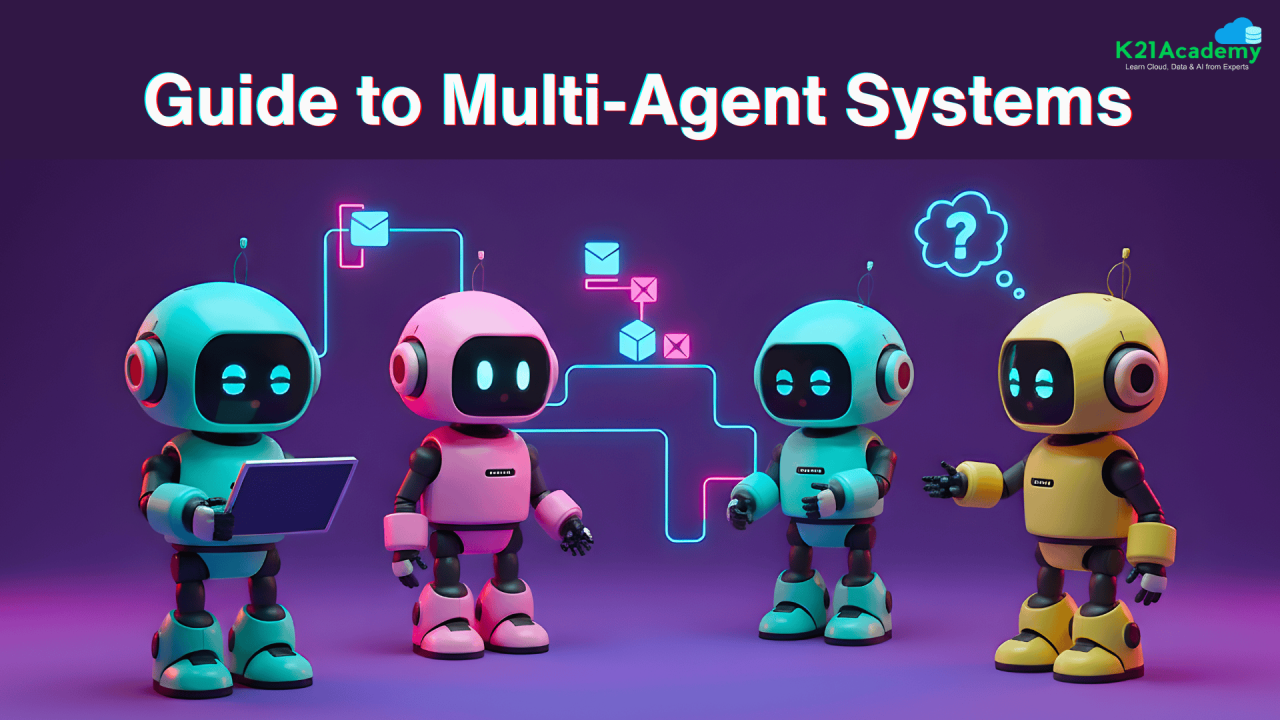
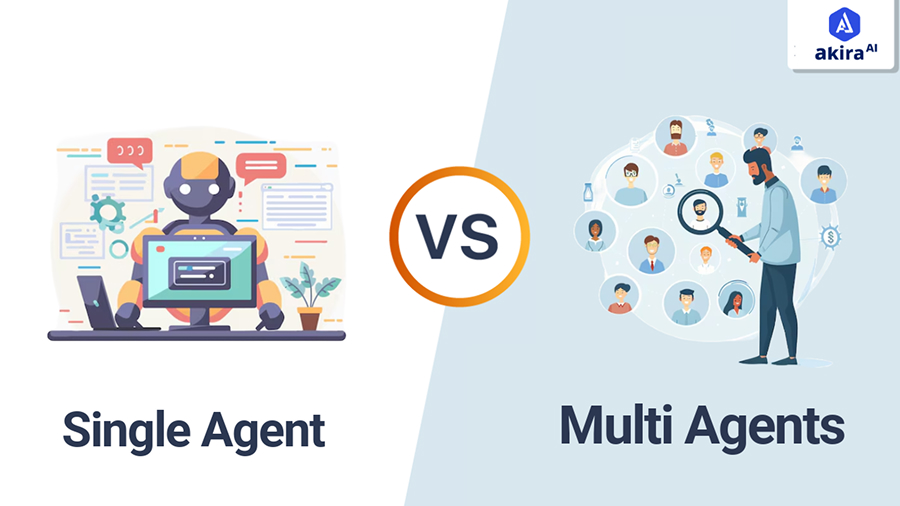
For decades, the promise of artificial intelligence has been tethered to the idea of a single, all-knowing machine that can solve any problem thrown at it. We imagined a digital butler, a singular “master AI” capable of handling every query, managing every schedule, and optimizing every process. However, the reality of modern computational intelligence has taken a different, arguably more powerful, turn. Instead of relying on a monolithic digital brain, the future of work is being built by swarms of specialized, collaborative digital workers known as Multiagent Systems (MAS) .
This paradigm shift is not merely an incremental upgrade to existing automation tools; it represents a fundamental rethinking of how work gets done. A multiagent system is a network of multiple interacting intelligent agents that can solve problems that are difficult or impossible for an individual agent or a single monolithic system to solve. These agents are not just scripts executing a linear set of rules. They are autonomous, reactive, proactive, and social entities that can perceive their environment, reason about their actions, communicate with peers, and adapt to changing circumstances in real-time.
As we stand on the precipice of the next industrial revolution, understanding the mechanics, benefits, and implications of multiagent systems is crucial for any business leader, technologist, or knowledge worker. This article delves deep into the architecture of these systems, explores their transformative applications across industries, and provides a comprehensive roadmap for integrating them into your organizational fabric to automate complex workflows and unlock unprecedented levels of efficiency.
Part I: The Anatomy of a Multiagent System
To appreciate the power of these systems, one must first understand their construction. Unlike traditional software that follows a rigid, top-down command structure, a multiagent system is inherently decentralized and distributed. The “intelligence” of the system does not reside in a single location but emerges from the interactions of its constituent parts.
A. Core Components of a Multiagent System
-
The Agents (The Workers): At the heart of the system are the agents themselves. An agent is a computer system situated in some environment and capable of autonomous action in that environment to meet its design objectives. In a business context, an agent might be designed to handle a specific task like data entry, customer inquiry triage, supply chain forecasting, or code generation. Each agent has its own knowledge base, goals, and decision-making capabilities.
-
The Environment (The Workspace): This is the digital or physical space in which agents operate. It could be a database, a network of sensors, the internet, or a shared cloud storage system. The environment provides the data that agents perceive and upon which they act.
-
Interaction Protocols (The Language): For agents to collaborate, they must speak a common language. These protocols define the rules of communication, including how agents share data, delegate tasks, negotiate resources, and resolve conflicts. Standards like FIPA (Foundation for Intelligent Physical Agents) provide a framework for these interactions.
-
The Organizational Structure (The Hierarchy): How are the agents organized? Is there a manager agent that delegates tasks to subordinates, or is it a completely peer-to-peer network? The architecture of the system dictates the flow of information and control. Common structures include centralized (where a facilitator agent coordinates all activities), decentralized (where agents interact directly without a central coordinator), and hybrid models.
B. The Four Pillars of Agent Intelligence
To be effective, an agent must exhibit a specific set of characteristics:
-
Autonomy: Agents operate without the direct intervention of humans or others. They have control over their own actions and internal states.
-
Reactivity: Agents perceive their environment (which may be physical, virtual, or a combination) and respond to changes in a timely manner. For instance, a monitoring agent will react to a drop in server performance immediately.
-
Proactiveness: Agents do not merely act in response to their environment; they exhibit goal-directed behavior by taking the initiative. A proactive logistics agent might anticipate a delayed shipment and preemptively reroute inventory.
-
Social Ability: Agents interact with other agents (and humans) via some communication language. This collaboration is the cornerstone of MAS, allowing the system to tackle complex problems that require diverse expertise.
Part II: The Transition from Automation to Orchestration
Traditional automation often referred to as Robotic Process Automation (RPA) works on a “top-down” principle. You define a specific workflow, and the software executes it step-by-step like a conveyor belt. If the input is “X,” the output is always “Y.” While effective for repetitive, rule-based tasks, this approach is brittle. It struggles with variability, ambiguity, and complex decision-making.
Multiagent systems, on the other hand, introduce a “bottom-up” or emergent approach. Instead of a rigid script, you have a community of agents that negotiate and coordinate to find the optimal path to a goal.
The Key Differentiators
-
Scalability: In a traditional system, adding more processing power usually requires upgrading the central server. In a MAS, you can simply introduce more agents into the network. The system scales organically.
-
Fault Tolerance: If a single agent fails in a monolithic system, the entire workflow often crashes. In a MAS, if one agent fails, its peers can detect the failure, redistribute the workload, and continue operations seamlessly. This makes the system inherently resilient.
-
Dynamic Adaptability: Business environments are fluid. A sudden market shift, a supply chain disruption, or a new regulatory requirement can render a static workflow obsolete. MAS adapts in real-time. Agents continuously monitor the environment and adjust their strategies.
-
Specialization: Just as a human team consists of specialists (a marketer, a data scientist, a salesperson), a MAS consists of highly specialized agents. This ensures that complex problems are solved by the best “digital mind” for the job, rather than a generic system trying to do everything poorly.
Part III: The Mechanics of Automated Workflow Orchestration
How exactly does a multiagent system automate work? The process is a sophisticated dance of discovery, negotiation, delegation, and aggregation.
Step 1: Goal Definition and Task Decomposition
The process begins when a user or a triggering event (e.g., a customer placing an order) inputs a high-level goal into the system, such as “Process the customer order for Product X.” A facilitator agent or a “Broker Agent” receives this goal. It then uses its reasoning capabilities to break this complex task down into granular sub-tasks. For example:
-
Verify Payment Authorization.
-
Check Inventory Levels at Warehouse A and B.
-
Calculate Shipping Costs and Delivery Times.
-
Generate a Packing Slip.
-
Update the Customer Database.
Step 2: Agent Discovery and Recruitment
The Broker Agent does not perform these tasks itself. Instead, it broadcasts the requirements to the network. This is similar to a manager posting job openings. “I need an agent specialized in inventory management,” it might signal. Other agents, listening on the network, evaluate the request. An agent with the relevant skills will respond with a “proposal” or “bid,” indicating its availability and “cost” (in terms of computational resources or time).
Step 3: Negotiation and Contracting
This is where the “marketplace” aspect of MAS comes into play. The Broker Agent may receive multiple bids from different inventory agents. It must negotiate. Which agent has the most updated data? Which is closest to the data source? Which operates faster? The agents negotiate a “contract” or a “plan” that outlines who will do what and the timeline. This negotiation happens in milliseconds, allowing for real-time optimization.
Step 4: Execution and Monitoring
Once the contract is set, the agents execute their designated tasks. The inventory agent queries the database to find the stock levels. The payment agent communicates with the banking API. As they work, they send status updates back to the Broker Agent. A dashboard or interface allows human managers to monitor this process in real-time.
Step 5: Aggregation and Delivery
Once all sub-tasks are complete, the agents send their results back to the Broker Agent. The Broker Agent aggregates the information confirming payment, inventory availability, and shipping details into a coherent final response, such as a “Shipping Confirmation” sent to the customer and an “Order Update” sent to the finance department.
Part IV: The Technical Advantages of MAS Architecture
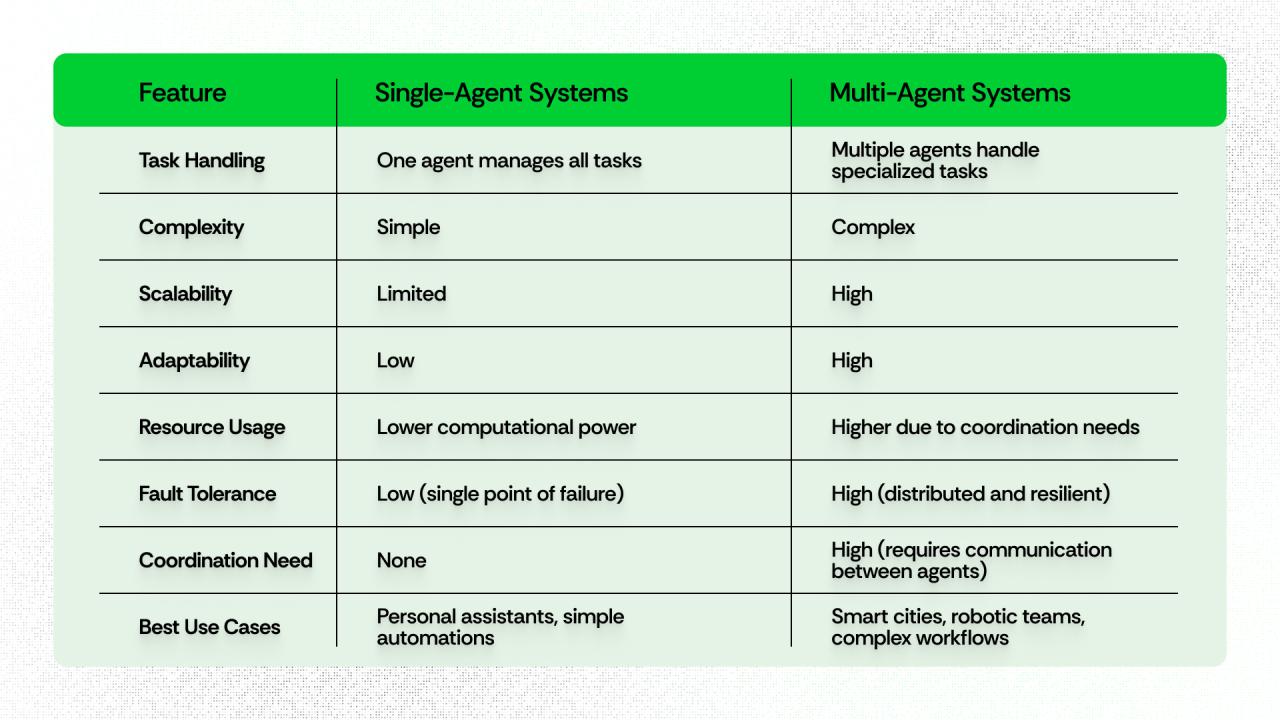
To truly understand why businesses are pivoting to MAS, we must explore the specific technical advantages that this architecture offers over traditional cloud-based monoliths or simple scripts.
A. Enhanced Resource Utilization
In a traditional server architecture, you often over-provision resources to handle peak loads. With MAS, agents can be distributed across different hardware, containers, or even cloud regions. They can “sleep” when not in use and “wake up” when needed, optimizing energy consumption and cloud costs.
B. Superior Data Privacy and Security
In a monolithic system, data often has to flow through a central pipeline to be processed, creating a single point of vulnerability. In MAS, data can stay local. An agent that handles sensitive HR data does not need to share that raw data with an agent handling logistics. It only needs to share the result of its processing (e.g., “Employee count is approved for payroll”). This “need-to-know” data handling is a massive boon for security and compliance with regulations like GDPR.
C. Accelerated Development Cycles
Building a large, monolithic application takes years. Building a network of small, specialized agents is faster. Teams can work in parallel on different agents. You can update the “Shipping Agent” without touching the “Payment Agent.” This modularity allows for continuous integration and deployment (CI/CD) at a granular level.
D. Explainable AI (XAI)
One of the biggest hurdles in AI adoption is the “Black Box” problem not knowing why an AI made a decision. In a MAS, because tasks are decomposed, you can trace the decision-making process step-by-step. If a customer is denied credit, you can see exactly which agent flagged the risk and what data it used, providing a clear audit trail.
Part V: Real-World Applications Across Industries
Multiagent systems are not a theoretical concept locked in university laboratories. They are active, working technologies driving efficiencies in a variety of sectors. Here is a closer look at how they are transforming specific industries:
1. Supply Chain Management and Logistics
The global supply chain is a chaotic web of manufacturers, distributors, retailers, and transporters. Traditional planning systems fail because they are static and cannot react to delays, weather events, or sudden demand spikes.
How MAS Solves It: Agents are assigned to every “node” in the supply chain. A “Container Agent” monitors a specific shipment. A “Port Agent” manages dock scheduling. A “Warehouse Agent” manages inventory. When a storm delays a ship at sea, the Container Agent alerts the Warehouse Agent. The Warehouse Agent communicates with the Retailer Agent to adjust expectations. Simultaneously, the System searches for alternative inventory to fulfill the missing shipment. This autonomous healing prevents stock-outs and lost revenue.
2. Financial Services and Algorithmic Trading
Financial markets are the epitome of complexity, operating 24/7 with rapid changes. High-Frequency Trading (HFT) relies on speed, but complex portfolio management requires risk analysis, historical data, and real-time news sentiment.
How MAS Solves It: A “Market Data Agent” collects tick data. A “Sentiment Agent” scrapes social media and news feeds. A “Risk Agent” calculates portfolio volatility. These agents operate independently but report to a “Decision Agent.” The Decision Agent weighs the risk score, the market data, and the sentiment to execute a trade. If the market turns volatile, the Risk Agent can override the Decision Agent to stop losses, demonstrating a “checks and balances” system that protects investors.
3. Smart Grids and Energy Management
The energy grid is transitioning from a centralized model to a distributed one, with solar panels, wind farms, and electric vehicles (EVs) acting as both consumers and producers (prosumers).
How MAS Solves It: Agents represent every appliance, EV, and solar panel in a home. A “Cost Agent” monitors real-time energy prices. During peak pricing, the Cost Agent communicates with the “EV Agent” to delay charging until midnight. If the home is generating surplus solar power, a “Selling Agent” negotiates with the “Grid Agent” to sell the excess electricity to neighbors experiencing high demand. This creates an efficient, self-regulating energy market at the local level.
4. Healthcare and Patient Monitoring
Hospitals are high-stress environments where a delay in information can mean the difference between life and death. Managing bed occupancy, staff scheduling, and patient records is overwhelmingly complex.
How MAS Solves It: A “Bed Manager Agent” monitors ward occupancy. A “Vitals Agent” tracks patient heart rates and blood pressure from wearable devices. If a patient’s vitals become critical, the Vitals Agent contacts the Bed Manager Agent to find a free Intensive Care Unit (ICU) bed. It simultaneously alerts the “Staff Scheduler Agent” to page the nearest available specialist. This automated triage ensures that resources are allocated to the patients who need them most, without human delay.
5. Software Development and DevOps
With the rise of AI coding assistants, the natural progression is a multi-agent development team. Generative AI is powerful, but a single large language model (LLM) often writes code with bugs or inefficiencies.
How MAS Solves It: A “Architect Agent” designs the software structure. A “Coder Agent” writes the actual script. A “Code Reviewer Agent” analyzes the code for security vulnerabilities and syntax errors. A “Tester Agent” runs test cases. If the Tester Agent finds a bug, it sends feedback directly to the Coder Agent, which rewrites the script. This human-like team dynamic leads to higher-quality code and faster release cycles.
Part VI: A Comprehensive Guide to Implementing Multiagent Systems
Transitioning from traditional automation to a multiagent system is not a plug-and-play endeavor. It requires careful planning, architectural consideration, and a cultural shift. Below is a step-by-step roadmap for organizations looking to embark on this journey.
A. Identify the Right Use Cases
Not every process benefits from MAS. Look for problems that are:
-
Complex: Involving multiple dependencies.
-
Dynamic: Subject to frequent changes and uncertainty.
-
Distributed: Involving different physical locations or departments.
-
Interdependent: Where decisions in one area affect another.
B. Choose the Right Architecture
You must decide if you want a centralized facilitator (easier to manage but a single point of failure) or a fully decentralized network (more robust but harder to debug). A common entry point is the “middle ground” or hybrid architecture, where a facilitator handles high-level planning, but execution is decentralized.
C. Define Agent Capabilities
What is the scope of each agent? It is often better to have many “dumb” agents (micro-services) than one “smart” agent. Define the “perception” (what data it receives) and the “action” (what it can change) for each agent clearly.
D. Develop Interaction Protocols
This is the most critical technical phase. You must standardize the “message format.” Will you use JSON? XML? Will you use a reactive programming model or a streaming model (e.g., Apache Kafka)? The “Contract Net Protocol” is a common standard for task distribution, where agents bid on tasks.
E. Focus on Failure Handling
In a distributed system, failures are inevitable. You must design for resilience. This involves:
-
Timeouts: If an agent doesn’t respond, the facilitator should have a backup plan.
-
Replication: Having duplicate agents that can take over.
-
Damping: Preventing system oscillation (e.g., two agents constantly outbidding each other).
F. Implement Robust Security
Since agents communicate frequently, ensure that the communication channels are encrypted. Implement strict identity management—how does the system know an agent is who it claims to be? Digital signatures and token-based authentication are standard best practices.
G. Monitor and Visualize
You cannot manage what you cannot see. Because MAS involves many interactions, it is difficult to debug. Invest in visualization tools that map the “conversations” between agents. This helps in understanding the emergent behavior of the system.
H. Start with a Simulation (Sandbox)
Before deploying to production, run the agents in a simulated environment. Feed them historical data and see how they behave. This helps you fine-tune the negotiation algorithms and prevents costly mistakes in a live environment.
I. Human-in-the-Loop (HITL)
Despite their autonomy, agents should not be entirely autonomous for critical tasks. Build in “Human Decision Points.” For instance, an agent can handle the boring paperwork of loan processing, but if it detects a high-risk anomaly, it should defer the final decision to a human loan officer.
J. Embrace Continuous Evolution
The environment changes, so the agents must change too. Use machine learning to update the agents’ utility functions over time. If the market changes, the pricing agent should learn new pricing strategies.
Part VII: The Challenges and Limitations of MAS
No technology is without its hurdles. While the promise of MAS is immense, organizations must be aware of the potential pitfalls to mitigate them effectively.
1. The Complexity of Emergent Behavior
The most significant challenge is unpredictability. While the individual agents are predictable, the system as a whole can exhibit emergent behaviors that were not explicitly programmed. These could be beneficial (finding a creative solution) or detrimental (a feedback loop causing a bidding war that crashes the network). Detecting and managing emergent behavior requires advanced monitoring and simulation.
2. Communication Overhead
In a centralized system, the time cost is the processing time. In MAS, a significant amount of time is spent on communication—sending messages, waiting for responses, parsing data. If the network latency is high, the system’s performance can degrade. Optimizing the “communication path” is often the bottleneck in MAS implementation.
3. Trust and Security Vulnerabilities
Since agents are autonomous, a malicious agent that infiltrates the system could cause significant damage. For example, a rogue agent could lie about inventory levels to sabotage sales. Therefore, security goes beyond encryption; it involves reputation systems and authentication protocols that ensure agents are trustworthy.
4. Lack of Standardization
While standards like FIPA exist, the industry is still fragmented. Many companies build bespoke proprietary systems. This creates “vendor lock-in” and makes it difficult for agents from different companies to interact (interoperability).
5. Debugging Difficulty
If a script fails, you find the line of code. If a MAS fails, you have to look at the interaction history of 50 agents. “Where did the error originate?” is a much harder question to answer in a distributed system. Specialized debugging tools are required.
6. Organizational Resistance
From a human resources perspective, allowing “machines” to negotiate with each other can be unsettling. Employees may fear that these autonomous systems will replace them. It requires strong change management to communicate that MAS is a tool to augment human work, not eliminate it (shifting focus from data entry to oversight).
Part VIII: The Future Trajectory of Multiagent Systems
As we look toward the horizon, the evolution of multiagent systems is poised to accelerate, driven by advances in large language models (LLMs) and edge computing. We are moving toward a world where these systems are not just integrated into workflows but are the workflow itself.
A. LLM-Driven Agents (The Natural Language Interface)
Generative AI is removing the “programming barrier.” In the future, you won’t write code to create an agent; you will simply instruct it in natural language. “Agent, you are now the inventory manager for the European region. Your goal is to minimize shipping costs while maintaining a 95% fulfillment rate.” The agent will then generate its own logic and negotiate with other agents on your behalf.
B. Agentic Mesh (The Internet of Agents)
We are moving toward an “Internet of Agents” (IoA) where agents from different organizations interact on a public or semi-public network. Your logistics agent might talk to your supplier’s logistics agent to find the best route, without needing a human to make the introduction. This will create a fully autonomous global economy.
C. Integration with Digital Twins
Businesses are building digital twins virtual replicas of their physical assets (factories, cities, power grids). Multiagent systems will operate inside these digital twins. They will simulate thousands of “what-if” scenarios simultaneously to find the optimal operating parameters before implementing a change in the physical world.
D. Emergence of “Stigmergy”
In nature, ants leave pheromone trails to coordinate without direct communication. In digital systems, agents are starting to use “stigmergy” altering the environment as a form of indirect communication. For example, an agent might “tag” a task with a priority level. Other agents see the tag and know to work on that task first. This reduces the need for direct messaging, reducing overhead and improving efficiency.
Part IX: Conclusion: The Inevitable Shift
The question for organizations is no longer if they should adopt multiagent systems, but when. The era of the “digital dinosaur” the slow, monolithic, rigid software suite is ending. In its place, we are building resilient, flexible, and intelligent digital ecosystems.
The journey to multiagent automation is a journey from programming to orchestration. It requires a shift in mindset from “telling the computer what to do” to “setting objectives for a digital society and letting it figure out the best path.”
Key Takeaways for Decision Makers:
-
Efficiency: MAS eliminates latency by distributing decision-making to the “edge” of the workflow.
-
Resilience: The system is fault-tolerant; it heals itself.
-
Scalability: You scale by adding agents, not by rebuilding the infrastructure.
-
Adaptability: The system evolves with the market.
However, it is crucial to remember the human element. These systems are designed to handle the “grunt work” of data processing, scheduling, and basic decision-making, freeing up human talent for what truly matters: creative problem-solving, strategic planning, empathetic customer engagement, and innovation. A multiagent system handles the how, but humans must always define the what and the why.
By embracing the collaborative power of multiagent systems, we are not just automating work; we are architecting a future where machines handle complexity so humans can focus on creativity. The multiagent revolution is here, and it is automating work in ways we are only beginning to understand. The organizations that learn to speak the language of agents today will be the market leaders of tomorrow.