
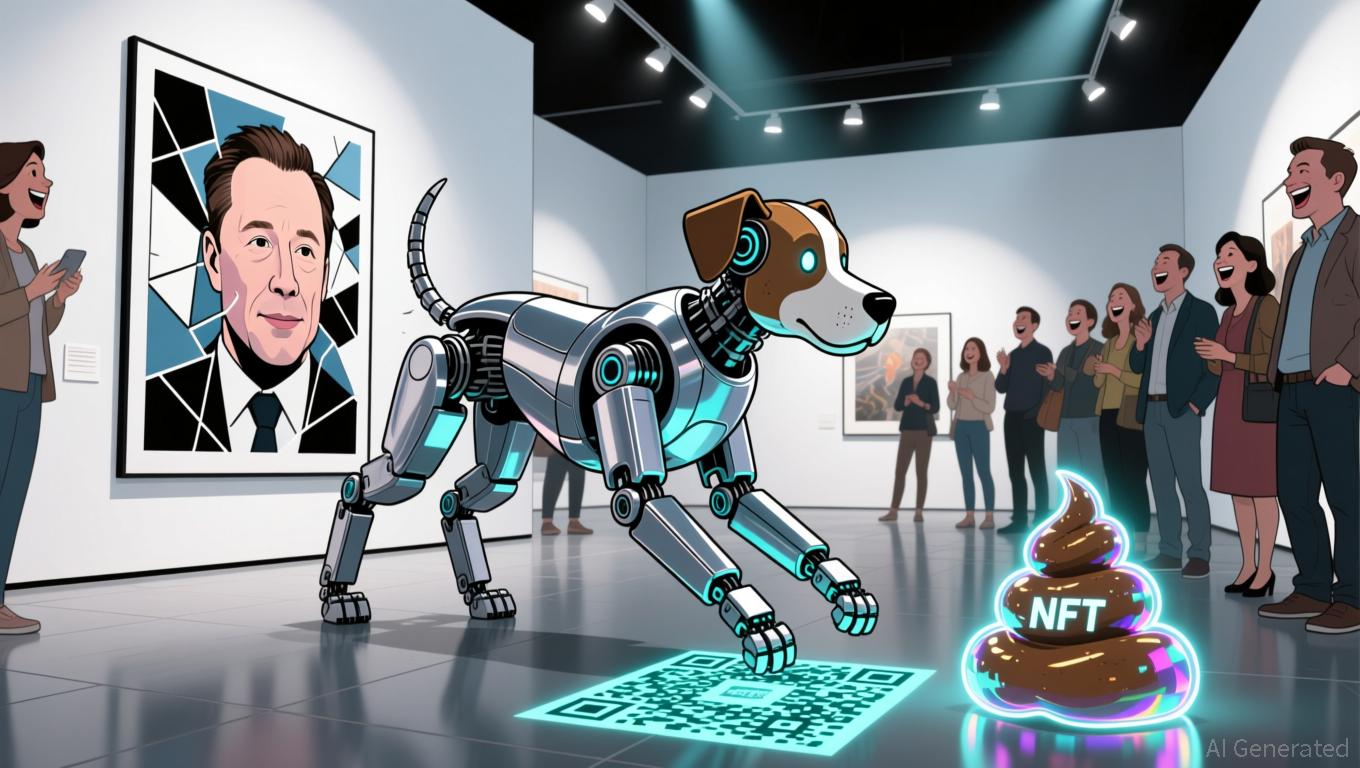
The year 2025 will forever be remembered as the moment when art, technology, and absurdity collided in the most unexpected way possible. At Art Basel Miami Beach, one of the world’s most prestigious and extravagant art fairs, a pack of robotic dogs wearing the hyper-realistic faces of tech billionaires like Elon Musk, Mark Zuckerberg, and Jeff Bezos stole the spotlight not by painting masterpieces or performing intricate dances, but by squatting down and defecating NFT artwork. This bizarre and unforgettable spectacle, titled “Regular Animals,” was the brainchild of digital artist Mike Winkelmann, better known as Beeple, who became a household name in 2021 when he sold an NFT for a staggering $69.3 million. The installation quickly went viral, sparking a global conversation about the intersection of AI, blockchain technology, satire, and the overwhelming influence of tech oligarchs on modern society. This article delves deep into every aspect of this viral phenomenon, exploring its creation, technology, underlying message, market impact, and the polarizing reactions it has elicited from audiences worldwide.
The Mastermind Behind the Madness: Who Is Beeple?
To truly understand the significance of the robotic dogs that poop NFTs, one must first understand the artist who created them. Mike Winkelmann, known professionally as Beeple, is a digital artist from Charleston, South Carolina, who has been at the forefront of the NFT and digital art revolution. Long before NFTs became a global buzzword, Beeple was known for his “Everydays” project, an ongoing commitment to creating and posting a new piece of digital art every single day. This relentless dedication to his craft culminated in 2021 when his collage, “Everydays: The First 5000 Days,” sold at Christie’s auction house for an astonishing $69.3 million, cementing his status as one of the most valuable living artists in the world.
Beeple has never been one to shy away from social commentary. His work often explores the relationship between technology, culture, and human perception. By 2025, with the NFT market having experienced a significant crash and subsequent recovery, Beeple returned with a project that was not just visually striking but deeply provocative. “Regular Animals” was his way of critiquing the modern information age, where algorithms controlled by a handful of tech billionaires dictate what billions of people see, think, and consume. In an interview with Page Six, Beeple articulated his vision: “It used to be that we saw the world interpreted through the eyes of artists, but now Mark Zuckerberg and Elon, in particular, control a huge amount of how we see the world”. By turning these titans of industry into robotic dogs that physically excrete art, Beeple offered a grotesque yet brilliant metaphor for how information is filtered, distorted, and “dropped” into our daily lives.
The “Regular Animals” Installation: A Closer Look
The installation itself was a spectacle that defied easy categorization. Housed within a plexiglass pen at Art Basel Miami Beach, six robot dogs roamed freely, their metal bodies painted a fleshy pink to mimic organic life. Each robot was topped with a hyper-realistic silicone mask created by the renowned mask-maker Landon Meier, also known as Hyperflesh. The faces included Elon Musk, Mark Zuckerberg, Jeff Bezos, legendary artists Pablo Picasso and Andy Warhol, and finally, Beeple himself.
These were not just static sculptures; they were interactive, AI-driven entities. Equipped with chest-mounted cameras, the robots continuously captured images of their surroundings and the spectators who gathered to watch them. This visual data was then processed through an internal AI system, which interpreted the information through the “temperament” or stylistic lens of the face the robot wore. For instance, the Picasso robot would generate abstract, cubist-inspired images, while the Warhol robot produced vibrant, pop-art-style prints. The Elon Musk robot, true to its branding, produced stark black-and-white images reminiscent of the aesthetic of X (formerly Twitter).
Periodically, the robots would stop, lean back on their hind legs, and a small LED screen on their backs would flash the words “POOP MODE”. They would then dispense a Polaroid-like print from their rear ends, presented in bags labeled “Excrement Sample”. This performance was equal parts disturbing, hilarious, and thought-provoking, capturing the attention of every attendee who wandered past.
The Technology Behind the Feces: AI, Robotics, and Blockchain
The “Regular Animals” installation was a marvel of modern engineering, combining several cutting-edge technologies into a single cohesive artwork.
A. Robotics and Hardware
The physical bodies of the dogs were based on Unitree Go2 robot dogs, a commercially available robotic platform known for its agility and advanced sensory capabilities. These robots are typically used for research and industrial applications, but Beeple repurposed them for artistic expression. The hyper-realistic masks were custom-made by Landon Meier, requiring hundreds of hours of meticulous craftsmanship to achieve the uncanny lifelikeness that made the installation so unsettling. Each robot was outfitted with multiple cameras and sensors to navigate its environment and interact with the audience.
B. Artificial Intelligence and Image Generation
The core of the “pooping” process relied on AI image generators. The cameras on the robots captured real-time images of the environment. This data was then fed into an AI model that had been fine-tuned to reflect the specific artistic styles associated with each robot’s face. The AI would “digest” this visual information—a deliberate metaphor for how algorithms process and reshape reality—and generate a unique print. No two prints were exactly alike, making each “excrement” a one-of-a-kind piece of generative art.
C. NFTs and Blockchain Integration
While the robots produced 1,028 physical prints over the course of the exhibit, only 256 of these were verifiable NFTs. These specific prints featured QR codes that allowed collectors to claim a free NFT linked to the physical artwork. The NFTs were stored on the blockchain, ensuring their authenticity, scarcity, and ownership. This integration of physical and digital art continued Beeple’s exploration of how technology shapes creativity and value in the art world. The NFTs were not just digital copies; they were the digital soul of the physical print, creating a bridge between the tangible and the virtual.
The Satirical Genius: A Critique of Tech Oligarchs
At its heart, “Regular Animals” was a biting satire of the immense power wielded by a small group of tech billionaires. Beeple’s message was clear: these individuals have become the new arbiters of reality. In the past, society looked to artists, philosophers, and writers to interpret the world. Today, the algorithms designed by Musk, Zuckerberg, and Bezos determine what content appears on our screens, shaping our opinions, politics, and even our sense of truth.
By depicting these billionaires as robotic dogs that literally defecate art, Beeple made a profound statement about the quality and nature of the content we consume. The prints were labeled “Excrement Sample,” a tongue-in-cheek acknowledgment that much of the algorithmically driven content on the internet is, in his view, digital waste. The act of the robots “pooping” art symbolizes how information is processed, filtered, and excreted by these platforms, often devoid of the nuance and depth that human artists once provided.
Interestingly, Beeple included himself in the pack, a move he described as “ballsy”. By placing his own face on one of the robot dogs, he acknowledged that he, too, is part of this ecosystem, creating art that is consumed and filtered through digital lenses. The self-portrait robot was the first to sell, surprising even the artist himself. This self-awareness added another layer of complexity to the installation, inviting viewers to question their own complicity in the digital age.
The Viral Explosion: Social Media and Public Reaction
It was almost inevitable that “Regular Animals” would go viral. In an era dominated by short-form video content and meme culture, the image of Elon Musk’s face on a robot dog squatting to poop out an NFT was too bizarre and shareable to ignore. Videos of the installation flooded social media platforms, garnering hundreds of thousands, if not millions, of views.
Public reactions were sharply divided, as is often the case with provocative art.
-
A. Shock and Disgust: Many viewers described the installation as “creepy,” “freaky,” “beyond disturbing,” and “pure nightmare fuel”. The hyper-realistic faces combined with the mechanical movements of the dogs created an uncanny valley effect that left many feeling uneasy. One Instagram user commented, “This is genius and terrifying at the same time”.
-
B. Humor and Admiration: Conversely, many found the installation hilarious and brilliant. The absurdity of the concept billionaires as poop-producing robots was seen as a masterful piece of performance art that perfectly captured the chaos of the modern world.
-
C. Philosophical Engagement: Art critics and intellectuals engaged with the piece on a deeper level, praising Beeple for his commentary on algorithmic control and the commodification of art. The installation was described as “part satire, part dystopia, part slapstick theater” by ARTnews.
At one point during the exhibit, two real dogs wandered into the area and began barking at the robotic versions, providing an unexpected moment of levity that amused the crowd. This interaction highlighted the blurring line between the organic and the artificial, a theme central to Beeple’s work.
The Market Impact: Price, Scarcity, and Collectibility
Beyond its artistic and social implications, “Regular Animals” was a commercial phenomenon. The financial success of the installation underscored the continued appetite for NFTs and tech-infused art, even after the market’s volatility.
A. The Robots Themselves
All six robot dogs were sold to private collectors for $100,000 each within the first hour of the fair. This rapid sellout demonstrated the high demand for unique, technologically advanced art pieces that double as social statements. The robots were designed with a limited lifespan; their primary function of taking photos and generating NFTs would cease after three years, although they would still be able to walk. This built-in obsolescence served as a reminder of how quickly technology ages, adding another layer of commentary to the piece. Soon, these robotic dogs will be living in private homes, occasionally producing NFTs for their wealthy owners.
B. The Prints and NFTs
The 1,028 physical prints produced during the exhibit were highly sought after. Attendees could collect the prints directly from the robots, each stamped with the “Excrement Sample” label. The 256 prints that included QR codes for free NFTs were particularly valuable. As of early December 2025, the floor price for these NFTs had already reached approximately $35,000. This rapid appreciation in value highlighted the speculative nature of the NFT market, where the story behind the art often drives its worth as much as the art itself.
C. The Broader Art Market
The installation contributed to the growing acceptance of digital and tech-based art in traditional fine art spaces. Art Basel’s 2025 report indicated that the digital art field was expanding again after a period of contraction. The fair even introduced a new section called Zero 10 dedicated to digital and tech-based art, where “Regular Animals” was the undisputed highlight.
Exploring the Deeper Themes: What Does It All Mean?
To dismiss “Regular Animals” as mere shock value would be to miss the profound philosophical questions it raises. Beeple’s installation touched upon several interconnected themes that are increasingly relevant in the 2020s.
A. The Algorithmic Gaze
We no longer see the world through our own eyes alone; we see it through the lens of algorithms. Social media platforms, search engines, and recommendation systems curate our reality, showing us what they think we want to see. Beeple’s robots, with their chest-mounted cameras, represent this algorithmic gaze. They capture, process, and reinterpret the world, excreting a version of reality that is filtered through their programming.
B. The Commodification of Everything
In the age of NFTs, everything can be commodified, including the act of defecation. By turning the process of creating art into a physical, almost scatological act, Beeple commented on the absurdity of the art market, where value is often assigned arbitrarily based on hype, scarcity, and celebrity association. The fact that the prints were labeled “Excrement Sample” and yet sold for significant sums is a direct critique of the collector’s mindset.
C. The Dystopian Future
The installation evoked a dystopian vision of the future, reminiscent of shows like Black Mirror. The idea of robots with human faces—particularly the faces of powerful individuals wandering around and producing art is unsettling. It raises questions about identity, authenticity, and the role of human creativity in an increasingly automated world. Beeple himself described his own robot’s temperament as “dystopic futurism”.
D. The Intersection of Life and Technology
The inclusion of real dogs barking at the robot dogs highlighted the strange intersection of the organic and the mechanical. As AI and robotics become more integrated into our daily lives, the line between what is natural and what is artificial continues to blur. “Regular Animals” forces us to confront this reality in a visceral, unforgettable way.
The Legacy of Beeple: From $69 Million to Robotic Poop
Beeple’s journey from selling a digital collage for $69 million to creating a pack of poop-producing robot dogs is a testament to his evolution as an artist. He has never been content to rest on his laurels; instead, he constantly pushes the boundaries of what art can be.
His 2021 NFT sale was a watershed moment for the art world, legitimizing digital art in the eyes of traditional institutions. However, Beeple was also one of the first to predict the NFT market crash, acknowledging that there was far too much low-quality work flooding the space. With “Regular Animals,” he returned with a project that was not only commercially successful but also intellectually rigorous. He challenged the NFT community to think more critically about what they were buying and why.
The viral nature of the installation also demonstrated Beeple’s mastery of the digital landscape. In a world where attention spans are short, he created something that was impossible to ignore. The image of a robotic Elon Musk squatting to poop art is burned into the collective consciousness of the internet, ensuring that Beeple’s message will be remembered for years to come.
Conclusion: A Fever Dream We Can’t Look Away From
“Regular Animals” was more than just an art installation; it was a cultural moment that encapsulated the anxieties, absurdities, and possibilities of the modern age. It was a perfect storm of technology, satire, and spectacle that left no one indifferent. Whether you found it genius or terrifying, brilliant or disgusting, there was no denying its impact.
As we move further into an era dominated by AI, algorithms, and digital assets, Beeple’s work serves as a cautionary tale and a mirror. It reminds us to question who controls the information we consume and to remain vigilant against the commodification of our attention. The robot dogs may have pooped NFTs, but the real excrement might just be the unchecked power of the tech oligarchs who shape our digital lives.
In the end, “Regular Animals” was a fitting title for such a bizarre installation. After all, in a world where billionaires can become robot dogs and art can be excreted from a machine, what exactly is “regular” anymore? The answer, it seems, is nothing and everything. And that, perhaps, is the most profound statement of all.