The landscape of artificial intelligence is undergoing a monumental shift. For years, AI has been synonymous with chatbots tools designed to answer questions, generate text, or create images based on user prompts. However, Meta, the parent company of Facebook, Instagram, and WhatsApp, is spearheading a new era that redefines the very purpose of AI. This new paradigm moves beyond reactive question-answering toward a proactive, deeply integrated, and highly personalized digital companion. Meta is not just building another chatbot; it is constructing a “Personal AI” designed to understand users on a profound level, manage their daily activities, and autonomously execute tasks to help them achieve their personal and professional goals. This strategic pivot, unveiled by CEO Mark Zuckerberg, represents a fundamental bet on the future of human-computer interaction, aiming to embed an intelligent, action-oriented agent into the fabric of daily life. This article delves deep into Meta’s ambitious project, exploring its technological foundations, core functionalities, competitive landscape, and the significant challenges it faces.
The Vision: From Chatbot to Personal Superintelligence
At the heart of Meta’s strategy is a vision that CEO Mark Zuckerberg has articulated as “personal superintelligence”. During Meta’s Q2 2026 earnings call, Zuckerberg introduced the concept of Personal AI, framing it as an assistant that goes far beyond merely responding to queries. He stated, “Everyone should have a personal AI that deeply understands them, understands their goals, and can help them achieve those goals”. This is not a passive tool but an active partner in a user’s life.
Traditional chatbots operate on a reactive model: the user asks a question, and the AI provides an answer. Meta’s Personal AI is designed to be proactive. It aims to understand a user’s context, anticipate their needs, and take action on their behalf without requiring constant, step-by-step instructions. This marks a transition from a tool that “thinks” to an agent that “acts”. The goal is to create an always-on digital companion that can assist in everything from managing a hectic schedule to planning a kitchen renovation or training for a marathon.
The Technological Engine: The Muse Spark Model Family
The sophisticated capabilities of Meta’s Personal AI are powered by a new family of AI models called Muse Spark. This technology is the engine driving the entire initiative.
A. Muse Spark: The Foundation
Initial reports in May 2026 indicated that Meta was developing its advanced digital assistant using a new model called Muse Spark. This model was designed to power agentic tools for Meta’s over 3 billion users. The goal from the outset was to create an assistant that could autonomously complete tasks, moving beyond simple question-and-answer interactions.
B. Muse Spark 1.1: Planning and Execution
In July 2026, Meta announced a significant evolution with the introduction of Muse Spark 1.1. This upgraded model is the cornerstone of the new “action-oriented” Meta AI. Muse Spark 1.1 is built to plan, work with your apps, and follow through on tasks from start to finish. This represents a leap from an AI that can only generate ideas to one that can execute them. The model’s architecture is specifically designed for planning and execution, enabling the assistant to perform complex, multi-step tasks with minimal human intervention.
C. Muse Spark 1.3: Continuous Improvement
The development of Muse Spark is an ongoing process. By September 2026, Meta had already released Muse Spark 1.3. This update was touted to significantly improve performance in coding and agentic tasks, further paving the way for more capable and reliable personal agents. This rapid iteration demonstrates Meta’s commitment to aggressively advancing its AI capabilities to stay competitive in the fast-paced AI landscape.
Key Features and Capabilities
Meta’s Personal AI is being equipped with a suite of powerful features that distinguish it from conventional chatbots. These functionalities are designed to integrate seamlessly into a user’s digital and physical life.
-
Proactive Planning and Execution: The AI can create detailed, personalized plans and execute the necessary steps to complete them. For example:
-
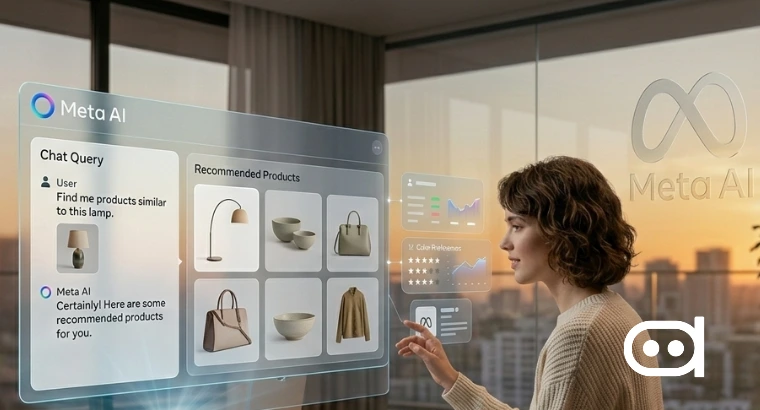
Home Renovation: Tell the AI you are renovating your kitchen, and it will learn your style, scour Marketplace for furniture and fixtures that fit your budget, and compile a mood board for you to review.
-
Fitness Training: Ask it to help you build a training plan for a half-marathon, and it will generate a week-by-week schedule, adjust for your availability, and send you a weekly reminder.
-
Event Planning: Request help planning a birthday dinner, and it will find restaurants, check your calendar for a suitable night, and suggest options.
-
-
Personalized Daily Briefings: The AI can generate a custom daily summary by pulling information from your calendar, identifying potential scheduling conflicts, and providing a quick overview at your preferred time. This ensures you start each day informed and organized.
-
Recurring Task Automation: Users can set up tasks once, and the AI will handle them on a recurring basis. This could include creating a weekly meal plan, providing alerts on the latest sneaker drops, or delivering an afternoon update on specific topics of interest.
-
Advanced Research and Content Creation: The assistant can conduct in-depth research in minutes, synthesizing information from across the web, including academic papers and public content shared on Meta’s platforms. It can then use this research to automatically generate slides or presentations.
-
Real-Time Collaboration and Editing: Unlike many AIs that generate a final product in one go, Meta’s AI allows for real-time interaction. While it is compiling a report or a plan, users can steer it, shift its focus, change the tone, or cut sections, ensuring the final output is exactly what they envisioned.
-
Cross-Platform Integration: The AI is designed to work across Meta’s entire ecosystem of apps, including Facebook, Instagram, WhatsApp, and Messenger, as well as through a standalone Meta AI app and website. This deep integration allows it to leverage data from across these platforms to provide a more cohesive and personalized experience.
The Competitive Landscape: Taking on OpenClaw and ChatGPT
Meta’s push into personalized AI is a direct challenge to other major players in the AI space, most notably OpenAI’s OpenClaw and ChatGPT.
A. The OpenClaw Rivalry
Numerous reports from May 2026 highlighted that Meta’s primary target is to develop a product similar to OpenClaw. OpenClaw is a popular open-source project that allows users to create AI “agents” that can autonomously complete tasks like browsing the web, managing emails, or handling a calendar. However, Meta’s CEO, Mark Zuckerberg, has pointed out that such systems are often too complex and difficult for the average person to use. Meta’s strategy is to create a more polished, refined, and user-friendly version that is essentially “ready to go” out of the box. Meta’s internal project, codenamed “Hatch,” is an AI agent system inspired by OpenClaw, with testing planned to conclude by mid-2026. The goal is to make agentic AI accessible to billions, not just tech enthusiasts. Interestingly, Meta had previously tried to recruit OpenClaw’s founder, Peter Steinberger, but he ultimately joined OpenAI.
B. Challenging ChatGPT
In addition to competing with agentic AI platforms, Meta is also directly challenging conversational AI giants like ChatGPT. In April 2025, Meta launched a standalone AI app, built with its Llama 4 model, designed to be a “personal AI” accessed primarily through voice conversations. This move gives users a direct path to Meta’s generative AI models, similar to how ChatGPT operates. With over a billion people already using Meta AI across its various apps, the company has a massive existing user base to leverage.
Privacy, Trust, and the “Grand Canyon” of Concern
Perhaps the most significant challenge facing Meta’s Personal AI is the issue of privacy and user trust. For the AI to be truly personalized and helpful, it needs access to vast amounts of sensitive user data.
A. The Data Dilemma
To function as a “personal superintelligence,” the AI would ideally need to understand a user’s health, finances, relationships, and daily routines. Meta has expressed a desire to allow users to share this highly sensitive information with its assistants if they choose to do so. However, this presents a massive hurdle: convincing users to trust a massive tech corporation with their most private data.
B. The Trust Deficit
One insider familiar with the project starkly described the situation: “There’s a trust deficit as wide as the Grand Canyon”. This sentiment encapsulates the core problem. While Meta has a long history of handling user data, its business model has often been built around using that data for targeted advertising. The company has faced numerous privacy scandals over the years, which have eroded public trust. Convincing users to share even more intimate details, especially for an AI that will act on their behalf, is a monumental task.
C. Mitigating Measures
Meta is aware of this trust deficit and is taking steps to address it. The company emphasizes that sharing sensitive information would be entirely voluntary. Furthermore, Meta has introduced features like an “Incognito mode” for chats, allowing users to have private conversations that are not used to personalize their experience. The company also plans to allow users to customize the degree to which the assistant acts on their behalf, giving them granular control over its autonomy. However, it remains to be seen whether these measures will be enough to overcome the deep-seated skepticism many users hold.
The Business Case and Investor Scrutiny
Meta’s massive investment in AI is not without its risks, and the company is facing intense scrutiny from investors.
A. The Cost of Ambition
Zuckerberg’s vision for “personal superintelligence” is extraordinarily expensive. Meta continues to pour billions of dollars into AI infrastructure and talent. In July 2026, the company announced it would raise its capital expenditure by $10 billion to as much as $145 billion for the year. This spending comes even as the company plans to cut 10% of its workforce.
B. Market Reaction
Wall Street’s reaction to this escalating spending has been swift and severe. Investor concerns over the costs and execution of Zuckerberg’s expansive AI vision led to a sharp drop in Meta’s share price, with nearly $170 billion being wiped off the company’s market capitalization in a single week. This highlights the immense pressure Meta is under to demonstrate that its massive AI investments will eventually translate into profitable products and services.
C. The Long-Term Bet
Despite the short-term market jitters, Meta is clearly playing a long-term game. The company views its personalized AI as the next major computing platform, one that will be central to how people interact with technology and, crucially, how they engage with Meta’s advertising ecosystem. By creating an indispensable AI companion, Meta aims to deepen user engagement and create new avenues for monetization, even as it navigates the immediate financial pressures.
Conclusion: A Transformative Gamble

Meta’s pursuit of a personalized AI assistant is one of the most ambitious and transformative projects in the tech industry. By moving beyond the simple chatbot model to create a proactive, action-oriented “personal superintelligence,” Meta is attempting to redefine the relationship between humans and machines. The technological foundation is impressive, with the Muse Spark model family enabling sophisticated planning, execution, and learning capabilities. The potential applications are vast, from managing daily logistics to achieving long-term personal goals.
However, the path forward is fraught with significant challenges. The company must overcome a massive “trust deficit” to convince users to share the sensitive data required for true personalization. It must also navigate the immense financial pressures from investors who are wary of the billions being spent on this vision. Meta’s success will depend not only on the technological prowess of its AI but also on its ability to build and maintain user trust. If it can achieve this delicate balance, Meta could indeed create the “personal AI” it envisions, fundamentally changing how we live, work, and interact with the digital world. If not, it risks a spectacular failure that could have profound consequences for the company and the broader AI industry. The coming years will be critical in determining whether this bold gamble pays off.