

The landscape of oncology is witnessing a paradigm shift, moving away from the one-size-fits-all approach of conventional chemotherapy towards more precise and personalized interventions. Among the most promising and revolutionary advancements is the development of personalized mRNA cancer vaccines. This innovative therapeutic strategy leverages the body’s own immune system to recognize, attack, and destroy cancer cells based on the unique genetic mutations present in an individual’s tumor. The success of mRNA technology during the COVID-19 pandemic has accelerated its application in oncology, transforming it from a theoretical concept into a clinical reality with the potential to redefine cancer treatment .
The Evolution of Cancer Immunotherapy
The journey of cancer treatment has been long and arduous, beginning with the non-specific cytotoxicity of chemotherapy and radiation, which often caused significant collateral damage to healthy tissues. The advent of targeted therapies provided a more precise approach by attacking specific molecules involved in tumor growth. However, the most transformative change has been the rise of immunotherapy, which harnesses the power of the host’s immune system to fight cancer . Immune checkpoint inhibitors (ICIs), which block proteins that prevent immune cells from attacking cancer, have shown remarkable success in various cancers. Despite these advances, many patients do not respond to ICIs, or they develop resistance, highlighting a critical need for complementary therapeutic strategies . This is where personalized mRNA cancer vaccines enter the picture, offering a novel approach to prime the immune system specifically against a patient’s unique tumor.
The Scientific Foundation of mRNA Cancer Vaccines
A. Understanding the Mechanism of Action
The core principle of an mRNA cancer vaccine is elegantly simple yet biologically potent. It involves injecting a patient with a specially designed messenger RNA (mRNA) molecule that carries the genetic instructions for producing specific cancer antigens . Unlike traditional vaccines that introduce a weakened or inactivated pathogen, mRNA vaccines instruct the patient’s own cells to become temporary “protein factories,” producing the tumor antigens that are then recognized by the immune system.
1. The mRNA Structure and Design
The effectiveness of an mRNA vaccine hinges on its molecular design. The mRNA molecule consists of four essential structural elements :
A. 5′ Cap: This structure is crucial for mRNA stability and efficient translation. It protects the mRNA from degradation and helps initiate protein synthesis. Third-generation capping technologies like CleanCap achieve high capping efficiency, which enhances the vaccine’s efficacy .
B. Untranslated Regions (UTRs): These regions flank the coding sequence and are optimized to enhance both the stability of the mRNA and the efficiency of its translation into protein .
C. Open Reading Frame (ORF): This is the coding sequence that holds the blueprint for the target antigen. In personalized vaccines, this region encodes the patient’s specific neoantigens .
D. Poly(A) Tail: This tail is a chain of adenine nucleotides at the 3′ end of the mRNA that contributes to molecular stability and controls the duration of protein expression .
2. Targeted Delivery Systems
Naked mRNA is rapidly degraded by enzymes in the body and cannot enter cells efficiently. To overcome this, the mRNA is encapsulated in sophisticated delivery vehicles, most commonly lipid nanoparticles (LNPs) . These LNPs, similar to those used in successful COVID-19 vaccines, protect the mRNA from degradation, facilitate cellular uptake, and ensure its release into the cytoplasm. The LNPs are often functionalized with polyethylene glycol (PEG) to prolong their circulation time and enhance their accumulation in lymphoid tissues, where immune responses are generated .
3. The Immune Activation Cascade
Once inside the cell, particularly in antigen-presenting cells like dendritic cells, the mRNA is translated into the tumor antigen protein. The immune system is then activated through a two-pronged mechanism :
A. MHC-I Pathway and CD8+ T Cells: The newly synthesized antigen is degraded inside the cell, and the resulting peptide fragments are presented on the cell surface via MHC class I molecules. This presentation activates CD8+ cytotoxic T lymphocytes, the “killers” of the immune system, which can then directly target and destroy cancer cells expressing the same antigen .
B. MHC-II Pathway and CD4+ T Cells: Antigens that are taken up from outside the cell are processed and presented via MHC class II molecules. This pathway primarily activates CD4+ helper T cells, which provide crucial support by secreting cytokines that enhance the activity of CD8+ T cells and promote the formation of long-term immunological memory .
One of the key advantages of mRNA vaccines is their intrinsic adjuvanticity. The mRNA molecule itself can stimulate innate immune sensors, such as Toll-like receptors (TLRs), enhancing the overall immune response . Furthermore, the vaccine can induce epitope spreading, where the initial immune response expands to target other, related antigens on the tumor. This mechanism helps overcome tumor heterogeneity and reduces the risk of immune evasion .
Personalized Neoantigens: The Key to Specificity
A. Tumor-Associated Antigens vs. Neoantigens
Cancer vaccines can target two main types of antigens :
A. Tumor-Associated Antigens (TAAs): These are proteins that are overexpressed on cancer cells but are also present, at lower levels, on some healthy cells. While easier to develop into vaccines, TAAs carry a risk of off-target effects and immune tolerance.
B. Tumor-Specific Antigens (TSAs) or Neoantigens: These are antigens that arise from somatic mutations unique to cancer cells. They are not found on healthy tissues, making them ideal targets for highly specific and safe immunotherapy .
The use of neoantigens is the cornerstone of personalized mRNA cancer vaccines. Each patient’s tumor harbors a unique set of mutations, creating a distinct mutational landscape. By sequencing a patient’s tumor DNA and comparing it to their healthy DNA, researchers can identify these unique mutations and predict which ones are most likely to generate a potent immune response .
B. The Role of Artificial Intelligence and Bioinformatics
The process of identifying and selecting the most effective neoantigens is a data-intensive task that is now being revolutionized by artificial intelligence (AI). Advanced algorithms are used to :
A. Predict Immunogenicity: Not all mutations create effective immunogens. AI models predict which neoantigens have a high probability of being processed and presented by MHC molecules and recognized by T cells . Some algorithms, such as the proprietary SmartNeo platform, have demonstrated prediction precision rates exceeding 50%, outperforming many publicly accessible tools .
B. Design Personalized Vaccines: The selected neoantigens are then linked together in a single mRNA sequence to create a personalized vaccine that encodes for multiple tumor-specific targets. This multi-antigen approach is designed to combat tumor heterogeneity and prevent immune escape .
C. Optimize mRNA Sequences: AI is also used to design the mRNA sequence itself to improve its stability and translational efficiency, ensuring that the encoded antigens are produced in sufficient quantities to trigger a robust immune response .
Clinical Landscape: Promising Results and Ongoing Trials
The translation of personalized mRNA cancer vaccines from the lab to the clinic is progressing rapidly, with numerous clinical trials underway across a variety of cancer types. The focus is not only on safety, which has been promising, but also on demonstrating robust immunogenicity and clinical efficacy.
A. Melanoma and Lung Cancer
Some of the most advanced and well-publicized results have come from trials in melanoma and non-small cell lung cancer. Prominent candidates like mRNA-4157 (V940) and BNT122 are being evaluated in combination with immune checkpoint inhibitors. Data from these studies have shown that the vaccines can induce strong and durable neoantigen-specific T-cell responses, with response rates exceeding 50% in some patient cohorts, and are now advancing into Phase III trials .
B. Gastrointestinal (GI) Cancers
GI cancers, known for being notoriously difficult to treat, are a major focus of mRNA vaccine research . An ongoing Phase I study (NCT07067385) is evaluating a personalized mRNA cancer vaccine deepGeneAI-001 in combination with the PD-1 inhibitor Sintilimab for the treatment of GI solid tumors. This single-center, open-label study will enroll 40 participants to assess safety and efficacy, with primary outcomes including adverse events and the vaccine’s immunogenicity measured by interferon-γ secreting T lymphocytes .
C. Ovarian Cancer
In ovarian cancer, the Phase I NeoOVIV trial (NCT07676890) is testing a personalized mRNA-LNP vaccine. This study is enrolling patients with stage II/III ovarian cancer post-surgery to evaluate safety, tolerability, and immune response. Participants will receive the vaccine in combination with standard chemotherapy and the PD-1 antibody Tislelizumab. The study is a dose-escalation design (25 μg, 50 μg, and 100 μg), with each patient receiving a series of priming and booster doses .
D. Pancreatic and Endocrine Tumors
Pancreatic cancer, one of the deadliest malignancies, and other endocrine tumors like adrenal cortical carcinoma and pancreatic neuroendocrine tumors are also being targeted. A study (NCT06141369) is investigating a personalized mRNA neoantigen vaccine, mRNA-0523-L001, for advanced endocrine tumors that have failed standard therapies . A personalized tumor neoantigen mRNA therapy is also in Phase I/II trials for advanced hepatocellular carcinoma and intrahepatic cholangiocarcinoma, often combined with standard treatments like TACE or chemotherapy .
E. The Power of Combination Therapy
A recurring theme across these clinical trials is the combination of mRNA vaccines with other immunotherapies, particularly immune checkpoint inhibitors . The rationale is strong: the vaccine “primes” the immune system by generating a large army of tumor-specific T cells, while the checkpoint inhibitors remove the “brakes” that might hold these T cells back in the suppressive tumor microenvironment. This synergistic effect is expected to yield more robust and durable antitumor responses than either approach alone .
Overcoming Challenges and Looking Ahead

Despite the immense promise, significant challenges remain on the path to making personalized mRNA cancer vaccines a widely available standard of care.
A. Key Challenges in Clinical Translation
The major scientific and logistical bottlenecks include :
A. Immunosuppressive Tumor Microenvironment (TME): The TME can actively suppress the activity of infiltrating T cells. Overcoming this resistance is crucial for the vaccines to be effective.
B. Delivery and Stability: While LNPs are effective, optimizing delivery to ensure efficient uptake by antigen-presenting cells and sustained antigen expression remains a key area of research .
C. Manufacturing Scalability: The production of personalized vaccines is a complex and costly process that requires significant time. Reducing the turnaround time from tumor biopsy to vaccine administration is essential for patients with rapidly progressing disease .
D. Identifying High-Quality Neoantigens: Although AI is improving prediction accuracy, reliably identifying the most potent immunogenic neoantigens from a patient’s tumor remains a challenge .
B. Future Directions
The future of personalized mRNA cancer vaccines is bright, with several exciting avenues being explored :
A. Self-Amplifying mRNA (saRNA): These vaccines encode for both the antigen and a replicase enzyme, allowing the mRNA to self-amplify within the cell. This could lead to more potent and durable immune responses with lower doses.
B. Neoadjuvant Applications: Administering these vaccines before surgery could shrink tumors, making them easier to remove, and train the immune system to eliminate any remaining micrometastases, thereby reducing the risk of recurrence.
C. Integration with Multi-Omics: Combining genomic data with other “omics” data like proteomics and transcriptomics will allow for a more comprehensive understanding of each patient’s tumor, leading to better vaccine design.
D. Advanced Delivery Vectors: Research into novel biomaterial vectors, such as exosomes and lipopolyplexes (LPP), could lead to more efficient and targeted delivery .
Conclusion
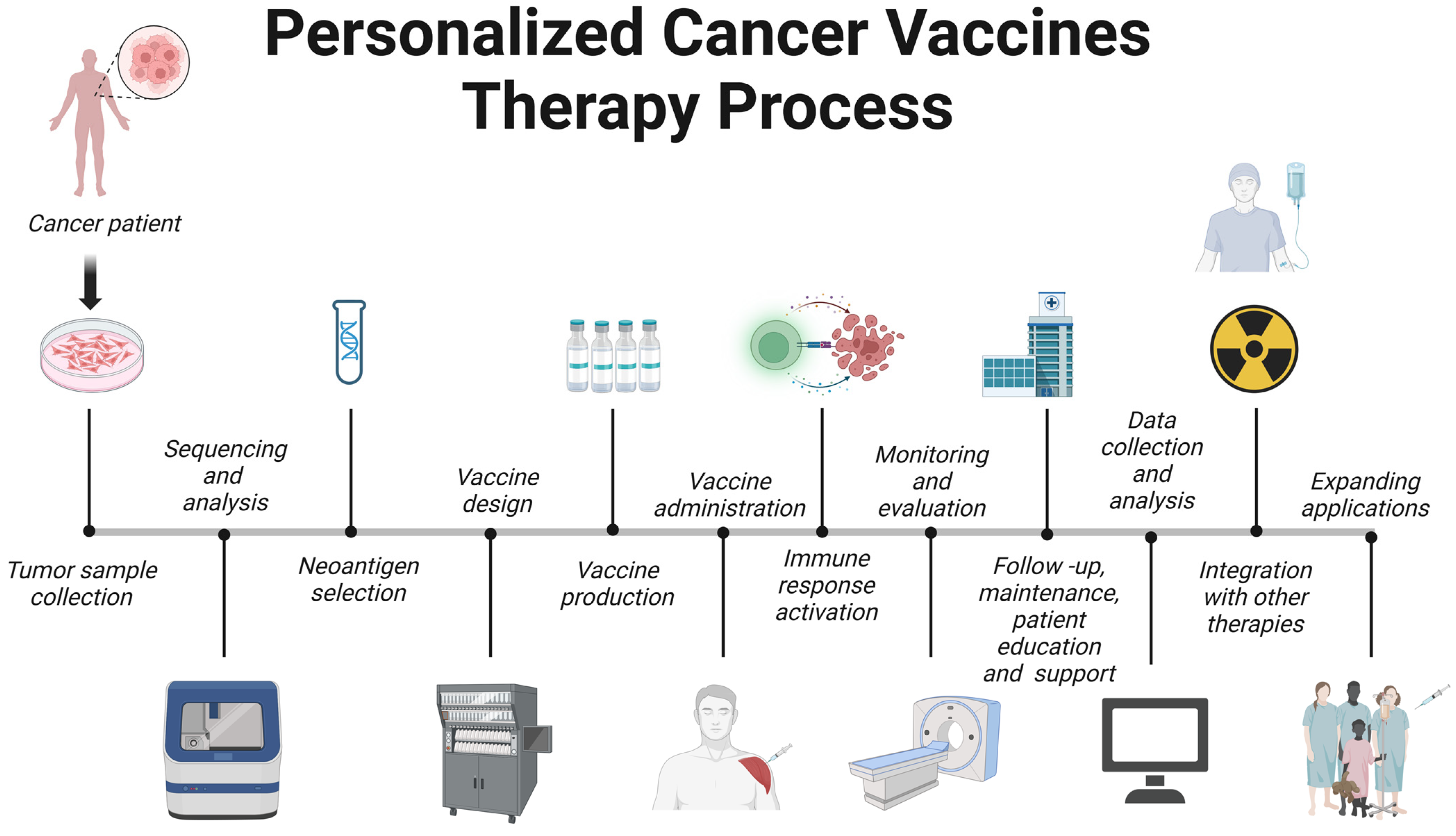
Personalized mRNA cancer vaccines represent a monumental leap forward in the fight against cancer. By harnessing the power of the immune system to precisely target the unique mutations of an individual’s tumor, this technology offers the potential for highly effective and specific therapy with fewer side effects. The foundational science is robust, the technology is rapidly evolving thanks to AI and bioinformatics, and the growing number of promising clinical trial results in challenging cancers like melanoma, lung, GI, and ovarian cancer is encouraging. While challenges in delivery, manufacturing, and overcoming the immunosuppressive tumor microenvironment remain, the momentum is undeniable. With continued investment and research, personalized mRNA cancer vaccines are poised to become a cornerstone of precision oncology, offering new hope and improved outcomes for cancer patients worldwide.