
The global automotive industry stands at a critical inflection point where the limitations of conventional lithium-ion battery technology are becoming increasingly apparent. Range anxiety, charging times, and safety concerns continue to hamper widespread electric vehicle adoption despite significant advances in recent years. Mercedes-Benz, the storied German luxury automaker that pioneered the automobile over a century ago, is now positioning itself at the forefront of a technological revolution that could fundamentally transform electric mobility. Through strategic partnerships with innovative battery developers and comprehensive testing programs, the company is systematically validating solid-state battery technology that promises to deliver unprecedented range, enhanced safety, and superior performance characteristics.
The urgency of this endeavor cannot be overstated. As governments worldwide implement increasingly stringent emissions regulations and consumers demand vehicles that match the convenience of internal combustion engines, the pressure to commercialize next-generation battery technology has intensified dramatically. Mercedes-Benz has responded by pursuing a dual-track strategy, collaborating with both American battery innovator Factorial Energy and Taiwanese solid-state specialist ProLogium to evaluate different technological approaches and accelerate the path toward production-ready solutions.
This comprehensive analysis examines Mercedes-Benz’s solid-state battery initiatives, the technical achievements that have captured industry attention, the remaining obstacles that must be overcome, and the broader implications for the future of electric mobility.
The Strategic Rationale Behind Solid-State Investment
Before examining the specifics of Mercedes-Benz’s testing programs, it is essential to understand why solid-state batteries have become the holy grail of electric vehicle technology. Conventional lithium-ion batteries, while revolutionary when first introduced, are approaching their theoretical performance limits. The fundamental chemistry that powers today’s electric vehicles relies on liquid electrolytes that are inherently flammable, creating safety challenges that require extensive engineering countermeasures.
Solid-state batteries address these limitations by replacing liquid electrolytes with solid materials. This architectural change enables several transformative advantages. The elimination of flammable liquid electrolytes dramatically reduces fire risk, as solid electrolytes are nonflammable and can withstand physical deformation without short-circuiting. Furthermore, solid-state designs permit the use of lithium-metal anodes instead of graphite, significantly increasing energy density and enabling longer driving ranges from equivalent battery weight.
The performance metrics achievable with solid-state technology are genuinely remarkable. Research indicates that solid-state batteries can achieve energy densities of 400 to 500 Wh/kg, compared to the 90 to 235 Wh/kg typical of commercial lithium-ion batteries. This improvement translates directly into extended vehicle range, reduced battery weight, and more efficient use of vehicle packaging space. Additionally, solid-state batteries demonstrate superior temperature adaptability and potentially longer service life, with projected cycle lifetimes exceeding 3,000 to 5,000 cycles.
For Mercedes-Benz, these advantages align perfectly with the company’s commitment to technological leadership and its ambitious electrification strategy. By investing in solid-state battery development now, the automaker positions itself to deliver vehicles that overcome the current limitations of electric mobility while maintaining the performance and luxury standards associated with the brand.
Factorial Energy Partnership: Real-World Validation
Mercedes-Benz’s collaboration with Massachusetts-based Factorial Energy represents one of the most significant solid-state battery validation efforts undertaken by any automaker. The partnership has already yielded remarkable results that demonstrate the technology’s real-world viability.
The Record-Breaking Road Test
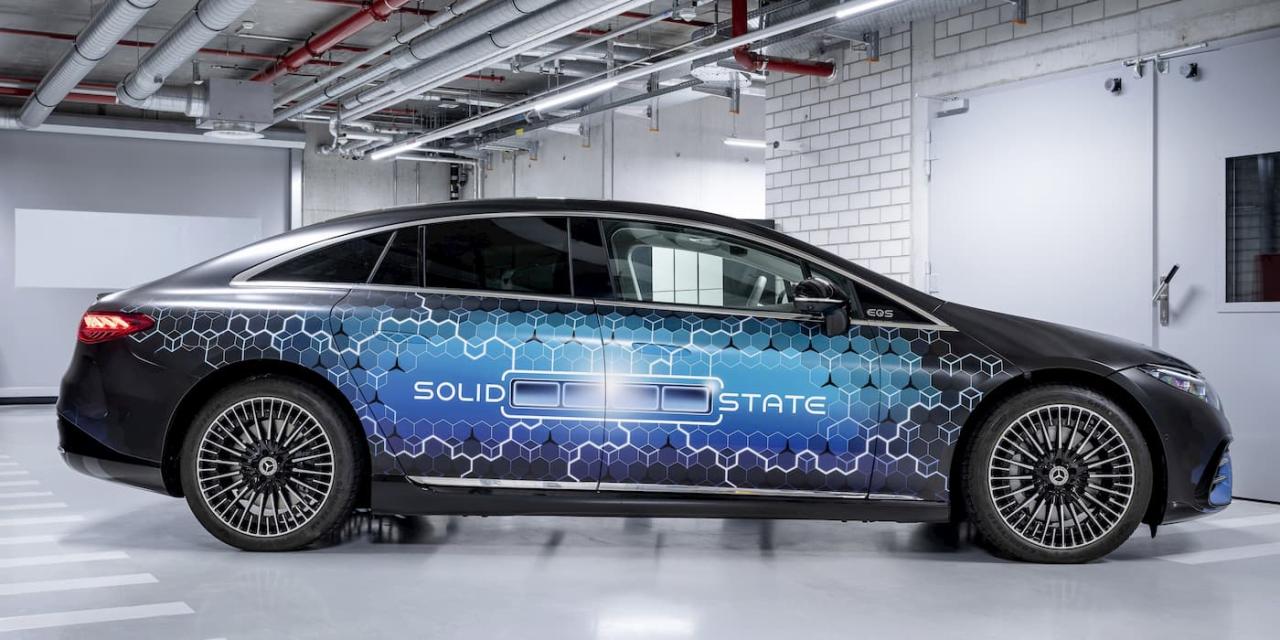
In September 2025, Mercedes-Benz achieved a milestone that captured global attention when a modified EQS test vehicle completed a journey of 1,205 kilometers from Stuttgart, Germany, to Malmö, Sweden, on a single battery charge. This extraordinary feat was accomplished using solid-state battery cells supplied by Factorial Energy, with the battery pack developed in collaboration with Mercedes-AMG High Performance Powertrains, the company’s Formula 1 technology subsidiary.
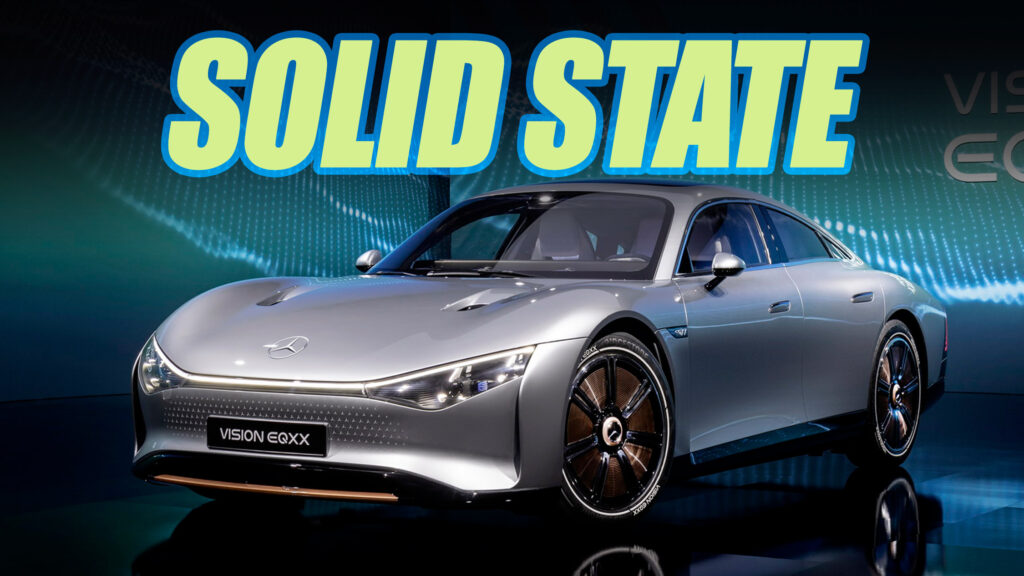
The significance of this achievement extends far beyond the impressive distance covered. The test vehicle arrived at its destination with 137 kilometers of remaining range, demonstrating that the solid-state battery system possesses substantial reserves even after such an demanding journey. This result surpassed the previous record established by Mercedes-Benz’s Vision EQXX concept vehicle, which had covered 1,202 kilometers on a single charge.
Critically, the road test was conducted under real-world conditions rather than laboratory settings. The route followed public highways through three countries, subjecting the vehicle and its battery system to varied terrain, traffic conditions, and climatic zones. This validation approach provides far more meaningful data than controlled laboratory testing and demonstrates that the technology has matured beyond the experimental stage.
Technical Architecture and Performance
The solid-state battery system developed through the Factorial partnership incorporates several innovative engineering solutions. The cells utilize a lithium-metal chemistry that achieves energy density of approximately 450 Wh/kg at the cell level, representing a substantial improvement over conventional lithium-ion technology. This higher energy density enables the extended range demonstrated in the road test while maintaining battery dimensions and weight comparable to standard EQS battery packs.
A particularly innovative aspect of the Mercedes-Benz design is the integration of pneumatic actuators within the battery pack. These devices function as intelligent clamps that maintain consistent pressure on the battery cells during charge and discharge cycles, addressing the challenge of electrode volume changes that can compromise contact and performance in solid-state systems.
The collaboration between Mercedes-Benz road vehicle engineers and Formula 1 technology specialists from HPP demonstrates the company’s commitment to leveraging its diverse technical expertise. The F1-derived approach to battery management and thermal control has proven instrumental in achieving the performance levels demonstrated in road testing.
Factorial’s Broader Platform
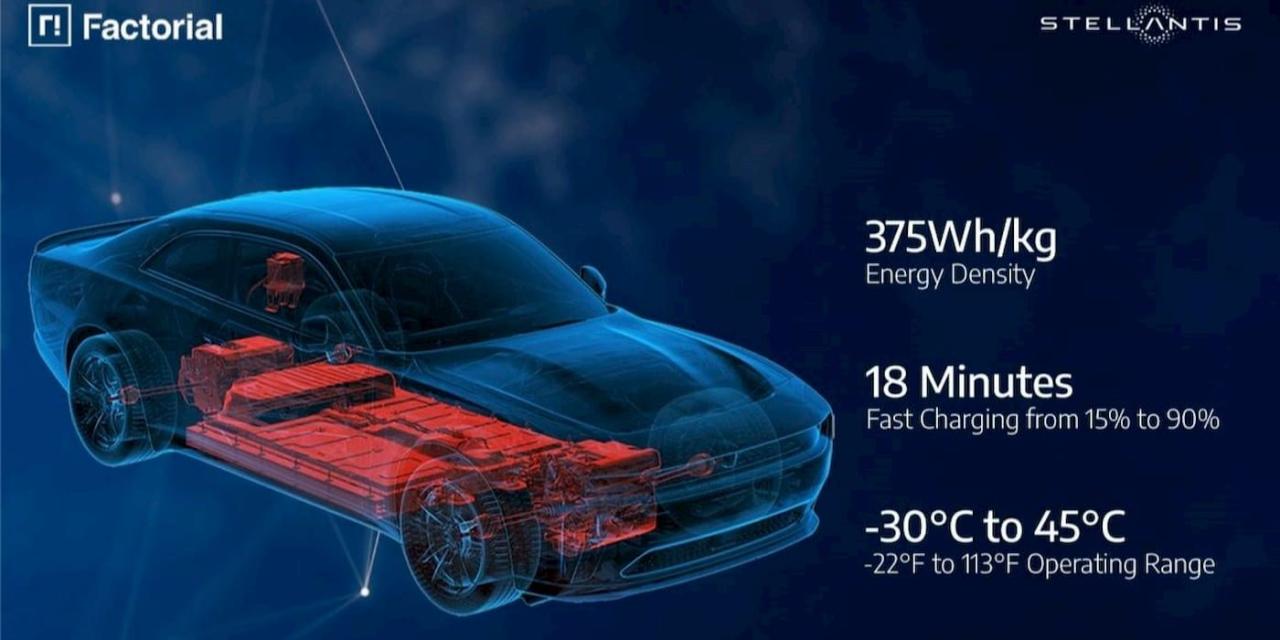
Factorial Energy’s solid-state technology, marketed under the FEST (Factorial Electrolyte System Technology) brand, has been validated across multiple automotive applications. The company’s cells have demonstrated energy density of 375 Wh/kg with the ability to charge from 15 percent to 90 percent in just 18 minutes. Furthermore, the technology has shown robust reliability across a wide temperature range, from -30°C to 45°C, addressing concerns about cold-weather performance that have historically plagued electric vehicles.
The company’s partnership portfolio extends beyond Mercedes-Benz to include Stellantis, Hyundai, and Kia, suggesting broad industry confidence in the FEST platform. Factorial’s public listing on the Nasdaq exchange in 2026 provided additional capital to accelerate manufacturing scale-up and commercialization efforts.
ProLogium Collaboration: Ceramic-Based Innovation
While the Factorial partnership focuses on quasi-solid-state technology with polymer electrolytes, Mercedes-Benz’s collaboration with ProLogium pursues a different technological pathway centered on ceramic electrolytes. This dual-track strategy allows the automaker to evaluate multiple approaches and select the most promising technology for future production vehicles.
The Gen4 Platform
In September 2026, Mercedes-Benz and ProLogium signed a joint testing agreement granting the automaker priority access to the battery developer’s latest Gen4 Superfluidized Inorganic Lithium Ceramic Battery cells. This agreement builds upon a partnership that dates back to 2016, during which the companies have validated multiple lithium ceramic battery formats, including pouch cells, prismatic cells, and ProLogium’s Bi-Polar technology.
The Gen4 platform represents a significant advancement in ceramic-based solid-state technology. ProLogium’s design incorporates a non-flammable inorganic electrolyte paired with a ceramic separator and the company’s proprietary Active Safety Mechanism. This safety architecture is designed to stabilize electrode materials under high-temperature conditions and interrupt reactions that could lead to thermal runaway.
Performance specifications for the Gen4 cells are impressive. The technology achieves energy density of up to 400 Wh/kg and supports ultra-fast charging from 5 percent to 80 percent in just 6.4 minutes. Third-party testing by TÜV has validated that ProLogium’s 185.4 Ah large-format Gen 3.5 cell achieved a gravimetric energy density of 381 Wh/kg.
Manufacturing Scalability
A critical consideration in evaluating solid-state battery technologies is the ability to transition from laboratory-scale production to mass manufacturing. ProLogium has made substantial progress in this area, opening its first GWh-scale gigafactory in Taiwan in May 2024 and commencing mass production of its Gen 3.5 battery in September 2026.
The company is also expanding production capacity internationally. In February 2026, ProLogium held a groundbreaking ceremony for its second battery gigafactory in Dunkirk, France. The first phase of this facility is designed to achieve annual production capacity of 4 GWh, with this capacity expected to be progressively reached by 2030. The complete facility is planned to ultimately support up to 44 GWh of annual production.
This European manufacturing footprint is strategically significant, as it positions ProLogium to supply cells for Mercedes-Benz’s European vehicle production while benefiting from proximity to the automaker’s development and testing facilities.
Remaining Challenges and Industry Context
Despite the remarkable progress demonstrated by both Factorial Energy and ProLogium, significant challenges must be overcome before solid-state batteries can achieve widespread commercial deployment in consumer vehicles.
Cost Considerations
Manufacturing cost remains perhaps the most formidable barrier to solid-state battery commercialization. The materials and processes required for solid-state cell production are substantially more expensive than those used in conventional lithium-ion manufacturing. Solid-state cell fabrication often requires stringent environmental controls, precise pressure management, and more complex assembly processes than conventional battery production.
The cost disparity is particularly pronounced for certain material systems. Sulfide-based solid electrolytes, for example, require lithium sulfide as a precursor material, which costs approximately forty times more than the lithium carbonate used in conventional battery production. Additionally, manufacturing yields for solid-state cells remain significantly lower than for established lithium-ion technology, further increasing unit costs.
Manufacturing Complexity
Scaling solid-state battery production to automotive volumes presents numerous engineering challenges. The assembly of solid-state cells demands precise control over interfacial contact between components, as inadequate contact can significantly impair performance. Some solid-state designs require continuous external pressure to maintain proper electrode-electrolyte contact, complicating module and pack design.
ProLogium’s Gen4 technology addresses some of these challenges by eliminating the need for high external pressure, potentially simplifying pack integration. However, the broader industry continues to grapple with the fundamental manufacturing challenges inherent to solid-state battery architecture.
Production Timeline
Mercedes-Benz has consistently indicated that its first production electric vehicle equipped with solid-state batteries will launch by 2030. This timeline reflects the substantial engineering and validation work that remains before the technology is ready for consumer vehicles. The company’s dual-track strategy with both Factorial and ProLogium provides optionality in case one technology pathway encounters unforeseen obstacles.
Key Advantages of Solid-State Batteries
The following list summarizes the primary benefits that solid-state battery technology offers compared to conventional lithium-ion systems:
A. Enhanced Safety: The replacement of flammable liquid electrolytes with solid materials dramatically reduces the risk of fire and explosion, even under extreme physical deformation or damage.
B. Higher Energy Density: Solid-state batteries can achieve energy densities of 400 to 500 Wh/kg, compared to 90 to 235 Wh/kg for conventional lithium-ion cells, enabling significantly longer driving ranges.
C. Faster Charging: The architecture of solid-state cells supports higher charging rates, with some designs capable of charging from 5 percent to 80 percent in under seven minutes.
D. Improved Temperature Performance: Solid-state batteries demonstrate superior functionality across a wider temperature range, from extreme cold to high heat, without the performance degradation typical of liquid electrolyte systems.
E. Longer Service Life: Projected cycle lifetimes for solid-state batteries exceed 3,000 to 5,000 cycles, potentially extending vehicle battery life well beyond current standards.
F. Weight Reduction: The higher energy density of solid-state cells allows for lighter battery packs that deliver equivalent or greater range, improving overall vehicle efficiency.
G. Design Flexibility: Solid-state batteries can potentially be manufactured in various form factors, providing greater flexibility in vehicle packaging and integration.
H. Environmental Benefits: The elimination of certain hazardous materials and the potential for improved recyclability contribute to more sustainable battery lifecycles.
Conclusion
Mercedes-Benz’s comprehensive solid-state battery testing initiatives represent a pivotal moment in the evolution of electric mobility. Through strategic partnerships with Factorial Energy and ProLogium, the automaker is systematically validating multiple technological pathways and accumulating real-world performance data that will inform future production decisions.
The record-breaking 1,205-kilometer road test achieved with Factorial’s lithium-metal cells demonstrates that solid-state technology has moved beyond laboratory curiosity and into practical reality. Meanwhile, ProLogium’s ceramic-based Gen4 platform offers an alternative approach with compelling performance characteristics and an expanding manufacturing footprint in Europe.
Significant challenges remain, particularly regarding cost reduction and manufacturing scalability. However, the trajectory of technological progress and the commitment demonstrated by both Mercedes-Benz and its partners suggest that these obstacles will be progressively overcome. The target of launching production vehicles with solid-state batteries by 2030 appears increasingly achievable.
For consumers, the implications are transformative. Solid-state batteries promise to eliminate range anxiety, dramatically reduce charging times, and enhance safety addressing the primary concerns that have limited electric vehicle adoption. As Mercedes-Benz and its competitors race toward commercialization, the automotive industry stands on the brink of a new era in electric mobility, one in which the limitations of current technology give way to vehicles that exceed the convenience and capability of their combustion-engine predecessors.