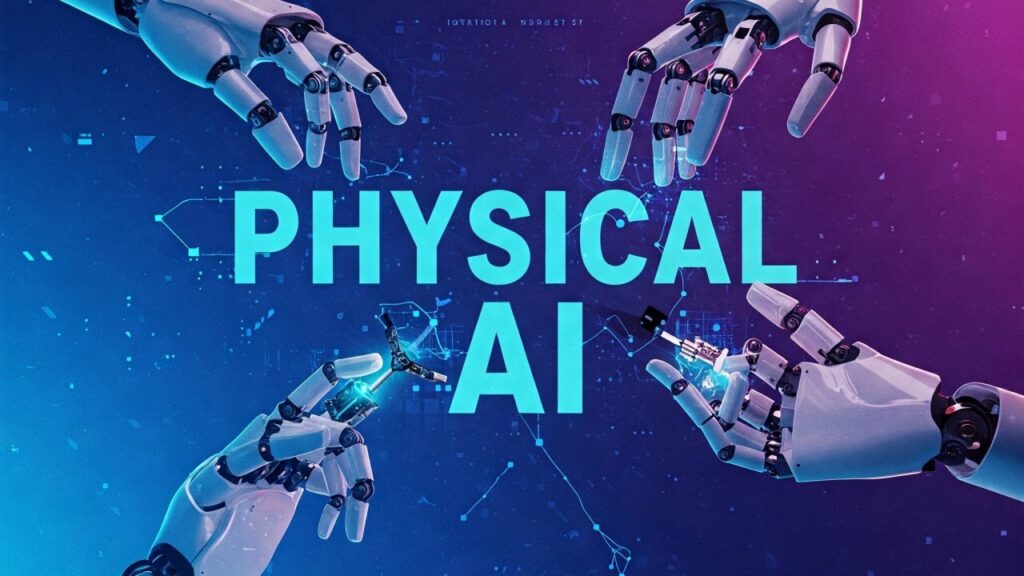
The concept of artificial intelligence has evolved dramatically over the past decade. Initially confined to algorithms operating within virtual environments, AI is now stepping out of the digital realm and into the physical world. This paradigm shift, often referred to as Physical AI, represents a groundbreaking convergence where intelligent systems interact with, manipulate, and adapt to real-world environments in real time. Unlike traditional AI models that process data and generate outputs within software environments, Physical AI embodies intelligence in machines capable of performing tangible actions, thereby bridging the gap between abstract computation and physical execution.
Physical AI powers real-world applications across industries ranging from manufacturing and logistics to healthcare and autonomous vehicles. It integrates advanced robotics, computer vision, sensor fusion, edge computing, and adaptive control systems to create agents that not only perceive their surroundings but also act decisively and dynamically. The ultimate goal of Physical AI is to produce autonomous systems that operate safely, efficiently, and reliably in unstructured, unpredictable environments a feat that pure digital AI cannot accomplish on its own.
Understanding the Core Components of Physical AI
To fully appreciate how Physical AI powers the real world, it is essential to dissect its fundamental building blocks. These components work in concert to enable machines to perform tasks that demand both cognitive processing and physical interaction.
A. Perception Systems
Perception is the foundation of Physical AI. Machines must sense and interpret their environment using a suite of sensors including LiDAR, radar, high-resolution cameras, ultrasonic sensors, and inertial measurement units. These sensors generate massive volumes of raw data that must be processed in real time to identify objects, measure distances, detect motion, and understand spatial relationships. Advanced computer vision algorithms, often powered by deep learning neural networks, transform this sensory data into actionable intelligence, allowing machines to recognize obstacles, read signs, track moving objects, and even anticipate human behavior. Without robust perception, no Physical AI system can operate effectively in dynamic settings.
B. Actuation and Control Mechanisms
Perception alone is insufficient; the system must also initiate physical actions. Actuation involves the conversion of digital commands into mechanical movement through motors, servos, hydraulic systems, and pneumatic actuators. These mechanisms must be precisely controlled to execute complex maneuvers such as grasping delicate objects, navigating uneven terrains, or adjusting force during assembly. Control systems employ classical feedback loops alongside modern reinforcement learning algorithms to fine-tune movements, ensuring that actions are both accurate and adaptive. The interplay between perception and actuation creates a closed-loop system where continuous monitoring and adjustment occur in milliseconds.
C. Embodied Cognition and Decision-Making
Physical AI systems must think on their feet literally and metaphorically. Embodied cognition refers to the concept that intelligence emerges from the interaction between the agent’s body and its environment. Decision-making algorithms, including model predictive control, behavior trees, and hierarchical reinforcement learning, enable the system to evaluate possible actions, predict outcomes, and select optimal strategies. These decisions are not made in isolation; they are influenced by the system’s physical constraints, energy reserves, and mission objectives. Moreover, advanced systems incorporate memory mechanisms that allow them to learn from past experiences, thereby improving performance over time without human intervention.
D. Connectivity and Edge Computing
Physical AI demands low-latency communication between sensors, processors, and actuators. Edge computing brings processing power closer to the source of data generation, reducing reliance on cloud infrastructure and minimizing response delays. This is critical for applications such as autonomous driving, where a split-second delay can have catastrophic consequences. Edge devices equipped with specialized AI chips, such as graphics processing units (GPUs) and tensor processing units (TPUs), perform on-the-fly inference and decision-making, ensuring that the system remains responsive even in bandwidth-constrained environments. Meanwhile, 5G and future 6G networks provide high-speed, reliable connectivity that facilitates coordination among multiple Physical AI agents operating simultaneously.
How Physical AI Powers Diverse Industries
The transformative potential of Physical AI is best illustrated through its applications across various sectors. Each industry leverages the technology differently, yet all share a common thread: the replacement of manual, repetitive, or hazardous tasks with autonomous, intelligent systems that enhance productivity, safety, and quality.
1. Manufacturing and Industrial Automation
Physical AI has revolutionized factory floors by introducing intelligent robots capable of adaptive assembly, welding, painting, and material handling. Unlike traditional industrial robots that follow rigid preprogrammed paths, Physical AI-powered robots use real-time sensory feedback to adjust their actions based on part variations, tool wear, and environmental conditions. Collaborative robots, or cobots, work alongside human operators, sharing workspaces and assisting with heavy lifting or precision tasks. Predictive maintenance systems employ vibration analysis and thermal imaging to detect equipment anomalies before they lead to unplanned downtime, thereby saving millions in operational costs. Furthermore, autonomous mobile robots (AMRs) navigate complex factory layouts, transporting materials between workstations without the need for fixed guide rails or magnetic tapes.
2. Logistics and Supply Chain Management
In warehouses and distribution centers, Physical AI enables rapid, error-free order fulfillment. Autonomous picking systems use robotic arms equipped with suction grippers or soft manipulators to retrieve items from bins, shelves, and conveyor belts. Computer vision identifies individual products despite variations in packaging, lighting, and orientation. Meanwhile, autonomous drones and ground vehicles traverse sprawling facilities, performing inventory counts and cycle audits in a fraction of the time required by human workers. Outside the warehouse, self-driving trucks and delivery robots promise to revolutionize last-mile logistics, reducing delivery times and lowering carbon emissions through optimized routing and platooning strategies. The integration of Physical AI with warehouse management systems ensures seamless coordination between physical operations and digital inventory databases.
3. Healthcare and Medical Robotics
Physical AI is making significant inroads into healthcare, where precision and reliability are paramount. Surgical robots equipped with haptic feedback and advanced imaging capabilities assist surgeons in performing minimally invasive procedures with enhanced dexterity and visualization. These systems compensate for natural hand tremors and provide submillimeter accuracy, leading to shorter recovery times and reduced complication rates. Beyond the operating room, Physical AI powers rehabilitation exoskeletons that help patients regain mobility after strokes or spinal cord injuries. Autonomous disinfection robots use ultraviolet light or hydrogen peroxide vapor to sanitize hospital rooms, reducing the risk of healthcare-associated infections. In elderly care, companion robots monitor vital signs, remind patients to take medication, and even engage in social interactions to combat loneliness.
4. Autonomous Vehicles and Transportation
Perhaps the most visible application of Physical AI is in the development of self-driving cars, trucks, and aerial vehicles. These systems integrate perception, planning, and control into a cohesive framework that navigates complex urban environments, adheres to traffic regulations, and responds to unpredictable events such as sudden pedestrian crossings or road debris. Sensor fusion combines data from cameras, radar, and LiDAR to create a comprehensive 360-degree view of the vehicle’s surroundings, while deep learning models interpret traffic signs, lane markings, and traffic light states. Motion planning algorithms generate safe trajectories that account for kinematic constraints, weather conditions, and interaction with other road users. Meanwhile, vehicle-to-everything (V2X) communication enables autonomous vehicles to exchange information with infrastructure, other vehicles, and even pedestrians, further enhancing safety and traffic flow.
5. Agriculture and Environmental Monitoring
Physical AI is also transforming agriculture by enabling precision farming techniques that optimize yields while minimizing resource consumption. Autonomous tractors and harvesters use GPS guidance and computer vision to plant seeds, apply fertilizers, and harvest crops with unprecedented accuracy. Drones equipped with multispectral cameras monitor crop health, detect pest infestations, and assess soil moisture levels, providing farmers with actionable insights that guide irrigation and pesticide application. In forestry and environmental conservation, Physical AI-powered robots perform reforestation by planting saplings in deforested areas, while underwater autonomous vehicles map ocean floors and monitor marine ecosystems. These applications not only enhance productivity but also contribute to sustainable resource management and climate change mitigation.
6. Construction and Infrastructure
The construction industry, historically resistant to automation, is beginning to embrace Physical AI for tasks such as bricklaying, concrete spraying, and structural inspection. Autonomous bulldozers and excavators operate on construction sites, moving earth and grading surfaces according to digital site plans. Drones capture aerial imagery to monitor progress and detect deviations from blueprints, enabling real-time quality control. Physical AI also plays a role in infrastructure maintenance, where climbing robots inspect bridges, dams, and wind turbines for cracks, corrosion, and fatigue. By reducing human exposure to dangerous heights and confined spaces, these systems significantly improve worker safety.
The Role of Simulation and Digital Twins in Physical AI
One of the most powerful enablers of Physical AI is the use of simulation environments and digital twins. These virtual replicas of physical systems allow engineers to train AI models, test algorithms, and validate performance without risking damage to expensive equipment or endangering human lives. Simulation accelerates the development cycle by generating millions of training scenarios that cover rare or hazardous conditions that would be impractical to replicate in the real world. Digital twins, on the other hand, provide continuous monitoring and predictive analytics by mirroring the current state of physical assets, enabling proactive maintenance and performance optimization. The synergy between simulation and reality ensures that Physical AI systems are robust, adaptable, and safe from the moment they are deployed.
Challenges and Limitations of Physical AI
Despite its immense potential, Physical AI faces several formidable challenges that must be addressed before widespread adoption becomes feasible.
A. Safety and Reliability
Physical AI systems operate in environments shared with humans, making safety a paramount concern. Ensuring that these systems behave predictably and fail gracefully is a daunting task, especially given the inherent uncertainty of real-world conditions. Certification and regulatory frameworks are still evolving, and there is no universal standard for evaluating the safety of autonomous physical agents. Rigorous testing, redundancy mechanisms, and continuous monitoring are essential but significantly increase development costs and time.
B. Data Scarcity and Generalization
Training Physical AI models requires vast amounts of labeled data that capture the diversity of real-world scenarios. However, collecting such data is often expensive, time-consuming, and fraught with privacy concerns. Furthermore, models trained in simulation may not generalize well to physical environments due to differences in lighting, texture, and dynamics—a phenomenon known as the sim-to-real gap. Bridging this gap necessitates domain adaptation techniques, transfer learning, and hybrid approaches that blend simulated and real data.
C. Energy Efficiency and Hardware Constraints
Physical AI systems demand substantial computational resources, leading to high energy consumption and heat generation. Battery-powered robots and vehicles face particularly stringent constraints, as processing power competes with locomotion and actuation for limited energy reserves. Advances in low-power AI chips, energy-harvesting technologies, and efficient algorithms are critical to extending operational endurance and reducing environmental impact.
D. Ethical and Social Implications
The deployment of Physical AI raises profound ethical questions concerning job displacement, privacy, surveillance, and accountability. As machines take over tasks previously performed by humans, workforce retraining and social safety nets become imperative. Additionally, the use of Physical AI in surveillance and law enforcement sparks debates about civil liberties and bias. Ensuring that these technologies are developed and deployed responsibly requires multidisciplinary collaboration among engineers, ethicists, policymakers, and community stakeholders.
Future Directions and Emerging Trends
The trajectory of Physical AI points toward increasingly sophisticated systems that blur the boundaries between the physical and digital worlds.
A. Swarm Intelligence and Multi-Agent Systems
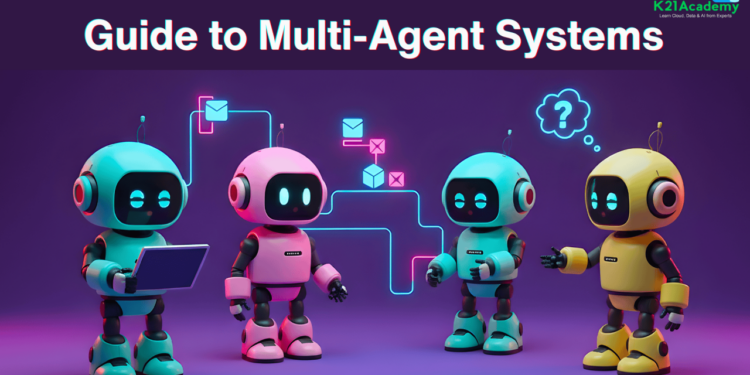
Inspired by the collective behavior of insects and birds, swarm intelligence involves coordinating large numbers of simple agents to accomplish complex tasks. Swarms of drones can perform search-and-rescue missions, agricultural pollination, or environmental mapping with robustness and scalability that single large robots cannot match. Multi-agent reinforcement learning enables these swarms to adapt dynamically to changing conditions and communication failures, making them resilient and flexible.
B. Soft Robotics and Bio-Inspired Design
Traditional rigid robots are giving way to soft robots made from compliant materials that mimic biological tissues. Soft robots offer superior adaptability, safer human interaction, and the ability to navigate confined or delicate environments. Advances in 3D printing, shape-memory alloys, and electroactive polymers are driving this trend, opening up applications in medical devices, wearable technology, and underwater exploration.
C. Human-Robot Collaboration and Intuitive Interfaces
The future of Physical AI is not about replacing humans but augmenting human capabilities through seamless collaboration. Intuitive interfaces, including voice commands, gesture recognition, and brain-computer interfaces, will allow users to instruct and supervise Physical AI systems effortlessly. Shared autonomy, where the system and human operator jointly control tasks, will become increasingly common, leveraging the strengths of both parties.
D. Continuous Learning and Adaptation
Physical AI systems will move beyond static training to embrace lifelong learning, where they continuously update their models based on new experiences. This capability is particularly important for long-duration missions, such as space exploration or deep-sea operations, where no human intervention is possible. Online learning algorithms, meta-learning, and neuromorphic computing are key research areas that will enable this adaptive behavior.
Conclusion

Physical AI represents a monumental leap forward in our quest to create intelligent systems that not only think but also act in the real world. By integrating perception, actuation, decision-making, and connectivity, these systems are revolutionizing industries from manufacturing and healthcare to agriculture and transportation. While challenges related to safety, data, energy, and ethics remain, ongoing research and innovation are steadily overcoming these hurdles. As Physical AI continues to evolve, it promises to unlock unprecedented levels of efficiency, safety, and sustainability, fundamentally reshaping how we interact with technology and with each other. The physical world is no longer beyond the reach of artificial intelligence it is its new frontier, and the possibilities are boundless.