
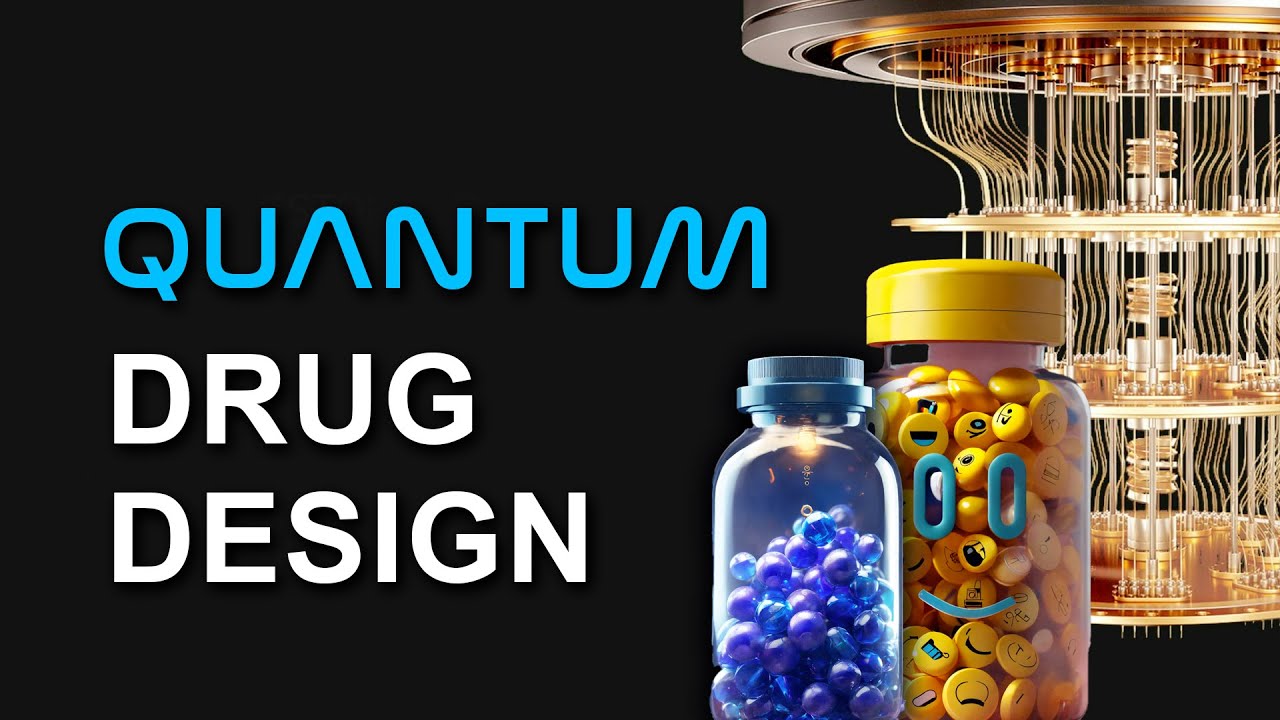
The pharmaceutical industry stands at a critical juncture. Developing a single new drug typically requires over a decade of research and billions of dollars in investment, with success rates hovering around a mere 10% . This inefficiency stems largely from a fundamental problem: classical computers struggle to accurately model the quantum mechanical interactions that govern molecular behavior. The chemical space of potential drug compounds is estimated at a staggering 10^60 molecules, far exceeding what traditional algorithms can efficiently explore . However, a revolutionary solution is emerging in the form of quantum simulation, a technology that promises to transform drug discovery by harnessing the very principles of quantum mechanics to model molecular interactions with unprecedented accuracy and speed.
Quantum simulation represents a paradigm shift in how we approach pharmaceutical research. Unlike classical computers that process information in binary bits of zeros and ones, quantum computers use quantum bits or qubits that can exist in multiple states simultaneously through superposition and entanglement . This fundamental difference allows quantum systems to process complex molecular information in ways that classical computers cannot replicate. The promise is simple yet profound: if we want to simulate nature, we need to use quantum mechanics, as Richard Feynman famously observed .
Understanding the Quantum Simulation Revolution
The application of quantum simulation to drug discovery addresses a fundamental computational bottleneck. When researchers attempt to model how a potential drug molecule interacts with its biological target, they must solve complex quantum mechanical equations that describe electron behavior, bonding patterns, and molecular dynamics. Classical computers use approximations like Density Functional Theory (DFT) and Hartree-Fock methods, which while powerful, face fundamental limitations. These approximations are not systematically improvable and can fail entirely for certain systems, particularly those involving strong electron correlation or transition metals .
Quantum simulation offers a more elegant solution. By encoding molecular systems directly into quantum states, researchers can model electron correlation, polarization, and protonation dynamics with far greater accuracy. This becomes particularly crucial for understanding drug-target interactions, where subtle quantum effects can determine binding affinity, selectivity, and safety profiles . The ability to accurately predict binding free energies represents one of the most significant challenges in drug discovery, and quantum simulation provides a pathway to address this challenge systematically.
Current Capabilities and Hardware Platforms
The current generation of quantum computers falls into what researchers call the Noisy Intermediate-Scale Quantum (NISQ) era. These devices contain approximately 50 to several hundred qubits but lack full quantum error correction capabilities . Despite these limitations, significant progress has been made in demonstrating quantum simulation’s potential for pharmaceutical applications.
Three primary hardware platforms are currently leading the effort in quantum chemistry and drug discovery applications:
A. Superconducting circuits utilize Josephson devices operating at millikelvin temperatures, offering very fast gate speeds and mature control electronics. Their rapid cycle times make them particularly well-suited for hybrid algorithms like the Variational Quantum Eigensolver (VQE) . Companies like IBM and Google have made significant investments in this technology, with Google’s recent Willow platform demonstrating improved fidelity in quantum operations .
B. Trapped ion systems encode qubits in internal atomic states held by electromagnetic fields, providing long coherence times and all-to-all connectivity within a trap . This architecture offers superior precision for high-accuracy simulations of small molecules, making it attractive for pharmaceutical research requiring exact calculations .
C. Neutral atom platforms arrange qubits in optical tweezers or lattices with entanglement mediated by Rydberg interactions, allowing flexible geometries and large arrays . This technology offers unique opportunities for mapping molecular structures and performing analog simulations of model Hamiltonians relevant to drug discovery .
Quantum Algorithms for Drug Discovery
Several quantum algorithms have emerged as promising tools for pharmaceutical research. The Variational Quantum Eigensolver (VQE) represents one of the most developed approaches for NISQ-era devices. VQE combines quantum state preparation on quantum hardware with classical optimization routines to iteratively minimize energy expectation values, ultimately estimating molecular ground-state energies . For drug discovery, VQE has been applied in proof-of-concept studies to calculate molecular energies of small pharmacophores, evaluate binding affinities, and explore potential energy surfaces relevant to reaction mechanisms in enzymatic catalysis .
Quantum Phase Estimation (QPE) represents a more advanced algorithm that can achieve exponential speedups over classical methods for molecular energy calculations. Studies have shown that quantum computing may become advantageous for systems requiring approximately 50 orbitals in the active space, particularly for complex molecules like cytochrome P450 enzymes that are crucial for drug metabolism . This crossover point is significant because P450 enzymes are responsible for metabolizing the majority of drugs, making accurate modeling essential for predicting drug interactions and toxicity.
The field of Quantum Machine Learning (QML) has also shown remarkable promise. By combining quantum computing with artificial intelligence, QML enables more accurate property prediction, docking simulations, and de novo drug design . Quantum neural networks have demonstrated improved classification accuracy in diagnostic applications, with one study showing tumor classification accuracy improved from approximately 77% to 84% using hybrid quantum-classical systems .
Translational Integration and Current Applications
While quantum simulation shows immense promise, translating these capabilities into practical drug discovery workflows requires addressing several challenges. Researchers have proposed a three-gate framework for evaluating quantum technologies in pharmaceutical applications :
A. Physics Validity ensures that the computational method correctly encodes the relevant quantum mechanical model for the system under study, including appropriate treatment of electron correlation, spin-orbit coupling, and boundary conditions .
B. Computational Feasibility demands that the hardware-software stack delivers reliable, reproducible results at the scale required for pharmaceutical decision-making, encompassing qubit count, coherence times, gate fidelities, and error correction overhead .
C. Biological Relevance requires that the computed or measured quantity demonstrably changes experimental decisions and ultimately improves clinical outcomes .
Recent developments have demonstrated practical progress in all three areas. The launch of platforms like QIDO (Quantum-Integrated Discovery Orchestrator) by Mitsui, QSimulate, and Quantinuum represents a significant step toward industrial application. This platform integrates high-performance quantum chemistry workflows with quantum computing, achieving up to ten times higher accuracy in simulations of complex molecules compared to open-source software . QIDO enables automated identification of reaction coordinates, mapping of strongly correlated systems to compact Hamiltonians, and optimized energy calculations using quantum hardware .
Another promising development is the CovAngelo platform, which implements a quantum-in-quantum-in-classical multiscale embedding model that integrates molecular dynamics with quantum-information-enhanced density matrix embedding theory . This platform has demonstrated the ability to compute full reaction energy profiles and barriers for covalent docking at reduced computational cost, with resource estimates indicating potential speedups of up to 20x .
Applications in Specific Drug Discovery Challenges
The impact of quantum simulation extends across multiple areas of pharmaceutical research. In covalent inhibitor design, researchers are using quantum algorithms to predict the properties of covalent warheads, the reactive sites that form irreversible bonds with target proteins. This work has revealed that quantum features, or “quantum fingerprints,” can provide human-interpretable metrics and input for machine learning approaches, offering new insights into the formation of covalent bonds in the complex environment of enzymes .
For understanding non-covalent interactions, researchers have implemented Symmetry-Adapted Perturbation Theory (SAPT) on quantum hardware, enabling better understanding of binding properties in enzyme systems. Studies have shown that only quantum-level models can correctly capture the interactions that drive optimal compound binding, suggesting that quantum approaches may be necessary for achieving the accuracy required to address challenging targets .
Quantum simulation also shows particular promise for systems where classical methods struggle. Metalloproteins like cytochrome P450, iron-containing enzymes crucial for drug metabolism, present significant challenges for standard computational chemistry . By enabling more accurate modeling of these systems, quantum simulation could help predict drug metabolism, avoid toxic metabolites, and design compounds with better pharmacokinetic properties.
Future Prospects and Integration with AI

The future of quantum simulation in drug discovery lies in its integration with classical computing and artificial intelligence. Hybrid quantum-classical workflows are already enabling gene network inference and prioritization of genetic variants of uncertain significance . As quantum hardware continues to improve, researchers envision a future where quantum simulation enables in silico modeling of entire biological systems, allowing clinicians to test therapies in virtual patients before real-world application .
The emergence of quantum-inspired classical algorithms represents another important development. These approaches, which apply insights from quantum information theory to classical computing, have been shown to deliver practical insights and results in drug discovery applications . For example, integrating quantum mechanically refined ligand partial charges with classical free energy perturbation methods has achieved accuracy comparable to contemporary FEP protocols while reducing computational costs by approximately 20-fold .
Challenges and Considerations
Despite the remarkable progress, several challenges must be addressed before quantum simulation becomes routine in pharmaceutical development. Current quantum devices face limitations in qubit counts, coherence times, and gate error rates, making quantum computations susceptible to noise and decoherence . Error mitigation strategies, while essential for extracting meaningful results from current hardware, introduce limitations regarding bias and reproducibility that must be rigorously characterized .
The field also faces challenges in demonstrating practical advantage over classical methods. Even perfect electronic energies may not translate to better clinical candidates when binding is governed by solvation, conformational entropy, and cellular context rather than gas-phase electronic structure . This underscores the need for controlled benchmarks aligned with reproducibility expectations comparable to those evolving for AI/ML-driven methods in regulated contexts .
Conclusion

Quantum simulation for drugs represents one of the most promising frontiers in pharmaceutical research. By harnessing the power of quantum mechanics to model molecular interactions with unprecedented accuracy, this technology offers the potential to transform drug discovery, reduce development timelines, and bring more effective therapies to patients. While challenges remain, the convergence of advances in quantum hardware, algorithms, and hybrid quantum-classical workflows is bringing this vision closer to reality.
The near-term translational value appears most substantial for quantum sensing and device/physical platforms with established clinical evidence, with quantum computing remaining principally hypothesis-generating until fault tolerance and reproducible advantage are established . However, as quantum hardware evolves and AI-aligned quantum algorithms mature, their integration holds transformative potential that may eventually shorten diagnostic timelines, improve therapeutic precision, and make biomedical innovation more globally accessible .
The journey toward quantum-enabled drug discovery requires continued investment in hardware development, algorithmic innovation, and validation against classical baselines. It demands collaboration across disciplines, from physics and chemistry to biology and medicine. Most importantly, it requires a focus on validated decision impact, ensuring that quantum approaches deliver genuine value in the drug discovery pipeline. The rewards of this endeavor are immense, promising a future where the discovery of life-saving medicines is faster, more efficient, and more accessible than ever before.