
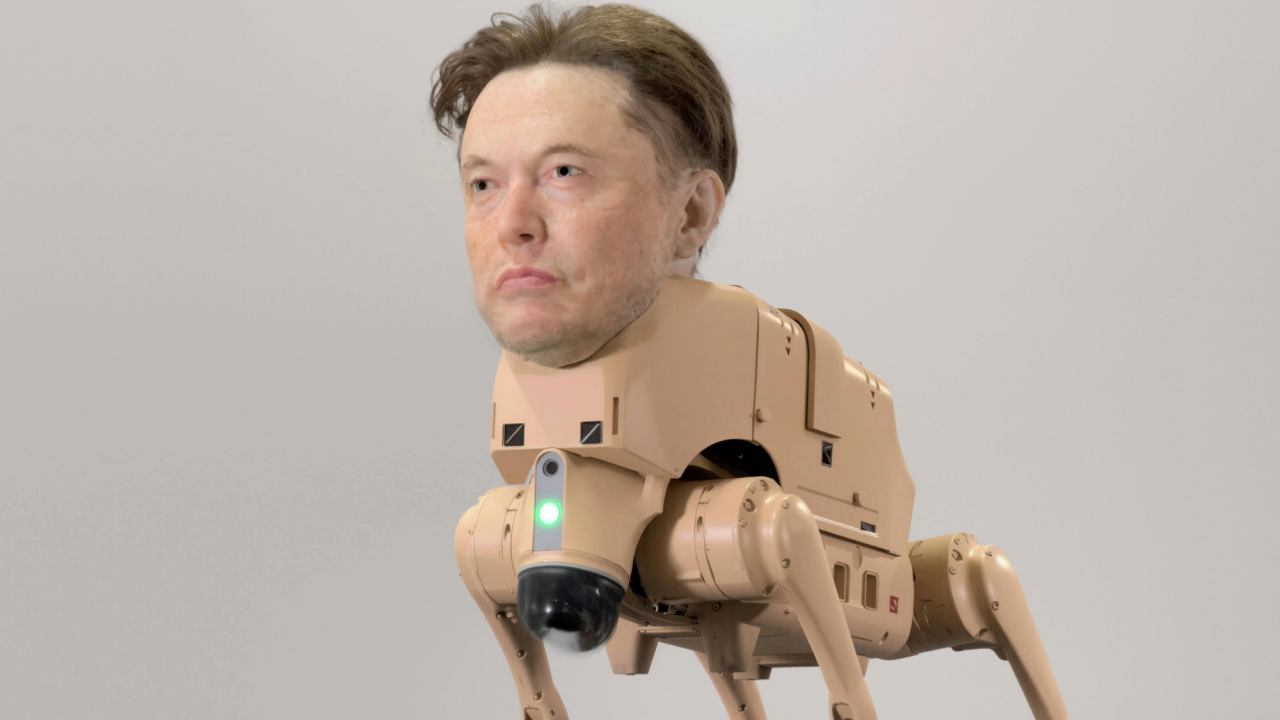
In the heart of Berlin’s Neue Nationalgalerie, a surreal spectacle unfolds daily as robotic dogs equipped with hyper-realistic silicone heads of tech billionaires like Elon Musk, Jeff Bezos, and Mark Zuckerberg roam freely, observing visitors and producing AI-generated art. This provocative installation, titled “Regular Animals” by renowned digital artist Mike Winkelmann, known professionally as Beeple, has captured global attention by transforming familiar tech figures into mechanical observers that comment on how algorithms and digital systems shape modern perception . The exhibition explores themes of surveillance, identity, and the growing influence of artificial intelligence in everyday artistic expression and cultural interpretation .
The Artistic Vision Behind Regular Animals
A Billionaire Canine Menagerie
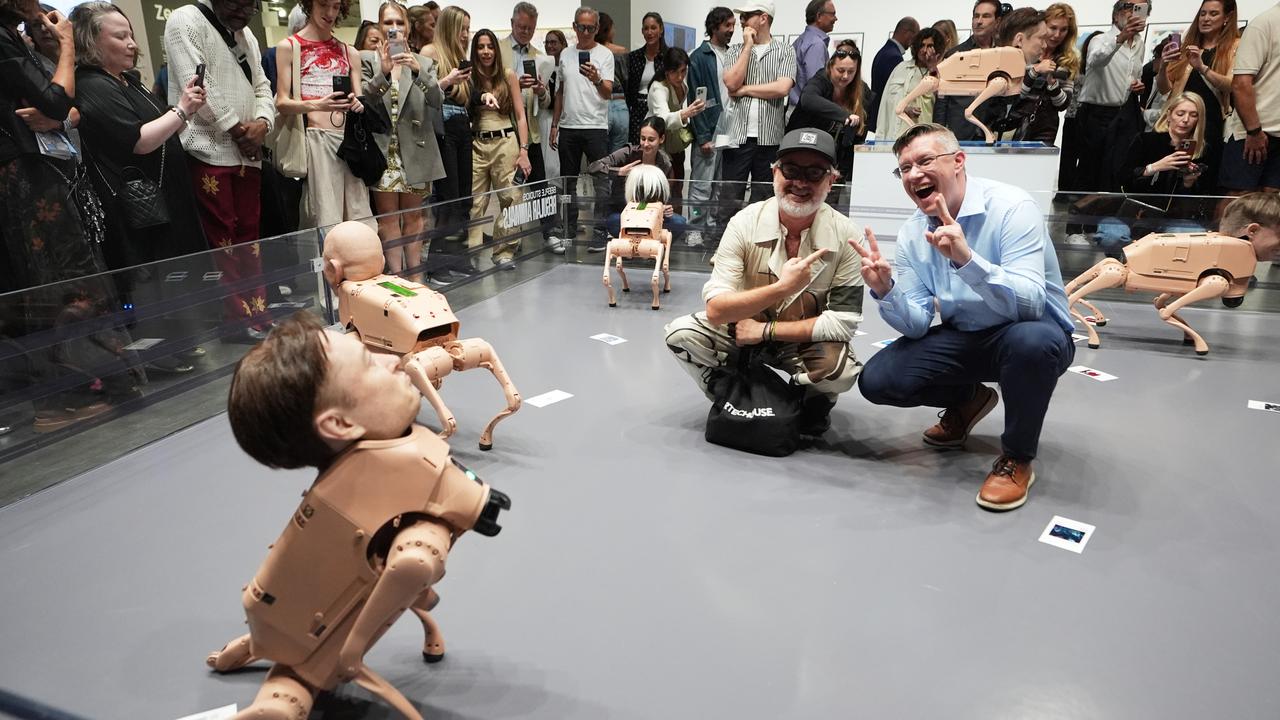
Each robotic dog operates as a self-contained system combining mobility, image capture, and generative AI processing. Built on quadruped platforms, these machines move within the gallery while scanning their environment through embedded cameras. Captured visuals are processed in real time using AI models that reinterpret scenes in distinct styles . A dog modelled on Pablo Picasso renders fragmented, Cubist compositions, while one inspired by Andy Warhol produces bold pop-art imagery. In contrast, dogs bearing the likeness of tech figures represent data-driven filtering rather than artistic interpretation, pointing to how digital systems reshape information .
The resulting images are printed instantly and deposited within the space. Some prints include QR codes that link to blockchain-backed assets, extending the artwork into a digital layer where visitors can access or collect parts of the project . These robots wander aimlessly around their pen and “defecate” printed images of their surroundings in a style associated with whichever celebrity it resembles . The Warhol mutt, for instance, would pass an image in the late artist’s pop art style as rendered by the robot’s AI . This design choice serves as a conceptual tool rather than a simple visual gimmick, bringing the hidden mechanism of digital content generation into something tangible and difficult to ignore .
From NFT Pioneer to Museum Provocateur
Mike Winkelmann gained global recognition in 2021 when his digital collage “Everydays: The First 5000 Days” sold for over $69 million at Christie’s, marking a turning point in the acceptance of digital art and introducing blockchain verification into mainstream art markets . With “Regular Animals,” Beeple expands his practice beyond static digital works, combining robotics, artificial intelligence, and blockchain elements into a unified system that generates and distributes content in real time . This shift reflects broader changes in the creative landscape, where artists increasingly engage with technological infrastructures as part of their work, demonstrating how digital tools are no longer just mediums but active components in shaping artistic output .
Beeple included a model of his own head on some of the dogs, seeming to recognize his own influence as the third most expensive living artist to sell at auction . When he debuted the exhibit at Art Basel 2025 in Miami, he gave away photos excreted by the robots to eager audience members with a certificate that read, “100% organic GMO-free dog sh-t” . The robots are set to expire theoretically “die” in three years, at which point its existence will be “preserved forever on-chain,” according to Beeple .
The Shifting Dynamics of Influence and Perception
Artists vs. Algorithms: The Power Transfer
Beeple’s installation examines how influence over perception has shifted in the digital era. Artists once shaped cultural understanding through visual language, but today, platforms controlled by figures such as Elon Musk and Mark Zuckerberg play a central role in determining what people see online . These platforms rely on recommendation systems that curate content for billions of users, with visibility, reach, and engagement governed by algorithms that operate with limited transparency . Small adjustments to these systems can significantly alter public discourse, affecting news exposure, cultural trends, and social narratives .
Unlike traditional institutions, these systems can be modified instantly without formal approval processes. By presenting this influence in physical form, the installation makes an abstract system visible and easier to question . Beeple argues that the view of the world today is now shaped by tech billionaires who possess algorithms that dictate what society sees. “That’s an immense amount of power that I don’t think we’ve fully understood, especially because when they want to make a change, they don’t need to lobby the U.N.,” he explained. “They don’t need to get something through Congress or the EU, they just wake up and change these algorithms” .
The Absurd Element as Critical Commentary
One of the most discussed aspects of the installation is the way the robots produce printed images in a deliberately exaggerated manner. In digital environments, content is generated and distributed continuously through automated systems, with the process remaining largely invisible and encouraging passive consumption. The installation brings that hidden mechanism into view, turning it into something tangible and difficult to ignore . This approach highlights how information is processed, filtered, and delivered at scale, encouraging viewers to think more critically about the origins and reliability of the content they encounter .
The absurd element matters because it uses humor and shock to engage viewers in a conversation about power and perception . As the robot dogs wag their motorized tails and pant electronic peeps, a wave of recognition hits gallery visitors. One visitor, 63-year-old Corien Bogels, expressed this sentiment perfectly: “First, I was laughing because it was so funny. Then after I saw it was Elon Musk and Zuckerberg, I was quite surprised because it’s so funny and so helpless at the same time” . The dogs are driven by things that they don’t control, yet they are the spitting image of the very people who wield unprecedented control on a vast scale .
The Intersection of Robotics, AI, and Modern Culture
The Broader Context of AI Robotics Development
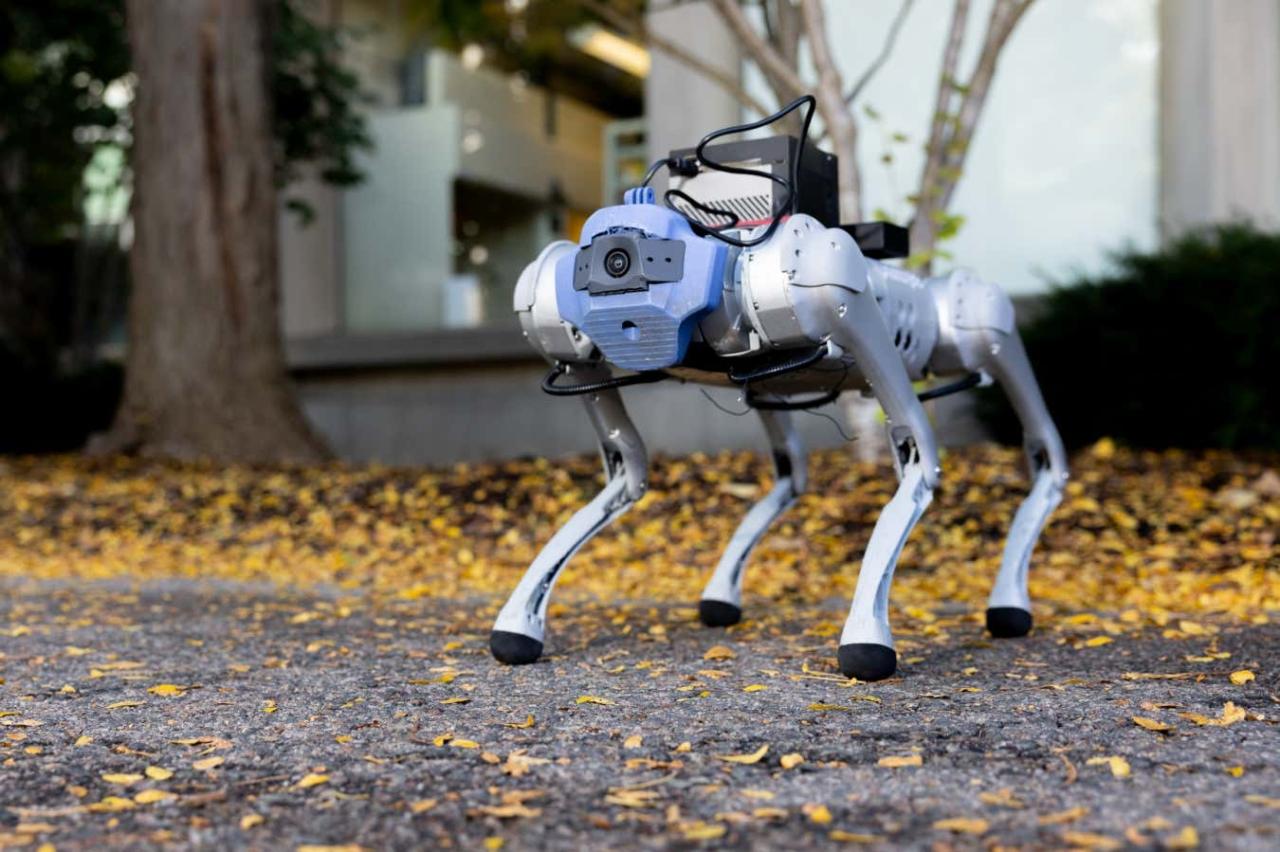
While Beeple’s installation serves as a critical commentary on tech influence, the broader field of AI robotics continues to advance rapidly, with significant investments flowing into the sector despite market concerns about a potential AI bubble . Family offices representing billionaires from the United States, Europe, and Asia are actively investing in artificial intelligence robotics companies, with deal activity continuing to intensify . The venture capital arm of the family office of Bernard Arnault, France’s richest person, participated in the Series A funding round of Humanoid, a London-based industrial robotics manufacturer . Jeff Bezos’s investment vehicle has increased its stake in Generalist AI, a U.S.-based robotics software startup, while the family office of Azim Premji, India’s software tycoon, is in talks to lead a new funding round for a company focused on general-purpose robotics development .
These investors collectively hold net assets totaling USD 628.5 billion, with their wealth primarily derived from sectors outside artificial intelligence . Other ultra-high-net-worth individuals investing in the AI robotics space include Dan Friedkin, an American billionaire, whose investment firm participated in the Series C financing round of robotics company RobCo, and Alpha Square Group, a New York-based family office, invested in Atoms, an industrial robotics company founded by Uber Technologies co-founder Travis Kalanick . In March, the family office of Austrian investor Harald McPike backed the Series B funding round of Vitestro, a Dutch developer of automated blood-drawing systems .
Practical Applications: From Museum to Mainstream
Beyond the conceptual realm, AI robot dogs are finding practical applications in various sectors. Boston Dynamics is testing Spot, its canine-shaped robot, as a delivery worker that can ride along in trucks and hop out to leave packages at customers’ doorsteps . The delivery-focused version of Spot includes a conveyor belt, with a human worker placing packages on the conveyor belt, followed by Spot walking up to houses and rotating the belt to set them down . The company believes Spot has an advantage over wheeled delivery robots because it can climb stairs, cross gravel, step over curbs, and navigate uneven sidewalks and other obstacles commonly found in residential neighborhoods .
“The company said those ‘last 50 feet’ from the curb to the front door remain one of the hardest parts of the delivery process to automate” . Boston Dynamics is already in talks with major logistics companies to test Spot for making deliveries, with the robot previously used for other applications, from security to site inspections . The company has even tested the robot’s package handling of fragile items, including cartons of eggs, to ensure deliveries remain gentle . For every three packages delivered via Spot, Boston Dynamics thinks they can add another package to the van, significantly improving delivery efficiency .
AI Robot Dogs in Tourism and Public Engagement
In Singapore, five AI-powered robot dogs from China are operating at Sentosa, a popular tourist destination, where they conduct guided tours, perform multiple dance shows, and patrol around to interact with visitors . These robot dogs were developed by Unitree Robotics, a technology company in China, while Mafengwo, a Chinese travel platform, specially trained them for tourism scenarios . Equipped with multilingual interactive narration and multimodal environmental perception capabilities, the robot dogs can actively recognize surrounding environments, understand tourists’ needs, answer questions through reasoning, and interact with visitors through various body movements .
Visitors can not only ask them for directions but also receive personalized recommendations. Families may be guided to family-friendly restaurants, while younger visitors get suggestions for photogenic attractions and social-media-worthy spots. The robot dogs also provide location-based storytelling and explanations, creating a more immersive experience for tourists . So far, more than 5,000 visitors have interacted with the robot dogs, and the feedback has been extremely positive . Another important goal of the pilot project is to continuously collect interaction data through the robot dogs, including high-traffic areas, visitor preferences, and frequently asked questions, which will then be used to further optimize large language models and improve the overall tourism experience .
Thematic Analysis: What Regular Animals Reveals About Our Digital Age
A. The Transformation of Influence and Authority
“Regular Animals” powerfully demonstrates the shift from artists to tech billionaires as the primary shapers of cultural perception. Historically, artists like Picasso and Warhol influenced how society saw the world through their unique visual languages and commentary on consumerism and pop culture . Today, however, algorithms controlled by tech CEOs have replaced artistic vision, creating a new form of authority that operates without the checks and balances traditionally associated with public influence. This transformation raises critical questions about who holds the power to shape reality and what accountability mechanisms exist.
B. The Economics of Perception: From Art to Algorithms
The commercial aspect of Beeple’s work highlights how perception has become a commodity. His earlier NFT sale for $69 million demonstrated how digital art could be monetized, while “Regular Animals” extends this commercialization to the very act of seeing and interpreting. The prints generated by the robotic dogs, sometimes linked to blockchain-backed assets, create a new economy of perception where observation itself becomes a transaction. The artist even gave away photos excreted by the robots to eager audience members with a certificate that read, “100% organic GMO-free dog sh-t,” a satirical take on the commercialization of digital products .
C. Surveillance and Identity in the Algorithmic Age
The installation also forces viewers to confront their own relationship with surveillance and identity in the digital era. By placing recognizable faces of tech billionaires on surveillance-capable robotic platforms, Beeple literalizes the anxiety many feel about being watched and filtered through corporate algorithms. The dogs observe their surroundings before producing AI-generated interpretations, mirroring how tech platforms observe users and produce tailored content based on their behavior. This surveillance economy, often invisible and abstract, becomes concrete and uncomfortable when manifested through robotic forms bearing the faces of those who control the surveillance infrastructure.
D. The Blurring Line Between Physical and Digital Reality
The exhibition reflects the merging of physical and digital environments, with the robotic forms existing in the gallery while their outputs extend into digital networks and blockchain systems . This dual presence mirrors a broader cultural shift in which physical experience and digital representation are increasingly interconnected. The work leaves visitors with an open question: as algorithms play a growing role in shaping perception, the extent of human control over how reality is constructed becomes less certain . This blurring of boundaries represents one of the most profound challenges of our age, affecting everything from how we consume news to how we form relationships and understand ourselves.
Conclusion: The Canine Mirror of Our Digital Souls
Beeple’s “Regular Animals” stands as a powerful artistic statement that forces viewers to confront uncomfortable truths about the digital age. By transforming tech billionaires into robotic dogs that literally “defecate” AI-generated art, the installation suggests that our digital lives shaped by algorithms controlled by a handful of powerful individuals are both absurd and troubling. The work challenges us to think critically about who shapes our perception and what it means to be influenced by systems we cannot see or fully understand.
The broader context of AI robotics development, from Boston Dynamics’ delivery experiments to Singapore’s tourism robots, shows that AI is increasingly integrated into physical spaces. These practical applications, combined with the conceptual art of “Regular Animals,” point to a future where the boundaries between human, machine, and influence become increasingly porous. As algorithms play a growing role in shaping our perception of reality, Beeple’s robotic dogs serve as both a warning and a mirror a reflection of our own digital souls rendered in silicone, steel, and AI-driven imagination.