
Google has officially entered a new frontier in artificial intelligence computing. On October 1, 2026, the tech giant launched its first prototype satellite carrying Tensor Processing Units (TPUs) into low Earth orbit, marking a historic milestone under its ambitious Project Suncatcher initiative. The mission represents Google’s most serious attempt yet to determine whether AI hardware designed for terrestrial data centers can survive and thrive in the unforgiving environment of space. This article explores every dimension of this groundbreaking endeavor, from its technical underpinnings to its far-reaching implications for the future of computing.
Understanding Project Suncatcher
Project Suncatcher is not merely a satellite launch it is a research moonshot with transformative ambitions. Google first unveiled the initiative in November 2025, describing it as a long-term effort to explore whether interconnected, solar-powered satellites equipped with TPU chips could one day form the backbone of large-scale AI computing infrastructure in orbit. The fundamental premise is elegantly simple yet technologically daunting: leverage the near-constant sunlight available in low Earth orbit to power energy-intensive AI workloads that are increasingly straining terrestrial electricity grids.
Google’s research indicates that satellites positioned in low Earth orbit can access sunlight for nearly their entire orbital period, potentially generating up to eight times more solar power than comparable ground-based installations. This energy advantage, combined with the natural cooling properties of space, presents a compelling case for relocating at least a portion of the world’s growing AI computing infrastructure beyond Earth’s atmosphere. However, as the inaugural mission demonstrates, the journey from concept to reality is fraught with engineering challenges that demand rigorous testing and validation.
The Maiden Mission: A Technical Overview
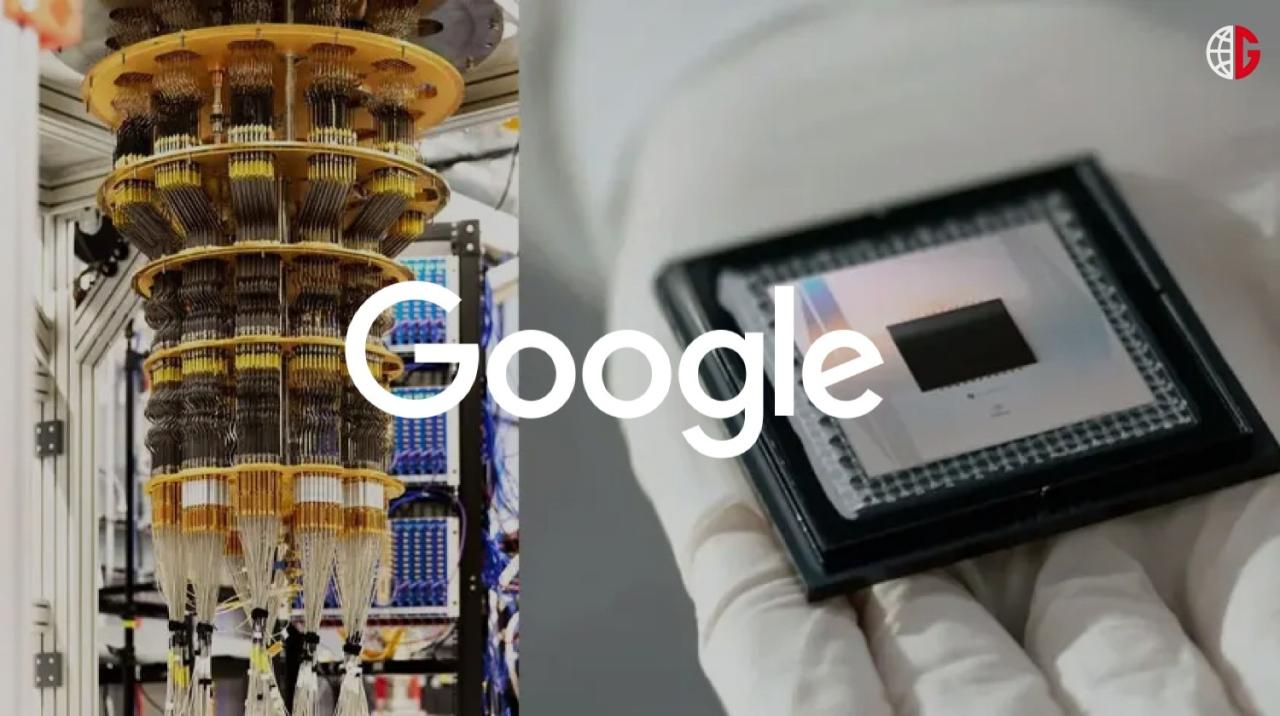
The first Suncatcher satellite, developed in partnership with satellite imaging company Planet Labs, rode aboard SpaceX’s Transporter-18 rideshare mission. The prototype carried four Trillium TPUs Google’s specialized AI processors with a combined computing capacity roughly equivalent to one data center server. The satellite’s solar panels were designed to generate approximately one kilowatt of power, sufficient for running short AI workloads, including limited requests involving Google’s Gemini model.
Perhaps the most striking operational constraint is the system’s brief operating window. According to Travis Beals, Google’s senior director of product management for Project Suncatcher, the TPUs can run for only about 15 minutes before the system must shut down and cool. Without convective cooling impossible in the vacuum of space heat accumulates rapidly, forcing a mandatory shutdown after each brief operating period. This limitation underscores the fundamental thermal management challenges that Google must overcome before orbital data centers can become commercially viable.
Surviving the Rigors of Launch
The journey to orbit subjects spacecraft to extreme physical stresses that can destroy delicate electronic components. During a rocket launch, chips can experience forces of 50 to 100 times Earth’s gravity. To prepare for these conditions, Google’s engineers conducted comprehensive vibration tests, shaking the satellite along all three axes to simulate the frequencies and forces encountered during launch.
The company reported that the hardware survived these ground-based tests, a critical validation before committing to the actual launch. As Google noted in its mission documentation, tests of this nature rarely proceed exactly as planned, making the successful vibration testing a significant milestone. Nevertheless, the true test would come during the approximately ten-minute ascent to low Earth orbit, where real-world conditions would either confirm or contradict the laboratory results.
Radiation: The Invisible Threat
Beyond the mechanical stresses of launch, AI chips in space face a more insidious challenge: radiation. Outside the protective shield of Earth’s atmosphere, high-energy particles from cosmic rays and solar activity can interfere with electronics, causing data errors known as “bit flips” where individual bits of stored information spontaneously change from zero to one or vice versa.
Google approached this challenge with characteristic thoroughness. Engineers subjected the Trillium TPUs to a proton beam at the Crocker Nuclear Laboratory at the University of California, Davis, while the processors actively ran machine learning workloads. This testing methodology allowed Google to observe not just whether the chips survived radiation exposure, but how radiation-induced errors affected their computational performance.
The results were encouraging. According to Google, the TPUs withstood a total ionizing radiation dose exceeding what they would be expected to receive during a five-year space mission. Restarting the processors generally corrected the resulting errors, and Google reported no hard failures up to the maximum tested level of 15 kilorad silicon. However, laboratory conditions cannot fully replicate the complex, combined effects of launch vibration, radiation, vacuum, sunlight, shadow, and repeated thermal cycling that the satellite would experience in orbit. As Google acknowledged, some things can only be tested in space.
The Cooling Conundrum
Thermal management represents perhaps the most formidable engineering challenge for space-based computing. Terrestrial data centers rely on airflow and convection to remove the tremendous heat generated by AI processors. In the vacuum of space, however, there is no air to carry heat away. The only viable cooling mechanism is radiation—emitting thermal energy directly into the void.
Google’s thermal design pairs heat pipes with radiators, routing heat away from the TPUs through thermal-interface materials and aluminum and copper layers before releasing it through a radiator panel. This approach has been validated in ground-based thermal vacuum chamber tests, but the orbital mission provides the first opportunity to observe how the system performs under actual space conditions.
The cooling challenge is not merely technical it fundamentally shapes what is possible for orbital AI computing. The 15-minute operational window before mandatory cooldown highlights the severity of the constraint. Until Google develops more efficient thermal management systems, orbital data centers will remain limited in their ability to handle sustained, large-scale AI workloads.
The 2027 Laser Link Experiment
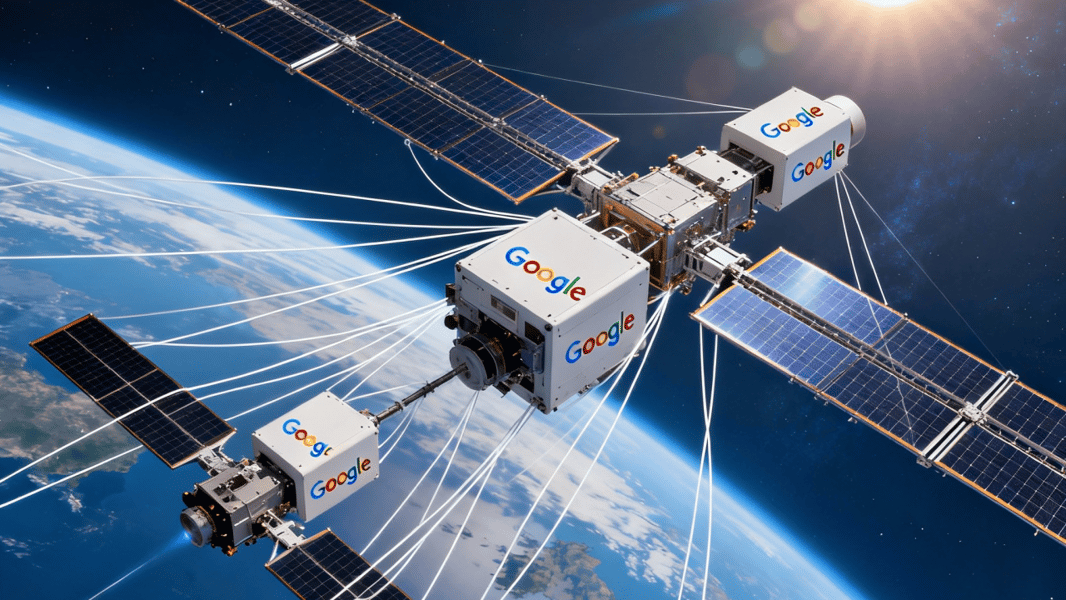
The first Suncatcher mission represents only the beginning of Google’s ambitious roadmap. The company has announced plans to launch two satellites in 2027 to test the high-bandwidth laser links that would be essential for connecting future computing clusters. This next phase addresses a critical architectural requirement: enabling multiple satellites to operate as a distributed AI computing system.
Unlike existing optical satellite communication systems designed for low-bandwidth, long-distance transmissions, Google’s design calls for extremely high bandwidth between satellites flying in relatively close formation. Keeping these laser links precisely aligned requires accurate knowledge of each satellite’s position relative to its neighbors a precision challenge that Google compares to hitting a coin-sized target from miles away while both points are moving.
Google’s full Suncatcher architecture envisions clusters of 81 satellites flying in formation within a one-kilometer radius at approximately 650 kilometers altitude. This orbital shell is already congested with debris, raising concerns about collision risks and the long-term sustainability of such large constellations. Nevertheless, Google views the laser link technology as essential for scaling orbital AI computing to meaningful capacity.
Competitive Landscape and Industry Context
Google is not alone in pursuing space-based AI infrastructure. Nvidia-backed startup Starcloud launched an H100 chip into orbit in November 2025 and has used it to run Google’s Gemma model. SpaceX is separately developing its Starmind program, which envisions orbital satellites carrying localized AI compute powered by solar energy and cooled by the thermal properties of space. SpaceX CEO Elon Musk has publicly endorsed moving a significant share of computing infrastructure into orbit, stating that “the amount of compute in space will obviously round up to 100 percent of all compute”.
This competitive dynamic reflects growing recognition that terrestrial data centers face mounting constraints. Energy costs, land availability, water consumption for cooling, and community opposition to large-scale facilities are all limiting factors. Space offers a potential escape from these constraints but at a cost. Google’s own research estimates that launch prices would need to fall to approximately $200 per kilogram for space computing to compete on cost with terrestrial alternatives.
Expert Skepticism and Practical Hurdles
Despite the technological ambition, industry experts remain cautious about the near-term viability of orbital data centers. High launch costs, engineering constraints, and satellite production bottlenecks present significant obstacles that will take years to overcome. The first Suncatcher mission is explicitly designed to gather engineering data and identify potential failure points rather than demonstrate an operational orbital data center.
The gap between concept and commercial reality is substantial. Even with successful orbital testing, Google would need to address questions of reliability, scalability, maintainability, and cost-effectiveness. Satellites cannot be easily serviced or upgraded once deployed, and their operational lifespan is limited by factors including radiation degradation, component failure, and orbital decay. The economics of space-based computing must account for these constraints relative to the declining costs and improving efficiency of terrestrial alternatives.
What the Mission Will Teach Us
The first Suncatcher mission’s primary value lies in the data it will generate. Ground testing cannot fully replicate the combined effects of launch vibration, radiation, vacuum, sunlight, shadow, and repeated thermal cycling. The orbital mission exists precisely to gather that real-world data, which will inform the design of future satellites and the overall architecture of Google’s space-based computing vision.
Google plans to operate the satellite for approximately one year, though it could remain in orbit for up to six years before atmospheric reentry. During this period, engineers will monitor how the TPUs perform under actual space conditions, how the cooling system functions, and how radiation affects computational reliability over time. These observations will determine whether Google’s approach to space-based AI computing is fundamentally sound or requires significant revision.
The Future of AI Computing Beyond Earth
Project Suncatcher represents more than a technical experiment it embodies a bold reimagining of where and how AI computing can occur. As terrestrial infrastructure faces growing constraints, space offers a compelling alternative: abundant solar energy, natural cooling, and freedom from many of the physical and regulatory limitations of Earth-based data centers.
However, realizing this vision requires solving complex engineering problems that have no terrestrial precedent. Google’s inaugural Suncatcher mission is a crucial first step in that journey a modest but essential experiment that will determine whether the company’s ambitious vision is grounded in reality or merely aspirational. The data gathered from this mission will shape not only Google’s plans but also the broader trajectory of the emerging space computing industry.
Whether orbital data centers ultimately become a significant component of global AI infrastructure remains uncertain. What is clear is that Google has committed to finding out and the first Suncatcher satellite is now in orbit, beginning to answer the questions that will define the next era of computing.