
The race to build practical quantum computers has long been defined by a frustrating trade-off: systems could either be large or reliable, but rarely both. That trade-off is now crumbling. In June 2026, researchers from Quantinuum and Sandia National Laboratories published peer-reviewed results in Nature demonstrating a 98-qubit trapped-ion quantum processor named Helios that achieves record-breaking operational fidelity while maintaining all-to-all connectivity across its entire qubit register. This is not merely another increment in qubit count. It represents a fundamental shift in what quantum hardware can deliver: scale without sacrificing accuracy.
The Helios system achieved single-qubit gate fidelities of 99.9975% and two-qubit gate fidelities of 99.921%, averaged across all operational zones. These figures place Helios in a performance tier that was previously unimaginable for a system of this size. For the first time, a trapped-ion quantum computer has scaled beyond the 50-qubit range without the steep fidelity penalties that historically accompanied such growth. The implications ripple across cryptography, materials science, pharmaceutical discovery, and energy research fields where quantum advantage could unlock solutions that classical supercomputers cannot reach.
This article explores what the 98-qubit milestone actually means, how Helios achieved it, why it matters for the broader quantum ecosystem, and what challenges remain before fault-tolerant quantum computing becomes a reality.
What Is a Qubit, and Why Does 98 Matter?
A qubit, or quantum bit, is the fundamental unit of quantum information. Unlike a classical bit, which exists as either 0 or 1, a qubit can exist in a superposition of both states simultaneously. This property, combined with entanglement the ability of qubits to correlate their states across distances enables quantum computers to explore vast computational spaces in ways classical machines cannot.
But qubits are fragile. They lose their quantum state through interactions with the environment, a process called decoherence. Every operation performed on a qubit introduces a small probability of error. As systems grow larger, these errors compound, and the computational advantage evaporates. This is why qubit count alone is a misleading metric. A 1,000-qubit machine with high error rates is less useful than a 50-qubit machine with exceptional fidelity.
The significance of 98 qubits lies in the combination of scale and precision. Helios operates well beyond the reach of classical simulation, as confirmed by random circuit sampling benchmarks that demonstrated the system’s ability to perform computations that would overwhelm even the most powerful classical supercomputers. This is not a theoretical claim; it is an experimentally verified boundary crossing.
For context, the first quantum charge-coupled device (QCCD) quantum computer demonstrated just five years ago operated with only six qubits. The jump to 98 qubits, while simultaneously improving fidelity, represents a scaling rate that outpaces Moore’s Law in its early decades.
The Helios Architecture: Trapped Ions and All-to-All Connectivity
Helios is not a superconducting quantum processor. It belongs to a different technological lineage: trapped-ion quantum computing. In this approach, charged atoms—in Helios’s case, barium ions (¹³⁷Ba⁺) are suspended in electromagnetic fields and manipulated with lasers to perform quantum logic operations. Trapped-ion systems have historically demonstrated the highest gate fidelities of any quantum modality, but scaling them to large qubit counts has been an enduring engineering challenge.
Helios overcomes this challenge through three key architectural innovations.
A. Barium Ion Qubits with Scalable Laser Architecture
Earlier trapped-ion systems relied on ytterbium ions, which require complex laser systems for state preparation and manipulation. Helios uses barium ions, which offer a more favorable energy-level structure for optical control. This shift enabled a 99.92% two-qubit gate fidelity while simplifying the laser architecture, making the system more manufacturable and scalable.
B. The Four-Way X Junction
The QCCD architecture separates qubit storage from qubit operation. Ions are shuttled between memory regions and logic regions through junctions. Helios introduces a four-way “X” junction that connects these regions without increasing electrical control complexity or device fabrication difficulty. This design enables a rotatable ion storage ring that links two quantum operation regions, facilitating all-to-all connectivity across the 98-qubit register.
C. Real-Time Compilation of Dynamic Programs
A new classical control stack orchestrates Helios, capable of executing arbitrary quantum programs with all-to-all connectivity and complex control flow logic. This software layer enables real-time compilation, meaning the system can adapt its operation sequence dynamically rather than relying on pre-compiled circuits. This is essential for running practical algorithms that involve conditional logic and mid-circuit measurement.
The Fidelity Numbers: What They Actually Mean
Fidelity is the probability that a quantum operation produces the intended result. A two-qubit gate fidelity of 99.921% means that, on average, 999 out of 1,000 two-qubit operations succeed as intended. While this sounds impressive, the implications for deep circuits are sobering. A computation requiring 10,000 two-qubit gates would accumulate roughly eight errors enough to corrupt the result without error correction.
This is why the Helios results are framed not as a solution, but as a critical step toward fault tolerance. The component infidelities measured 2.5 × 10⁻⁵ for single-qubit gates, 7.9 × 10⁻⁴ for two-qubit gates, and 3.3 × 10⁻⁴ for state preparation and measurement (SPAM) are predictive of system-level performance in random Clifford circuits and random circuit sampling. Crucially, the researchers note that none of these infidelities are fundamentally limited and are likely to improve with further engineering.
The benchmarking was conducted independently by Sandia National Laboratories, which has the longest-running quantum computing program within the U.S. Department of Energy. Sandia researchers contributed a new methodology for measuring mid-circuit measurement performance, a capability essential for error correction and conditional quantum logic. As Sandia’s Robin Blume-Kohout put it, “The most important aspect of quantum computers is not speed, but reliability”.
The Sandia–Quantinuum Partnership: A Model for Public-Private Collaboration
The Helios results emerged from a four-year Cooperative Research and Development Agreement between Sandia National Laboratories and Quantinuum, renewed in May 2026. This partnership exemplifies how national laboratories and private companies can accelerate quantum technology development in ways neither could achieve alone.
Sandia’s contributions extend beyond benchmarking. The laboratory has pioneered integrated photonics technologies energy-efficient chips that transmit information via light through microscopic optical channels for trapped-ion quantum computers. These photonic components promise to reduce energy consumption and improve scalability, addressing one of the most persistent barriers to building larger quantum systems. Sandia designs and tests these components for potential inclusion in future Quantinuum platforms.
The collaboration also underscores the national security dimensions of quantum computing. Sandia assesses emerging opportunities and threats from quantum information science for the U.S. government, covering areas such as cryptography, pharmaceutical research, energy science, and advanced sensing. As Sandia senior manager Mike Descour stated, “As a national resource, we are committed to accelerating quantum computing technology in support of economic and national security”.
Why This Milestone Matters for the Broader Quantum Ecosystem
The 98-qubit Helios milestone is significant not only for what it demonstrates but for what it signals about the trajectory of quantum computing as a whole.
A. It Validates the Trapped-Ion Scaling Path
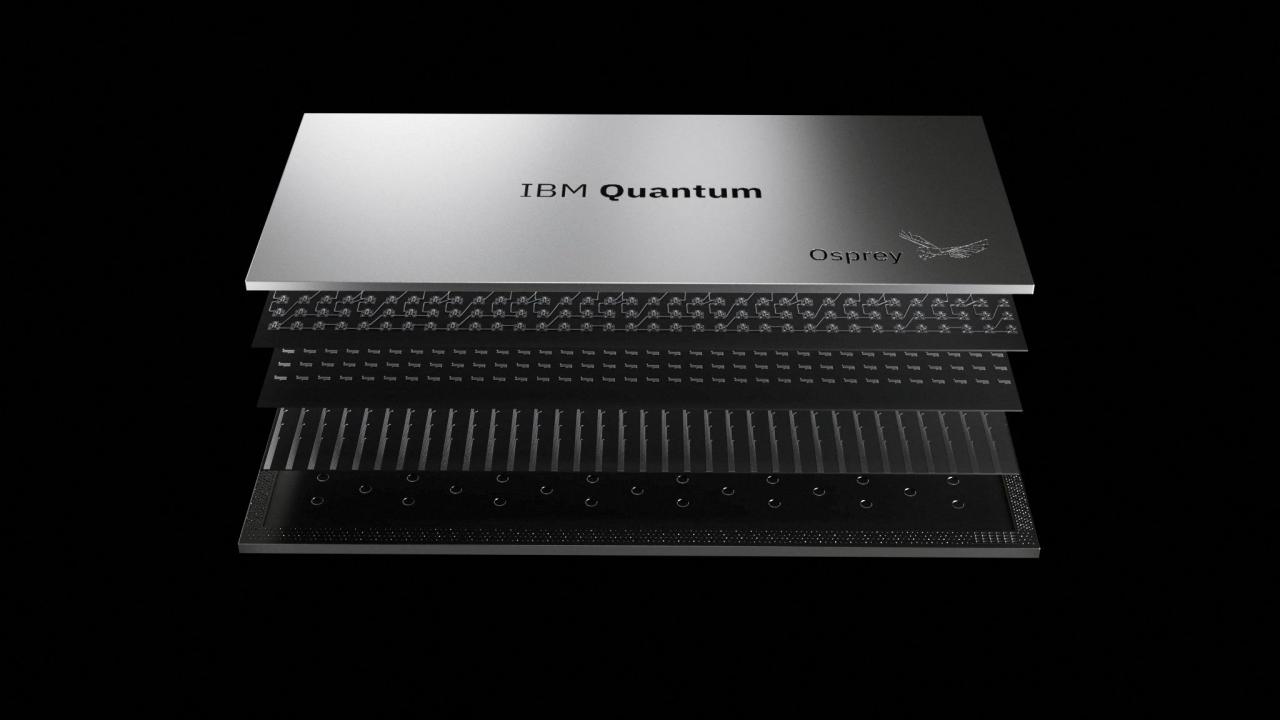
For years, superconducting qubits dominated headlines with rapid increases in qubit count. Google’s Sycamore processor, IBM’s Osprey and Condor systems, and others pushed into the hundreds and even thousands of qubits. However, superconducting qubits suffer from lower gate fidelities and limited connectivity each qubit typically interacts only with its nearest neighbors. Trapped-ion systems offer all-to-all connectivity, meaning any qubit can interact directly with any other, but they have historically been limited to tens of qubits. Helios demonstrates that trapped-ion systems can scale to nearly 100 qubits while maintaining their fidelity advantage.
B. It Sets a New Benchmark for System-Level Performance
The Helios paper reports system-level benchmarks, not just component-level metrics. Random circuit sampling experiments confirmed that the system operates beyond the reach of classical simulation. This is the gold standard for demonstrating quantum computational advantage: if a classical computer cannot reproduce the result in a reasonable time, the quantum system has crossed a meaningful threshold. The fact that Helios achieves this with 98 qubits, rather than the 50–60 qubits typical of earlier demonstrations, represents a substantial advance.
C. It Advances the Path to Fault Tolerance
Fault-tolerant quantum computing requires error rates below a threshold typically around 1% for two-qubit gates so that error correction codes can suppress errors faster than they accumulate. Helios’s 99.921% two-qubit fidelity translates to an error rate of 0.079%, well below the fault-tolerance threshold. This means that Helios-class hardware could, in principle, support error-corrected logical qubits. The researchers note that the component infidelities are predictive of system-level performance in random Clifford circuits, suggesting that the system behaves as its component metrics would predict.
D. It Demonstrates the Value of Independent Verification
The fact that Sandia National Laboratories independently benchmarked and certified Helios’s performance is significant. In a field where marketing claims often outpace peer-reviewed evidence, third-party verification provides credibility. The results were initially posted as a preprint on arXiv and subsequently peer-reviewed and published in Nature, meaning they have been scrutinized by domain experts. This transparency is essential for the field’s long-term health.
Challenges That Remain
Despite the impressive results, the path from 98 qubits to practical, fault-tolerant quantum computers is long and fraught with engineering challenges.
A. Scaling Beyond 98 Qubits
The QCCD architecture is inherently modular, but scaling to thousands of qubits will require more sophisticated ion shuttling, larger junction arrays, and more complex control electronics. The four-way X junction is a step forward, but connecting hundreds of such junctions into a coherent system remains an open engineering problem.
B. Improving Mid-Circuit Measurement
Mid-circuit measurement measuring a qubit without destroying the quantum state of its neighbors is essential for error correction and conditional logic. While Helios demonstrated improved mid-circuit measurement performance, further improvements are needed to support the repeated measurements required by surface codes and other error-correction protocols.
C. Reducing Laser System Complexity
Trapped-ion quantum computers rely on lasers to manipulate qubits. As systems grow, the laser systems become increasingly complex and expensive. Integrated photonics Sandia’s area of expertise promises to reduce this complexity by replacing bulk optical components with chip-scale photonic circuits. However, integrating these photonic components with trapped-ion processors at scale remains a challenge.
D. Demonstrating Practical Applications
Helios has been used for applications in materials science and other domains, but demonstrating a clear quantum advantage for a commercially or scientifically valuable problem remains a future goal. Random circuit sampling proves that quantum computers can do something classical computers cannot, but it does not solve a problem that anyone needs solved.
The Future of Quantum Computing: What Comes Next
The 98-qubit milestone is best understood not as an endpoint but as an inflection point. Several trends converge to suggest that the next five years will see even more rapid progress.
First, the modularity of the QCCD architecture means that scaling is primarily an engineering challenge rather than a physics challenge. The fundamental qubit operations work; the task is to build larger, more reliable systems around them.
Second, the public-private partnership model that produced Helios is replicable. Sandia has similar agreements with several other quantum computing companies, and the laboratory welcomes collaboration with universities, industry, and other national laboratories. This collaborative ecosystem accelerates progress by pooling expertise and resources.
Third, the field is shifting from chasing qubit count to optimizing system-level performance. The Helios paper’s focus on random circuit sampling, mid-circuit measurement, and predictive component infidelities reflects a maturation of the field. Researchers are no longer satisfied with demonstrating that quantum computers can do something interesting; they want to understand precisely how well they can do it and why.
Conclusion: A Milestone That Redefines What Is Possible
The 98-qubit Helios processor is not the largest quantum computer in the world. Superconducting systems have surpassed 1,000 qubits. But Helios may be the most important quantum computer yet built, because it demonstrates that the trapped-ion approach can scale without sacrificing the fidelity that makes quantum computation useful.
The combination of 99.9975% single-qubit fidelity, 99.921% two-qubit fidelity, all-to-all connectivity, and system-level performance beyond classical simulation establishes a new standard for what a quantum processor should deliver. The collaboration between Quantinuum and Sandia National Laboratories shows that public-private partnerships can accelerate progress in ways that neither sector could achieve alone.
Challenges remain scaling to thousands of qubits, improving mid-circuit measurement, reducing laser complexity, and demonstrating practical applications. But the path forward is clearer than ever. The 98-qubit milestone is not a destination. It is a signpost on a road that is rapidly lengthening, and the quantum computing era it heralds is closer than many skeptics believed possible.