

The rapid urbanization sweeping across Southeast Asia has placed unprecedented pressure on cities to innovate, adapt, and transform. Malaysia, with its ambitious smart city agenda and Vision 2030 goals, finds itself at a critical juncture where traditional urban management models are no longer sufficient to meet the demands of growing populations, climate change, and digital disruption. In this context, Shanghai has emerged as an unlikely but powerful source of inspiration not merely as a technological showcase, but as a living laboratory where integrated urban solutions have been tested, refined, and scaled to serve millions. From flood management to digital governance, from autonomous mobility to green infrastructure, Shanghai’s smart city journey offers Malaysia a comprehensive roadmap for building cities that are resilient, inclusive, and future-ready.
This article explores how Shanghai’s smart city innovations are inspiring Malaysia’s urban transformation across multiple dimensions. Through strategic partnerships, technical exchanges, and knowledge transfer, Malaysia is adapting Shanghai’s best practices to its unique local context a process that promises to reshape the nation’s urban landscape for decades to come.
The Twin City Vision: Putrajaya and Shanghai
At the heart of Malaysia’s engagement with Shanghai’s smart city model lies the strategic “twin city” cooperation between Putrajaya and Shanghai. This initiative, formally endorsed by the Malaysian Cabinet, represents a structured framework for expertise exchange and technological collaboration. Dr. Zaliha Mustafa, Minister in the Prime Minister’s Department (Federal Territories), articulated the vision during her official visit to Shanghai in October 2024: strategic twin cities cooperation between the Federal Territories, particularly Putrajaya and Shanghai, will allow Malaysia to learn more about smart city management and innovation-based technological solutions.
The visit focused on sharing expertise in urban regeneration strategies adopted by Shanghai for ten of its key districts, involving the redevelopment of residential, commercial, and industrial areas by 2025. This cooperation is not merely symbolic; it is designed to ensure Malaysia remains at the forefront of adopting modern approaches to urban management. The Federal Territories comprising Kuala Lumpur, Putrajaya, and Labuan are positioned to serve as testbeds for these innovations, with the potential to scale successful models nationwide.
The Sponge City Revolution: Flood Management for a Climate-Resilient Future
One of the most compelling aspects of Shanghai’s smart city model that has captured Malaysia’s attention is the Sponge City concept. Dr. Zaliha noted that the implementation of Sponge City a smart flood management strategy using advanced monitoring technology, including underground sensors was among the innovations that impressed her most.
The Sponge City approach represents a paradigm shift in urban water management. Rather than relying solely on conventional drainage systems, this strategy integrates green infrastructure such as permeable pavements, rain gardens, green roofs, and constructed wetlands with smart monitoring technologies to absorb, store, and purify rainwater where it falls. Underground sensors provide real-time data on water levels, enabling predictive flood management and rapid response to extreme weather events.
For Malaysia, a country that experiences frequent monsoon floods and faces increasing climate volatility, the Sponge City model offers a powerful template. Dr. Zaliha emphasized that this concept not only strengthens the city’s resilience against extreme weather changes but also has the potential to minimize the impact of natural disasters in flood-prone areas. The model could serve as an inspiration for the Federal Territories to integrate green technology into urban planning for a more sustainable future.
Urban Grid Management: Precision Governance Through Technology
Shanghai’s detailed urban grid management system represents another innovation that Malaysia is keen to adopt. The system divides the city into smaller areas monitored using CCTV technology and a public database. This granular approach to urban governance enables authorities to detect issues from infrastructure failures to security concerns in real time and respond with unprecedented speed and precision.
The grid management concept aligns with Malaysia’s efforts to enhance public safety and service delivery. The Malaysian Crime Prevention Foundation (MCPF), following an exchange visit to Shanghai, recommended that Malaysia accelerate the construction of AI-powered police systems and strengthen investment in smart surveillance infrastructure to curb crime. The delegation’s objectives included learning advanced law enforcement techniques from Shanghai police, gaining in-depth understanding of community policing models, observing the application of AI and big data in policing, understanding the strategies behind Shanghai’s low crime rate, and establishing closer bilateral law enforcement networks.
Digital Governance and Citizen-Centric Services
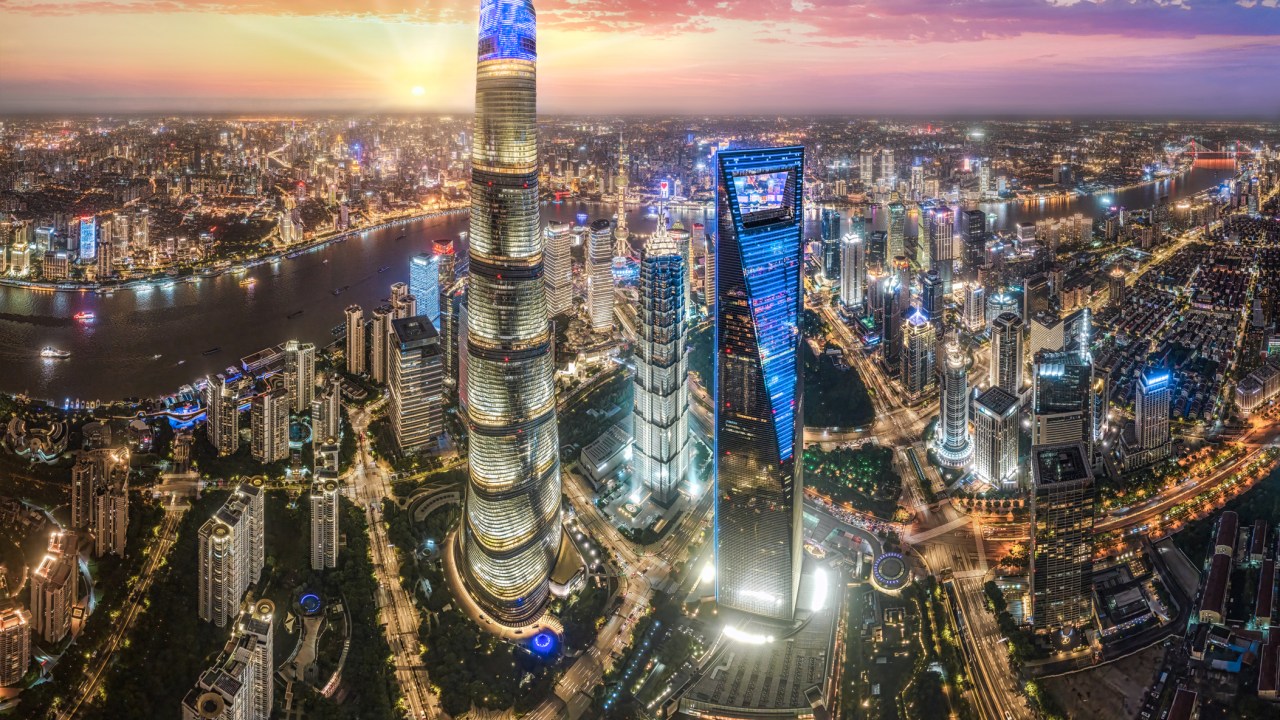
Shanghai’s approach to digital governance has also left a lasting impression on Malaysian policymakers. During the Sarawak delegation’s visit to the Shanghai Huangpu District Administrative Service Centre, officials observed a cutting-edge facility offering one-stop government services to citizens and businesses. The key to this system is an online and offline approach that combines services from specialized service personnel supported by an integrated information system to ensure efficiency and clarity for citizens and businesses seeking government services.
Datuk Michael Tiang, Public Health, Housing and Local Government Deputy Minister, noted: “Smart City is not just about applying technology but combining it with a humanized approach to provide government services efficiently and effectively, as seen here in Shanghai”. This human-centric philosophy resonates deeply with Malaysia’s own vision of smart cities that prioritize citizen well-being and accessibility.
The Sarawak delegation also visited the Shanghai Smart City Development Research Institute, where they gained deep insights into how advanced technologies are being transformed into strategies for inclusive and purposeful smart city implementation. These exchanges have informed Sarawak’s own smart city ambitions, with officials noting that Shanghai’s innovative approach to modern urban management aligns with Sarawak’s goals for sustainable urban growth and modern infrastructure planning.
Autonomous Mobility and Digital Command Centres
Malaysia’s digital ministry has identified autonomous mobility platforms and national command centres as key enablers of smart city development and advanced digital governance. These foundational systems will be critical to future-ready smart cities, digital public services, and responsive governance.
In July 2025, Malaysia’s Minister of Digital, YB Gobind Singh Deo, visited Baidu’s Apollo Park in Jiading, Shanghai, where the delegation experienced Baidu’s Robotaxi RT6 Apollo Go autonomous vehicles. This visit underscored Malaysia’s interest in autonomous mobility solutions and the potential for Shanghai-based technologies to be adapted for Malaysian cities.
The Perak state government has been particularly proactive in studying Shanghai’s command centre systems. In May 2026, a Perak delegation led by Menteri Besar Datuk Seri Saarani Mohamad visited Taopu Smart City in Shanghai to study integrated technology and urban management systems. Taopu Smart City was once an industrial zone before being transformed into a modern smart district that integrates physical planning, digital technology, building management, security monitoring, energy efficiency, and city operations.
The insights from this visit are highly relevant to Perak’s smart city agenda, particularly in strengthening the Ipoh Integrated Operation Centre (IIOC), which is already operating at the city level. The knowledge gained will also serve as an early reference for the state’s preparations to develop the Perak State Command Centre, envisioned as a vital integrated platform to support operational monitoring, data coordination, cross-agency response, and faster data-driven decision-making.
Digital Twin Cities and Cross-Border Data Collaboration
Shanghai’s leadership in digital twin technology has opened new avenues for Malaysia-China cooperation. The concept of digital twins virtual replicas of physical cities that enable simulation, monitoring, and optimization represents the cutting edge of smart city development. Shanghai has implemented digital twin applications across various sectors, from metro maintenance to community management.
In July 2024, the Lin-gang Special Area Administration signed a Memorandum of Understanding with Malaysia’s Cyberview Sdn Bhd and Skyvast Sdn Bhd to build “digital twin cities”. This partnership aims to leverage Shanghai’s experience in digital twin technology to enhance urban planning and management in Malaysia.
Building on this foundation, the China-Malaysia trans-border trusted data space was unveiled in May 2025, with Shanghai’s Lin-gang Special Area and Malaysia’s Cyberjaya serving as core nodes. This initiative establishes trusted and resource interaction mechanisms for cross-border data, covering areas such as data, intelligent computing facility sharing, algorithm model training, and regulatory policy mutual recognition.
The China-Malaysia Data and Algorithm Training Centre project was formally launched in March 2026, focusing on intelligent driving and embodied intelligence sectors. These collaborations demonstrate how Shanghai’s digital infrastructure and data governance frameworks are being extended to support Malaysia’s digital economy ambitions.
Global Recognition and Knowledge Exchange Platforms
Shanghai has established itself as a global hub for smart city dialogue, and Malaysia has been an active participant in these platforms. The 2025 Tomorrow.City Shanghai (TCS 2025) conference, held at Zhangjiang Science Hall, brought together delegations from over 110 cities across Asia, Europe, Latin America, and Africa. The conference featured 20 industry roundtables, 32 city shows, and more than 40 closed-door meetings aimed at driving knowledge exchange and accelerating project implementation.
Malaysia’s participation was particularly noteworthy. The Department of Town and Country Planning (PLANMalaysia) and the Sepang Municipal Council were among the eight winners of the Best Projects (X-SDI) Award. NCT Group, together with Kuala Langat Municipal Council, showcased Malaysia’s smart city aspirations with the NCT Smart Industrial Park (NSIP) Malaysia’s first certified Managed Industrial Park.
The NSIP showcase highlighted the park’s integration of ESG principles, Industry 4.0 applications, and smart infrastructure, aimed at setting new benchmarks in ASEAN’s industrial and urban transformation. Datuk Seri Yap Ngan Choy, founder and group managing director of NCT Group, expressed pride that NSIP was selected to represent Malaysia, affirming the ambition to drive industrial and urban transformation on a global scale.
The Global SDG Cities Conference and Shanghai Award
The Global SDG Cities Conference and World Cities Day 2025 celebrations, held in Shanghai from October 26 to 27, 2025, represented another milestone in Malaysia-Shanghai engagement. PENANG Island City Council (MBPP) mayor Datuk A. Rajendran represented Malaysia at this prestigious gathering, which brought together more than 1,000 participants, including ministers, mayors, urban planners, and global development leaders.
Jointly organized by the Shanghai Municipal Government and UN-Habitat, the conference carried the theme “Innovative Development towards People-Centered Smart Cities”. Rajendran was invited to deliver a speech during the official opening ceremony alongside Ni Hong, China’s Minister of Housing and Urban-Rural Development, and Chen Ji Ning, Secretary of the Shanghai CPC Municipal Committee.
In his remarks, Rajendran expressed appreciation for recognizing Penang as one of the five recipients of the inaugural Shanghai Award in 2023, which acknowledged the state’s commitment to sustainable and inclusive urban growth. He noted: “This recognition is not only an honor for Penang but also a reflection of Malaysia’s dedication to advancing sustainable city initiatives”.
Rajendran also highlighted Penang’s success in securing a USD10 million grant under the Penang Nature-Based Climate Adaptation Programme, focusing on nature-based solutions such as pocket parks, permeable walkways, shaded tree-lined streets, and blue-green corridors to enhance climate resilience. He introduced the Virtual Island of Penang (VIP) initiative a comprehensive digital transformation programme by MBPP that integrates real-time data for urban planning, mobility, heritage management, and environmental monitoring.
The mayor emphasized that “the true measure of a smart city is not only in its technological advancement, but in its ability to uplift its people, creating a place where innovation blends with humanity, and progress becomes a tool for the common good”. This philosophy echoes Shanghai’s own people-centered approach to smart city development.
Best Practices from Shanghai: A Closer Look
To understand why Shanghai’s smart city model is so compelling for Malaysia, it is worth examining some of the specific innovations that have been showcased on global platforms:
A. Metaverse-Enabled Community Management: In Pudong New Area’s Dongming Road subdistrict, the community developed a mobile app that offers a 3D replica of the area, displaying government notices, news, and activity schedules in a virtual exhibition space. This metaverse application addresses common urban challenges by enhancing citizen engagement and access to information.
B. Smart Metro Maintenance: The Shanghai metro system, with an operational length of nearly 900 kilometers, has implemented a smart maintenance model that integrates industrial internet, artificial intelligence, big data, and cloud computing. This approach shifts from reactive maintenance to proactive real-time monitoring, increasing inspection frequency by 300 times and improving troubleshooting efficiency by at least 25 times.
C. Sustainable Urban Development Case Studies: The 2025 edition of the Shanghai Manual a core knowledge product of World Cities Day from 11 countries, covering ten areas including urban planning and community governance. These cases provide replicable experiences for global smart city construction.
D. Green and Community-Centric Parks: Drawing on Shanghai’s experience in community park development, Malaysia has launched the “Thousand Prosperous Parks” (Seribu Taman Makmur) construction plan, bringing parks into communities and closer to the people. This initiative reflects how Shanghai’s urban greening strategies are being adapted for Malaysian cities.
E. Smart Parking Solutions: Malaysia is also Guangzhou’s smart parking model to implement intelligent立体 parking systems in densely populated cities such as Kuala Lumpur and Penang, using AI management to solve urban parking challenges and optimize spatial efficiency.
Key Lessons for Malaysia’s Smart City Journey
Based on the extensive exchanges and collaborations between Malaysia and Shanghai, several key lessons emerge for Malaysia’s smart city development:
A. Integrated Urban Management: Shanghai’s experience demonstrates the importance of breaking down silos between government agencies and integrating data across sectors. The urban grid management system exemplifies how centralized monitoring and coordination can enhance efficiency and responsiveness.
B. People-Centered Design: Technology must serve people, not the other way around. Shanghai’s success lies in its focus on citizen-centric services and inclusive access. Malaysia’s smart city initiatives must prioritize digital literacy and ensure that no community is left behind.
C. Resilience Through Green Infrastructure: The Sponge City model shows how nature-based solutions can be combined with smart technology to address climate challenges. For flood-prone Malaysia, this integrated approach offers a sustainable alternative to conventional engineering solutions.
D. Public-Private Partnerships: Shanghai’s smart city development has been driven by collaboration between government, technology companies, research institutions, and communities. Malaysia can benefit from similar multi-stakeholder approaches.
E. Data as a Strategic Asset: Shanghai’s use of big data, AI, and digital twins underscores the transformative potential of data-driven governance. Malaysia’s investments in data infrastructure, digital twins, and cross-border data collaboration position the country to harness similar benefits.
F. Global Engagement and Benchmarking: Shanghai’s active participation in global smart city platforms from the World Cities Day to the Tomorrow.City conference has accelerated knowledge exchange and innovation. Malaysia’s increasing presence on these platforms enhances its access to best practices and international partnerships.
The Road Ahead: Malaysia’s Smart City Ambitions
Malaysia’s smart city journey is accelerating, with multiple states and municipalities pursuing ambitious agendas. Kuala Lumpur’s global smart city ranking has climbed from 75th to 65th place, reflecting tangible progress. Johor has positioned itself as a premier regional force in high-tech investment, securing partnerships with global technology giants including Huawei and Agibot for an RM80 billion Tech Smart City project spanning 930.78 hectares. Huawei’s world-renowned smart campuses in Shanghai and Dongguan serve as the foundational inspiration for the Knowledge AI Campus master plan.
The Perak state government is exploring new approaches to improve urban management, public service delivery, and citizens’ quality of life, leveraging technology and strategic partnerships with international counterparts. The Sarawak delegation’s visit to Shanghai, which included meetings with Huawei senior management on how emerging technologies such as big data and IoT can support smart city development, has informed the state’s digital transformation strategy.
Conclusion

Shanghai’s smart city success story offers Malaysia not a template to be copied wholesale, but a source of inspiration and practical lessons that can be adapted to local contexts. From the Sponge City’s climate resilience to the grid management system’s precision governance, from digital twin technology to autonomous mobility, Shanghai demonstrates what is possible when vision, technology, and human-centered design converge.
The deepening partnership between Malaysia and Shanghai through twin city cooperation, technical visits, conference participation, and cross-border data initiatives ensures that this knowledge transfer will continue to accelerate. As Malaysian cities embark on their own smart city journeys, they carry with them the insights gained from Shanghai’s experience: that smart cities are ultimately about people, not just technology; that resilience and sustainability must be embedded in urban planning; and that global collaboration is essential for local success.
The path forward for Malaysia is clear: to build cities that are not only smart but also inclusive, resilient, and sustainable cities where innovation serves the common good and where progress uplifts every citizen. Shanghai has illuminated that path, and Malaysia is ready to walk it.