Singapore, a compact city-state with a population exceeding 5.6 million and limited land area, has long been recognized as a global pioneer in urban planning and smart city development. In 2026, this reputation has been further solidified as the nation aggressively deploys artificial intelligence (AI) across the entire lifecycle of urban development from planning and construction to ongoing management and daily operations. These initiatives represent a fundamental shift in how cities can leverage technology to enhance liveability, sustainability, and resilience. The Urban Redevelopment Authority’s (URA) 13th edition of the Urban Lab exhibition, “AI for Cities,” which ran from June to August 2026, brought together ten curated exhibits tracing the evolution of AI in the built environment from machine learning and deep learning to generative and agentic AI. This comprehensive article examines the breadth and depth of Singapore’s AI urban tools deployment, exploring how this forward-thinking nation is rewriting the playbook for 21st-century urban management.
The Strategic Foundation: Singapore’s National AI Vision
Singapore’s AI urban initiatives do not exist in isolation; they are anchored in a robust national framework. The country’s National AI Strategy (NAIS) 2.0, updated in May 2026, sets out ten refreshed priorities designed to harness AI for the public good. A key development was the establishment of a dedicated National AI Office in February 2026 to provide strategic direction and drive Singapore’s AI agenda. The strategy also launched national AI Missions—ambitious, large-scale initiatives targeting four core economic sectors: Advanced Manufacturing, Connectivity (which encompasses urban mobility and smart city infrastructure), Financial Services, and Healthcare. Within the connectivity domain, smart cities and estates have been identified as early adoption priorities.
Furthermore, the government announced an additional S$115 million top-up for the “Cities of Tomorrow” research program, funding research and development focused on optimizing urban space and tackling complex urban challenges. This financial commitment underscores the seriousness with which Singapore treats its AI-driven urban transformation. Public-private partnerships are also central to this strategy; in May 2026, Singapore expanded its collaboration with Google through a new National AI Partnership to accelerate AI deployment across public services, research, education, and enterprise innovation. These strategic foundations provide the necessary policy support, funding, and collaborative ecosystems for the successful deployment of AI urban tools.
AI in Urban Planning: From Blueprints to Intelligent Design
The foundation of any great city lies in its planning, and Singapore is leveraging AI to make this process more data-driven, efficient, and responsive. The URA has developed a suite of in-house digital tools that harness AI to streamline planning workflows and enable more informed decision-making. These tools are not merely incremental improvements; they represent a paradigm shift in how urban planners conceptualize and design cities.
A. ePlanner: A Geospatial Platform for Collaborative Planning
ePlanner is a web-based geospatial platform that enables planners across government agencies to quickly visualise planning and 3D data. It allows users to run various analytics, including buffer analysis, sunshade analysis, line-of-sight analysis, and 3D site simulation. By providing a common platform for data visualization and analysis, ePlanner fosters collaboration between agencies and ensures that planning decisions are grounded in comprehensive, up-to-date information. In 2026, ePlanner was awarded the Geospatial World Excellence Award, a testament to its innovative approach and practical impact.
B. OneTool: Coordinating Infrastructure Development
OneTool complements ePlanner by bringing together government agencies to track the implementation of infrastructure projects and map future land use scenarios. With a common and integrated platform, agencies can develop a more holistic picture to formulate plans and coordinate infrastructure development. This integrated approach is crucial in a land-scarce city like Singapore, where every square meter must be optimized for multiple uses.
C. Smart Urban Planning Assistant and AI Image Generation
The Smart Urban Planning Assistant uses Natural Language Processing (NLP) technologies to identify precedent cases for case evaluation more quickly and accurately. This tool significantly reduces the time planners spend searching through historical records, allowing them to focus on analysis and decision-making. Separately, URA has adopted AI image generators to create artist impressions for internal design reviews and public engagements. Through prompt engineering, these AI models are trained to produce images that better reflect Singapore’s unique urban context, saving time and costs while improving the quality of public consultations.
D. DC Assistant: Democratizing Access to Planning Guidelines
Perhaps one of the most user-centric AI tools is URA’s DC Assistant, a Large Language Model (LLM) chatbot designed to help developers, architects, and members of the public navigate URA’s development control guidelines with greater ease and clarity. Having piloted the tool internally, URA made the DC Assistant available to the industry in the third quarter of 2026. This tool exemplifies how AI can enhance public service delivery by making complex regulatory information more accessible and understandable.
E. Modelling and Simulation for Complex Urban Systems
Beyond these specific tools, Singapore has long embraced modelling and simulation (M&S) to test potential scenarios and solutions before implementation. Integrated M&S allows planners to generate and evaluate a multitude of options quickly and accurately across multiple domains, helping them understand trade-offs and identify optimal solutions more effectively. For example, the Land Transport Authority’s (LTA) Singapore Integrated Transport and Energy Model (SITEM) integrates large datasets across transport and energy systems. By using machine learning to process and refine this data before running simulations, the model provides a more accurate representation of real-world conditions, helping to optimize Singapore’s transition to electric vehicles. Key capabilities include integrating diverse urban data to assess infrastructure needs, supporting decisions on charger placement based on usage patterns, and evaluating grid capacity.
Physical AI and Robotics: Bringing Intelligence to the Streets
While digital tools for planning are essential, Singapore is also pushing the boundaries of what is possible with physical AI—robotics and embodied AI (EAI) that can perceive, reason, and act in the real world. The Punggol Digital District (PDD) serves as Singapore’s premier living testbed for these technologies.
A. The Punggol Digital District Robotics Testbed
Announced by Prime Minister Lawrence Wong in September 2025 and launched in 2026, the PDD testbed is Singapore’s first facility to deploy multi-operator robots in a mixed-use public area. This is not a controlled laboratory environment but a real-world setting where robots navigate pedestrian paths, office building lobbies, and a university campus. The testbed involves eight industry leaders, including Grab, DHL, Certis, home-grown start-up QuikBot, software firms FieldAI and Thoughtworks, and robot-makers Slamtec and Unitree.
B. Services and Applications
The robotic fleet deployed in PDD will automate several essential services:
1. Food and Parcel Delivery: Robots will work alongside delivery partners to improve first- and last-mile efficiency, handling deliveries in areas that are currently underserved or difficult for human couriers to reach efficiently.
2. Security Patrolling: Autonomous security robots will patrol hard-to-reach spaces and operate beyond office hours, complementing human security personnel.
3. Cleaning: Robotic cleaners will conduct cleaning more frequently and consistently, maintaining higher standards of hygiene in public spaces.
The Infocomm Media Development Authority (IMDA), JTC, and the Singapore Institute of Technology (SIT) are jointly overseeing this initiative. Crucially, the robots are required to meet strict safety standards and operational parameters to ensure safe human-robot coexistence. A precinct-level exemption framework under the Active Mobility Act gives operators greater flexibility to trial different use cases on public paths without applying for individual exemptions, subject to safeguards.
C. Impact on Workforce and Industry
One of the key narratives surrounding this physical AI push is the transformation of work, not its elimination. By automating routine and physically demanding tasks, robots allow workers to take on higher-value roles such as supervision, operations management, and service delivery. Digital Development and Information Minister Josephine Teo emphasized that “robots can help our workers enhance service delivery to areas that are currently underserved”. This human-centric approach to automation is a defining feature of Singapore’s AI strategy.
D. Embodied AI Use Cases
Beyond the initial services, IMDA is also collaborating with knowledge partners like FieldAI and Thoughtworks, and robotics companies like Slamtec, Unitree, and QuikBot, to explore next-generation EAI use cases through SIT’s new Centre for Intelligent Robotics at PDD. This includes trialling infrastructure that pushes the boundaries of how robotic systems communicate, coordinate, and scale. The ultimate goal is to create a sustainable, commercially viable robotics ecosystem that can be replicated across Singapore and potentially exported globally.
AI for Mobility and Traffic Management
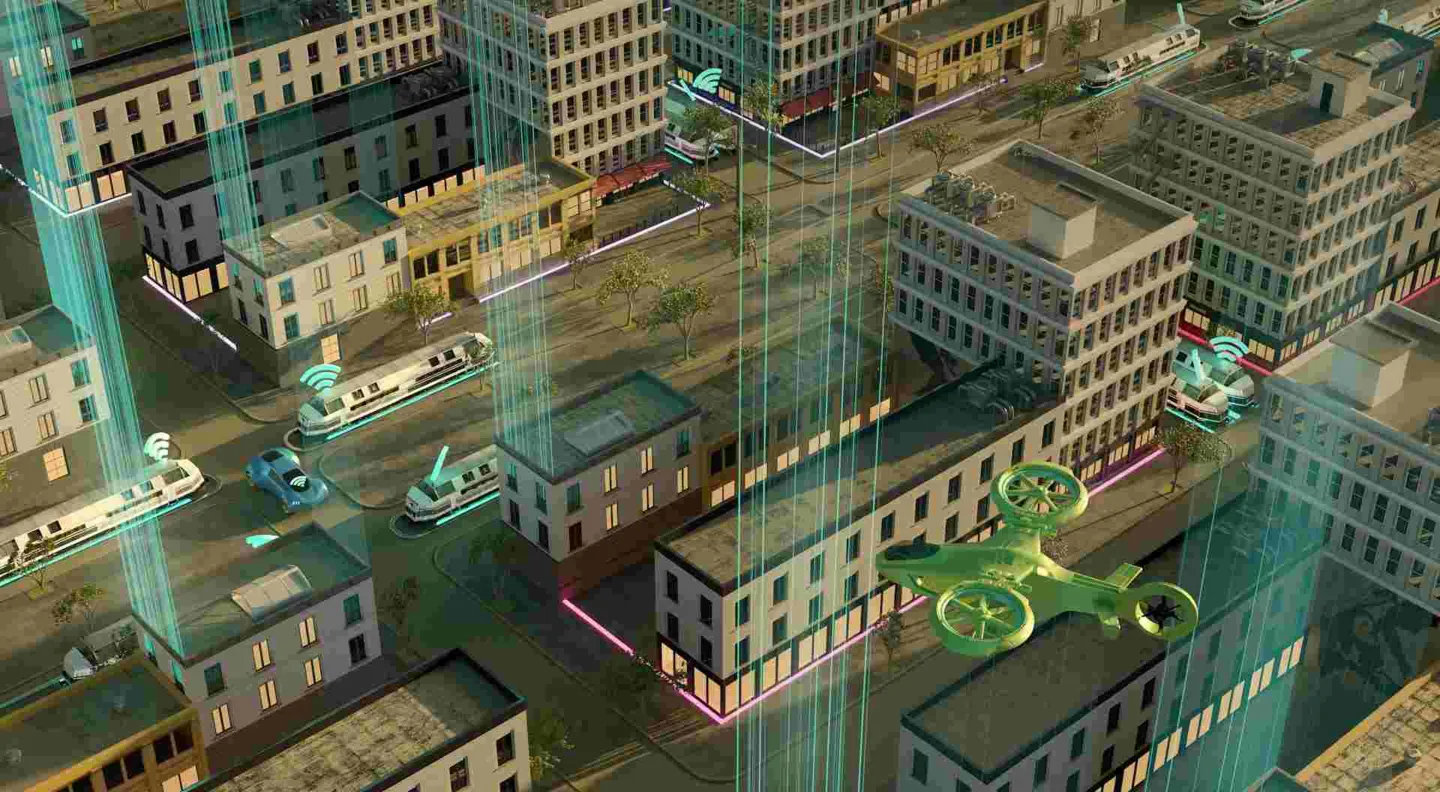
Given Singapore’s high population density and limited road space, efficient traffic management is paramount. AI is playing an increasingly central role in keeping the city’s transport network moving smoothly.
A. Adaptive Traffic Light Control: GLIDE
Singapore currently operates an adaptive traffic light control system called the Green Link Determining System (GLIDE). Sensors such as induction loops are deployed beneath road surfaces to detect vehicles and analyse real-time traffic conditions. Through GLIDE, traffic light timings are adjusted dynamically based on prevailing traffic conditions, optimizing traffic flow across multiple junctions. While this system has been in place for some time, it represents the foundational layer upon which more advanced AI capabilities are being built.
B. The Next Generation: CRUISE
LTA is currently developing a new system—the Cooperative and Unified Smart Traffic System (CRUISE)—which will draw on additional data sources and apply AI predictive capabilities to further enhance traffic management. CRUISE represents a significant leap forward, moving from reactive adjustments to proactive, predictive traffic control. The system will integrate data from a wider array of sources, including connected vehicles, to anticipate traffic congestion before it occurs and implement mitigating measures.
C. AI-Powered Bus Lane Enforcement
LTA is testing an AI system that analyses bus camera footage to automatically detect and identify vehicles that encroach on bus lanes during operation hours. This system enhances enforcement efficiency and improves bus service reliability by deterring violations. The trial has achieved a success rate of nearly 90%, and LTA plans to expand the system to all bus routes by 2030.
D. AI Video Analytics for Infrastructure Monitoring
Beyond traffic enforcement, LTA is introducing an AI-powered video analysis system that uses existing bus cameras to detect road rule violations, illegal parking, and infrastructure defects such as damaged road surfaces or bridge joints. This system will be introduced progressively starting from the fourth quarter of 2026. By leveraging the existing bus fleet as mobile sensors, Singapore is creating a cost-effective, city-wide monitoring network.
E. Passenger Information and Accessibility
AI is also being used to improve the passenger experience. SBS Transit, in partnership with SMRT, developed SiLViA, the nation’s first AI-powered sign language virtual assistant, which addresses accessibility gaps for deaf and hard-of-hearing passengers. This tool won the Singapore Business Review National Business Awards in 2026, highlighting the innovative application of AI for social inclusion. Separately, SBS Transit has partnered with UK-based PinPoynt.ai to develop an AI platform that provides passengers with real-time information on地铁 station crowd levels, enabling better travel planning.
AI in Building and Facilities Management
Singapore’s commitment to AI extends to the management of its built environment, from individual buildings to entire housing estates.
A. The Open Digital Platform (ODP) and Digital Twin
At the heart of Punggol Digital District is JTC’s Open Digital Platform (ODP), a smart city operating system that integrates building systems, sensors, and IoT devices into a single platform. Developed jointly by JTC and GovTech, the ODP powers a 3D digital twin of the district. This enables real-time monitoring of estate systems, scenario simulations, and early identification of potential issues before they escalate. The platform uses AI and machine learning to actively support decision-making, recommending settings to optimize energy use in systems such as cooling towers and lifts. It also includes an AI chatbot that allows quick access and analysis of live and historical building data. JTC is even considering integrating generative AI within the ODP to create “ChatGPT-style” personal AI assistants that facility managers can query about maintenance needs, contract renewals, and other operational matters.
B. Smart Facilities Management
Panasonic became the first partner to develop and test AI-enabled smart infrastructure and facilities management solutions in PDD using the ODP. These solutions support safer, more autonomous, and manpower-efficient building operations. Similarly, the Housing Development Board (HDB) is deploying sensors, building data analytics capabilities, and AI into housing estates. HDB’s system acts as the “central brain” that oversees the health of all housing estates, ensuring that building systems such as lifts, lighting, and solar panels are running smoothly.
C. Autonomous Building Inspections
dConstruct Robotics, a Singapore-based AI and robotics company, has developed autonomous AI-powered robots that navigate corridors, ride lifts, and conduct routine building inspections. These robots can inspect HDB flats and other buildings more efficiently and consistently than human inspectors, identifying potential issues early and reducing the need for costly repairs. This represents another example of how AI and robotics are being integrated into the operational fabric of Singapore’s urban environment.
D. Predictive Maintenance
URA has developed AI systems capable of predicting estate maintenance faults before they occur. By analyzing data from various building systems, these AI models can identify patterns that precede equipment failures, allowing maintenance teams to intervene proactively. This predictive approach reduces downtime, extends the lifespan of assets, and improves the overall reliability of urban infrastructure.
AI for Urban Safety and Security
Safety and security are fundamental pillars of any well-functioning city, and Singapore is deploying AI to enhance both.
A. Mobile AI Parking Enforcement
One of the most visible AI safety tools is URA’s Mobile AI Detection system. Mounted on patrol vehicles, the system uses deep learning-based computer vision to automatically detect unsafe parking behaviors as the vehicles move along the roads. The trial system achieves over 95% accuracy, enabling more comprehensive coverage and helping to keep roads and car parks safer for everyone. This system dramatically increases the reliability and reach of parking patrols across Singapore. HDB has also tested barrier-free smart parking systems in eight car parks, resulting in a nearly 60% reduction in illegal parking cases.
B. AI for Elderly Safety
With Singapore’s rapidly aging population, ensuring the safety of elderly residents is a growing priority. The National University of Singapore (NUS) has developed AI and robotics solutions to identify fall risks among seniors. These technologies can analyze gait patterns, environmental hazards, and other factors to predict and prevent falls, allowing seniors to age in place more safely.
C. AI-Driven Security Operations
Certis, one of Singapore’s leading security services providers, has scaled its AI orchestration platform, Mozart, globally. Mozart powers Certis’ Integrated Operations Centres deployed across critical sectors from aviation and healthcare to commercial real estate and urban city environments in Asia Pacific. This platform uses AI to coordinate security operations, improving response times and overall effectiveness. In PDD, Certis is also involved in deploying security patrol robots, demonstrating the integration of physical and digital security solutions.
AI for Sustainability and Climate Resilience
Singapore is leveraging AI to address pressing environmental challenges and build a more sustainable urban future.
A. AI for Carbon Mapping
NUS researchers have developed an open-source AI model that accurately maps building carbon emissions. The model integrates satellite images, street-view photos, population maps, road networks, and local climate data with building energy consumption data to predict city-scale building operational carbon emissions. This tool helps policymakers identify carbon hotspots and plan targeted, equitable decarbonization strategies. The findings were published in the journal Nature Sustainability in August 2025.
B. AI for Urban Cooling
Singapore is collaborating with Danish universities to develop sustainable urban cooling systems, including AI for cooling demand forecasting and management, efficiency monitoring, fault detection, and predictive maintenance. Comfort GPT, an AI-driven thermostat designed by NUS, uses machine learning to predict individual comfort with precision, bypassing the limitations of legacy thermostats. These innovations are crucial for reducing energy consumption in Singapore’s tropical climate.
C. AI for Nature Management
The “City in Nature” vision has received a significant boost through AI. Researchers are using AI, modelling, and automation to enhance operations such as tree inspections. AI can analyze data from sensors and cameras to assess tree health, detect disease, and predict potential hazards, enabling more effective and efficient urban forest management.
D. Sustainable Design Optioneering
AECOM has built Singapore’s first AI-enabled sustainable design optioneering ecosystem, which includes ScopeX (for whole-life carbon management) and AecomZero (a parametric design tool that allows engineers and architects to test multiple design scenarios in real-time). Additionally, AECOM has established an Underground Infrastructure AI Innovation Centre in Singapore, supported by the Singapore Economic Development Board, to develop AI-powered solutions for optimizing underground space. This is critical in a dense urban environment where underground space is at a premium.
The Digital Nervous System: AIoT and Predictive Analytics
GovTech, Singapore’s government technology agency, is building what it calls the “digital nervous system” of the nation—using AIoT (AI + Internet of Things), predictive analytics, and smart sensors to create a more responsive, sustainable, and caring Smart Nation. This system represents the integration of all the AI tools discussed above into a cohesive, city-wide platform. Platforms like the Open Digital Platform use predictive analytics to anticipate issues and optimize operations. The goal is to create a city that not only reacts to problems but anticipates and prevents them.
Privacy and Ethical Considerations
As Singapore deploys AI across urban spaces, privacy and ethics remain paramount. The government has contextualised guidance such as the AI in Healthcare Guidelines (AIHGle) and is committed to ensuring that AI systems are deployed responsibly. Projects like CODEMIA, developed in partnership with Singapore’s City Matrix, demonstrate how cities can achieve comprehensive urban monitoring while respecting privacy. The government has also emphasized that human oversight remains integral to systems like CRUISE, ensuring that rigorous testing and on-site trials are conducted before large-scale implementation.
Conclusion
Singapore’s deployment of AI urban tools represents one of the most comprehensive and ambitious smart city initiatives in the world. By integrating AI across the entire urban lifecycle—from planning through construction to management and daily operations—Singapore is not just adopting new technologies; it is fundamentally reimagining how a city can function. The tools and systems described in this article—from ePlanner and the DC Assistant to robotic delivery fleets and predictive traffic management—are not isolated experiments but components of a cohesive, strategic vision.
The benefits are already becoming apparent: more efficient traffic management, safer roads, cleaner public spaces, more responsive building management, and more inclusive public services. As Singapore continues to refine these tools and scale their deployment, it is creating a blueprint for other cities around the world to follow. The city-state’s success demonstrates that with the right policy framework, public-private partnerships, and a human-centric approach, AI can be a powerful force for urban transformation.