The way humans interact with technology is undergoing a fundamental transformation. For decades, the keyboard has served as the primary gateway for translating human thought into digital text. However, this 150-year-old technology is increasingly being recognized as a bottleneck to productivity and creative flow. Wispr, a San Francisco-based artificial intelligence startup, is at the forefront of challenging this status quo. Through its innovative application, Wispr Flow, the company is pioneering a voice-first future where speaking naturally replaces typing manually. The recent expansion of Wispr Flow’s operations marked by a highly anticipated Android launch, a strategic entry into the Indian market, and the introduction of an AI-powered note-taking assistant signals a significant shift in how AI-driven voice technology is being deployed and adopted on a global scale. This article delves deep into the company’s recent developments, exploring the technological advancements, market strategies, and future implications of this burgeoning voice AI ecosystem.
A New Voice-First Era
The Vision Behind Wispr
Wispr was founded in 2021 by Stanford alumni and Indian-origin entrepreneurs Tanay Kothari and Sahaj Garg. Their mission has always been audacious: to reshape how people interact with their devices, making the experience as natural and fluid as a conversation with a friend. The journey to this vision began with an exploration of brain-computer interfaces, a testament to the founders’ desire to remove friction from human-computer interaction. While that hardware path proved too resource-intensive for the nascent startup, it laid the foundation for a pivot towards software that would eventually become Wispr Flow. The core philosophy driving the company is that the keyboard is an outdated relic that disrupts the seamless flow of ideas from mind to screen. By leveraging advanced artificial intelligence, Wispr aims to replace typing with speaking, allowing users to draft emails, compose documents, and navigate their digital lives hands-free and at the speed of thought.
The Core Product: Wispr Flow
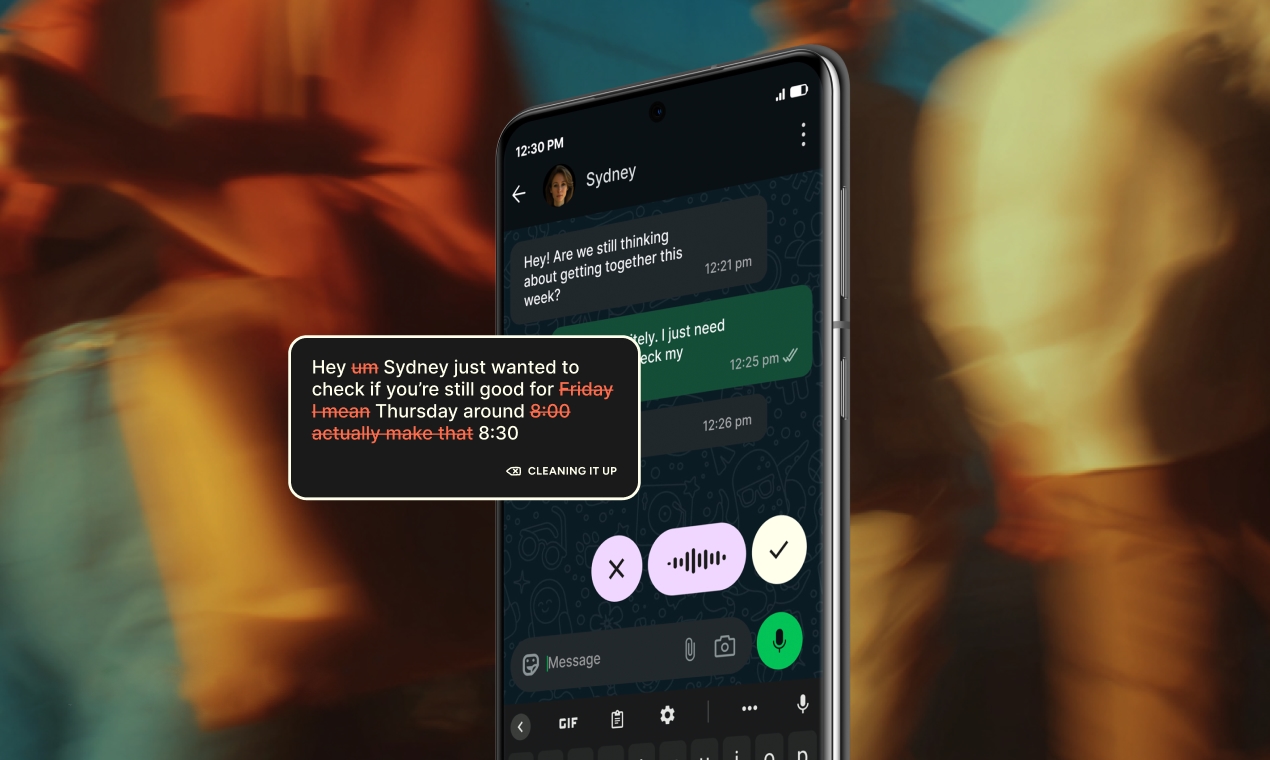
Wispr Flow is not just another speech-to-text application; it is an advanced AI voice keyboard designed for speed, accuracy, and seamless integration into the user’s digital life. Unlike traditional dictation tools that simply transcribe spoken words verbatim, Wispr Flow is engineered to understand context and intent. When a user speaks, the AI does more than just convert audio to text. It actively polishes the output by removing filler words, correcting grammar, and restructuring sentences to produce clear, coherent, and ready-to-send text. This focus on achieving a “zero-edit rate” is a key differentiator. The company claims a significant portion of its users can dictate a message or document and send it without making any manual corrections, a feat that dramatically enhances productivity.
Features and Functionalities
Wispr Flow is designed to function as a versatile interface across an entire device ecosystem. Its key features make it an indispensable tool for a wide range of users, from business executives to students and creatives.
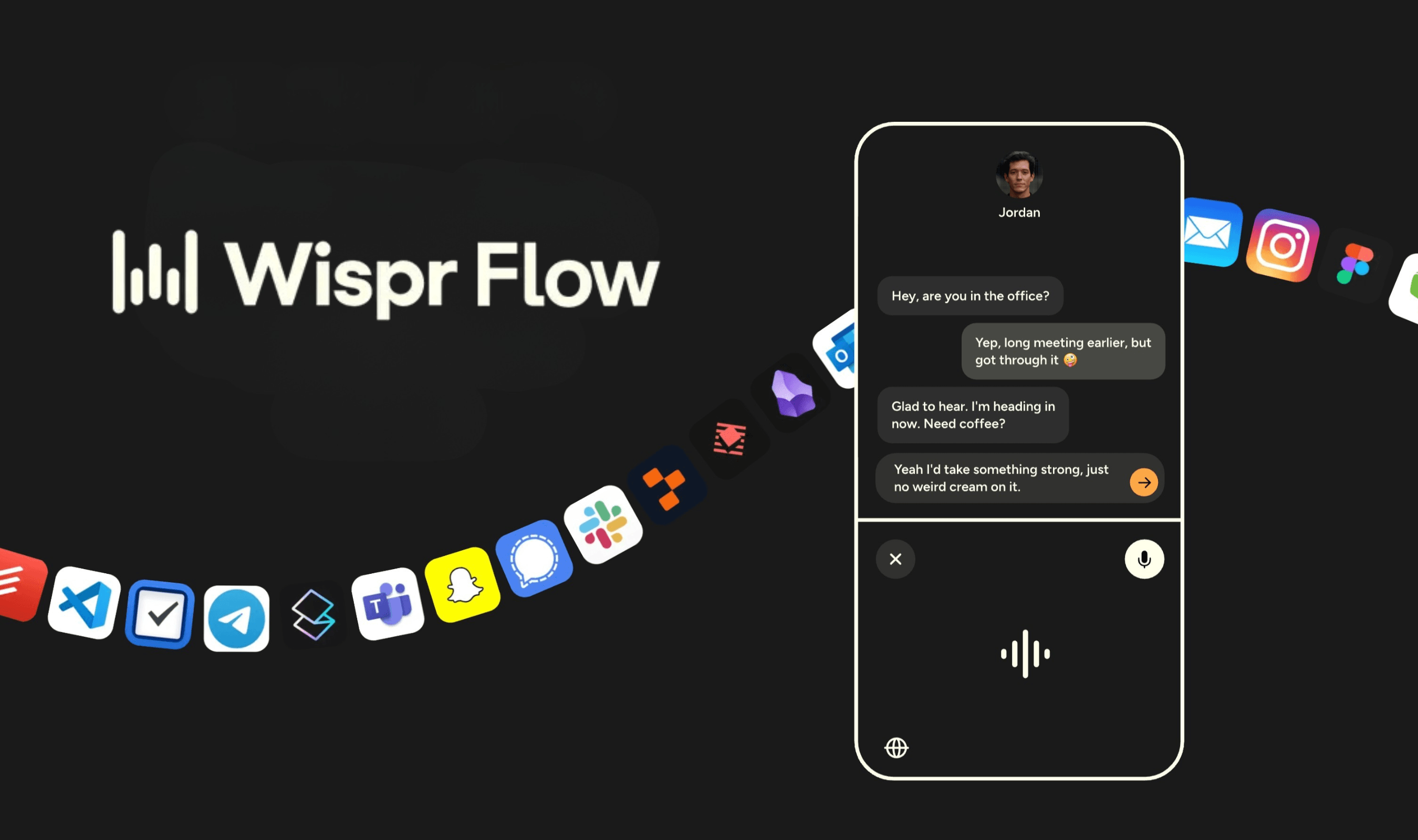
Universal Compatibility: The app works inside virtually any other application, including Slack, Messages, Email, WhatsApp, ChatGPT, and Google Docs. This means users don’t have to switch contexts or rely on a specific platform’s native dictation tool; Flow is always available to capture their words.
AI-Powered Polishing: This is the hallmark of the product. As mentioned, the AI cleans up the raw dictation, removing the verbal stumbles, repetitions, and “umms” and “ahs” that are a natural part of speech. The result is text that sounds professional and articulate, as if the user had carefully typed and edited it.
Personalized Dictionary: The app learns the user’s unique vocabulary. It can be trained to recognize specific acronyms, product names, industry jargon, and preferred spellings, ensuring that technical or personalized terms are transcribed accurately every time.
Whisper Mode: Acknowledging that users may be in public or quiet spaces, Wispr Flow includes a feature that allows for quiet dictation. The app can transcribe speech spoken at a low volume, making it usable in libraries, coffee shops, or meetings without disturbing others.
Cross-Platform Support: Initially available on Mac and Windows, the app’s expansion to iOS and Android has been a critical part of its growth strategy. This ensures users can maintain a consistent voice-driven workflow across all their primary devices.
The Technology Under the Hood
The impressive performance of Wispr Flow is the result of a sophisticated technological architecture. The company has made significant investments in developing its own proprietary voice models. This strategic move allows them to achieve a level of performance that outstrips generic, off-the-shelf solutions. According to the company, its error rate is around 10%, a notable improvement over competitors like OpenAI’s Whisper (27%) and Apple’s native transcription (47%).
Furthermore, Wispr’s commitment to privacy is a cornerstone of its technology philosophy. The app’s architecture emphasizes on-device processing where possible, especially for the initial audio capture and recording. This means a user’s raw voice data doesn’t always have to travel to the cloud for the most basic transcription tasks, addressing the growing concern over data privacy and security. This approach, combined with its advanced AI, makes it a compelling choice for professionals dealing with sensitive information.
Major Expansion: The Android Launch
For a long time, Wispr Flow’s presence on mobile platforms was limited to iOS. However, recognizing the massive global user base of Android devices, the company identified this as a critical area for expansion. The official launch of the Wispr Flow app on Android in early 2026 marked a pivotal moment in the company’s operational growth. This move was not simply a port of the existing application but represented a rethinking of how voice AI could be integrated into the Android experience.
A Different Approach on Android
One of the most innovative aspects of the Android launch was the adaptation of the user interface. On iOS, the app typically uses a customized keyboard. On Android, however, Wispr adopted a different mechanism to provide a more fluid and integrated experience. The app utilizes a floating bubble that hovers over the screen. This persistent overlay allows users to initiate dictation from anywhere, at any time, regardless of which app they are currently using. This design choice gives users unprecedented freedom and integration, effectively making the voice interface an always-available system-level feature rather than an app-specific function. Tanay Kothari, Wispr’s CEO, noted that the Android platform provided the team with the freedom to build a “truly integrated voice experience,” suggesting that the company sees immense potential in the platform for embedding voice-first interactions.
Performance and Language Support
The Android launch was accompanied by a major overhaul of the underlying infrastructure. The company announced a complete rewrite of the backend systems, which resulted in a 30% increase in dictation speed. This improvement is crucial for maintaining a seamless and responsive user experience, as even a slight delay can disrupt the natural flow of dictation. The app supports dictation in over 100 languages, catering to a global audience. To showcase its technical prowess and commitment to the Indian market, Wispr also announced a new voice model specifically designed to support “Hinglish”—a ubiquitous blend of Hindi and English spoken by millions in India.
A Strategic Market Entry: The India Expansion
The decision to launch officially in India was a strategic masterstroke. While many tech companies see India as a market of the future, Wispr discovered it was already one of its most important markets. The company reported that India organically became its second-largest market by downloads, even without any formal campaigns or partnerships, with user growth tripling in just three months. This impressive organic traction indicated a massive demand for a product like Wispr Flow, prompting the founders to make a dedicated push into the region.
Leveraging Hinglish and Local Culture
To succeed in India, localization was key. The official launch included full Hinglish support, a feature that was born out of a personal realization by the founders. As Tanay Kothari pointed out, many Indians naturally mix Hindi and English in their daily conversations, whether with family or colleagues. By developing a voice model that could seamlessly transcribe this mixed language, Wispr Flow moved beyond being a niche English-only tool and became a mass-market utility for a large and diverse population. This was a crucial step in building a product that felt native to the Indian user’s communication style.
Innovative Marketing: The Bengaluru Auto-Rickshaw Campaign
The launch campaign in India was as unconventional as it was brilliant. Rather than relying solely on digital advertising, Wispr’s CEO executed a high-visibility, street-level marketing campaign in Bengaluru, the country’s tech hub. The strategy involved branding over 100 auto-rickshaws and more than 20 billboards with cheeky, engaging advertisements for Wispr Flow. Kothari’s reasoning was simple yet insightful: the entire city of Bengaluru is stuck in traffic, often staring at the back of an auto-rickshaw. By turning these vehicles into moving billboards, the company tapped into a highly visible, captive audience in a way that traditional digital ads couldn’t match. This campaign went viral and helped generate significant buzz and downloads for the app in the Indian market.
The Notetaker Assistant: Expanding Beyond Dictation
Wispr’s ambition does not end with dictation. In a move that signals its intent to build a comprehensive AI productivity suite, the company introduced Wispr Flow Notetaker in August 2026. This new tool is designed to automatically capture, transcribe, and summarize meetings, freeing users from the burden of taking notes and allowing them to focus fully on the conversation.
Key Functions of Notetaker
The Notetaker is designed to support the entire lifecycle of a meeting, from preparation to follow-up.
**Pre-Meeting Brief: Before a call begins, Notetaker pulls together a brief that includes information like the meeting’s purpose and participant backgrounds, ensuring the user is fully prepared.
**Live Transcript and “What Did I Miss?”: During the meeting, it generates a live transcript, accurately identifying and labeling speakers. A unique feature, the “what did I miss?” button, allows users who were temporarily distracted to catch up on the talking points from the previous few minutes without interrupting the flow of the meeting.
**Post-Meeting Summary: After the call, Notetaker generates a detailed, topic-organized summary that highlights key decisions, action items, and important dates. These summaries are searchable, turning a user’s meeting history into a searchable knowledge base that can be queried for information.
Privacy and Integration
The Notetaker tool addresses the growing concerns around AI meeting assistants and privacy. It does not join meetings as a visible bot but captures audio locally on the user’s device. This places the responsibility of disclosing the recording on the user, in accordance with local laws. The company states it does not use customer data to train its models without consent and that audio is encrypted and automatically deleted after a limited period. Notetaker also integrates with other AI assistants like Anthropic’s Claude and OpenAI’s ChatGPT via the Model Context Protocol, allowing the generated insights to be plugged directly into a user’s existing workflow.
Financial Success and Market Position
The rapid expansion and product development at Wispr have been fueled by significant investor confidence. The company has raised a total of $81 million in funding, with a recent Series A round led by Notable Capital and participation from Menlo Ventures, Flight Fund, and others. This financial backing has catapulted the company’s valuation to an impressive $700 million post-money. The success is reflected in its user base, which grew 100x year-over-year, with a 70% retention rate over 12 months. The company is now used by over 270 of the Fortune 500 companies, a testament to its value in the enterprise sector.
Comparative Analysis: Wispr Flow vs. Competitors
To understand Wispr’s market position, it’s useful to compare it with its key competitors.
| Feature | Wispr Flow | OpenAI Whisper | Apple Native Transcription | Otter / Fireflies |
|---|---|---|---|---|
| Primary Focus | AI Voice Keyboard & Dictation | General-purpose Speech-to-Text | System-level Dictation | AI Meeting Assistant & Transcription |
| Core Function | Polish and format text in any app | Transcribe audio to text | Provide basic dictation | Record, transcribe, and summarize meetings |
| Platform | Mac, Windows, iOS, Android | API, various 3rd-party apps | iOS, macOS | Web, iOS, Android |
| Key Differentiator | AI polishing for “Zero-Edit” | High accuracy, open-source model | System-level integration | Botless meeting recording and summaries |
| Privacy Approach | On-device first, encrypted cloud | Varies by implementation | On-device | Cloud-based with opt-out policies |
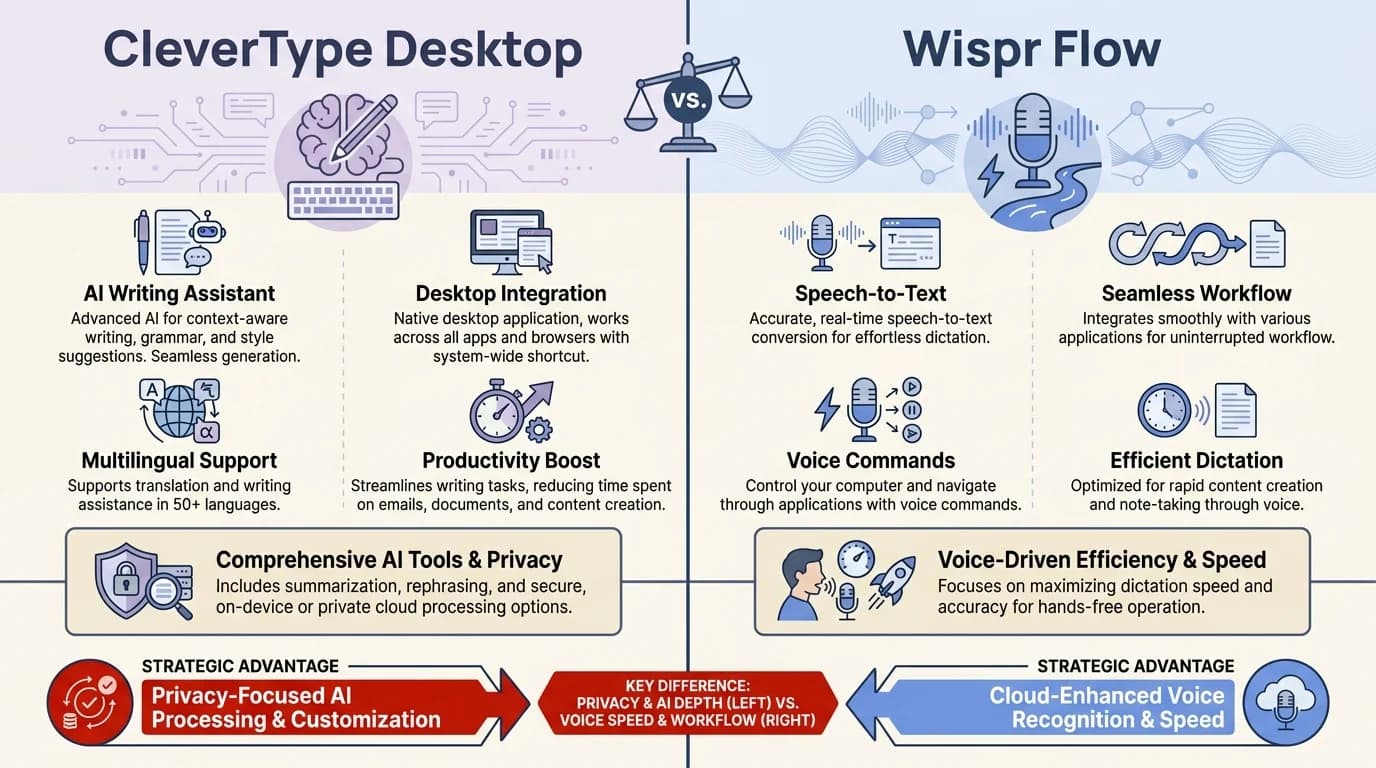
This comparison illustrates that Wispr Flow occupies a unique niche. While competitors like Otter focus on meetings, and Apple and OpenAI provide foundational transcription services, Wispr Flow is specifically an AI-powered keyboard that enhances the writing process itself. Its focus on “zero-edit” text sets it apart from traditional dictation tools.
Challenges and Future Outlook
Despite its rapid success, Wispr faces significant challenges. The most immediate is the issue of user consent and privacy when using the Notetaker tool in meetings, especially in jurisdictions that require all-party consent for recording. The company has stated it is working on features for automated consent messaging, but this remains a legal and ethical hurdle.
Furthermore, the Indian market presents a complex and demanding test for voice AI. The sheer diversity of languages, accents, and noisy environments in India makes it a high-stakes testing ground. Wispr’s ability to scale its AI to handle these complexities while maintaining a low price point will be crucial for its long-term success in the region. The data shows that while India accounts for a significant 14% of global installs, it only generates 2% of in-app purchase revenue. The company will need to strike a delicate balance between volume and monetization.
List of Wispr Flow’s Major Competitive Advantages
A. Superior AI Polishing: The software doesn’t just transcribe; it intelligently cleans up text, removing fillers and restructures sentences for coherent output.
B. Cross-Platform Ubiquity: Works seamlessly across Mac, Windows, iOS, and Android, providing a consistent experience on every device.
C. Privacy-First Architecture: Emphasizes on-device processing for core functions, ensuring user data is not unnecessarily exposed to the cloud.
D. Advanced Language Support: Beyond standard languages, it supports mixed languages like Hinglish, making it uniquely accessible in multilingual markets.
E. Proactive Innovation: The development of the Notetaker assistant demonstrates a commitment to solving broader workflow challenges, not just dictation.
Looking ahead, Wispr is planning to develop its own voice models further, focusing on personalized Automatic Speech Recognition (ASR) to reduce error rates even more. The company is also thinking about international growth and hiring top machine learning talent to compete with giants like OpenAI. The long-term vision is to become a “voice-led operating system” that can initiate workflow automation, moving far beyond the simple role of a dictation tool.
Conclusion
Wispr AI is effectively expanding its operations by executing on a clear and ambitious vision. The launch of the Android app, the strategic and culturally savvy entry into the Indian market, and the introduction of the Wispr Flow Notetaker all point to a company that is rapidly evolving from a promising startup into a major player in the AI productivity space. By addressing the inherent friction of typing with an intuitive, high-accuracy voice interface, Wispr Flow is not just a useful tool; it is a harbinger of a future where we interact with our digital devices in a way that feels as natural and effortless as thinking itself. As the company continues to navigate the technical and ethical challenges of voice AI, its expansion story serves as a compelling case study in how to build and scale a deep-tech product for a global audience.