
For decades, humanity has been quietly poisoning itself with one of the most resilient classes of chemicals ever created. Known scientifically as per- and polyfluoroalkyl substances (PFAS) and colloquially as “forever chemicals,” these synthetic compounds have infiltrated nearly every aspect of modern life. From the non-stick coating on your frying pan to the water-resistant finish on your jacket, from fast-food wrappers to firefighting foams, PFAS are ubiquitous . Their remarkable ability to repel water, oil, and heat has made them indispensable in countless industrial applications and consumer products for over 70 years . However, this very usefulness is precisely what makes them so dangerous. The same carbon-fluorine bonds that impart these desirable properties are among the strongest in chemistry, rendering PFAS virtually indestructible under normal environmental conditions. This persistence has allowed them to accumulate in our water, soil, air, and even in the blood of nearly all Americans . The health implications are staggering, with peer-reviewed studies linking PFAS exposure to certain cancers, fertility issues, immune system dysfunction, liver damage, and developmental problems in children . The pressing question of our time is no longer whether we need to address this contamination, but how we can effectively destroy these chemicals once and for all. This comprehensive guide explores the most promising and innovative methods currently available for eliminating forever chemicals from our environment.
The Scale of the PFAS Problem: A Global Crisis
Before delving into solutions, it is crucial to understand the magnitude of the PFAS crisis. These chemicals are not confined to industrial zones or contaminated hotspots; they have been detected in groundwater, surface water, seawater, soil, sediment, and even in remote locations such as the Arctic and Antarctic . The widespread contamination stems from decades of unchecked production and use, with PFAS cycling through various stages from manufacturing to disposal, resulting in both intentional and accidental environmental releases . The sheer volume of PFAS compounds is staggering, with over 1,400 individual chemicals listed on the Toxic Substances Control Act Inventory . While long-chain PFAS like perfluorooctanoic acid (PFOA) and perfluorooctane sulfonic acid (PFOS) have received the most attention and regulatory action, they are increasingly being replaced by short-chain alternatives that may be equally persistent and more mobile in aquatic environments . This shifting landscape complicates remediation efforts, as short-chain PFAS are often more challenging to degrade using conventional methods . The public is acutely aware of this threat, with search data revealing that nearly half of all online inquiries about PFAS focus on how to remove or filter these chemicals from drinking water . This public demand for solutions has driven a surge in scientific research and technological innovation, resulting in a diverse array of methods for destroying forever chemicals.
Understanding Why PFAS Are So Difficult to Destroy
The extraordinary persistence of PFAS is not accidental but is a direct consequence of their molecular structure. At the heart of every PFAS molecule lies a carbon-fluorine (C-F) bond, one of the strongest in organic chemistry. The bond dissociation energy of the C-F bond is approximately 544 kJ/mol, requiring immense energy to break . This stability, combined with the strong electronegativity of fluorine, creates a chemical shield that resists attack from most oxidizing agents, heat, and biological degradation processes . Furthermore, the unique combination of hydrophilic (water-loving) head groups and lipophilic (fat-loving) fluorinated tails gives PFAS unusual partitioning behavior in the environment, making them difficult to capture or concentrate for treatment . Traditional water treatment methods such as boiling are entirely ineffective, as PFAS are not volatile and boiling simply concentrates them further. Conventional oxidation processes, which rely on hydroxyl radicals to break down organic pollutants, are largely impotent against the C-F bond . This inherent recalcitrance has earned PFAS their moniker, “forever chemicals,” and has necessitated the development of specialized destruction technologies capable of overcoming these formidable molecular defenses.
Non-Destructive vs. Destructive Technologies: A Crucial Distinction
It is essential to distinguish between removal and destruction when discussing PFAS remediation. Non-destructive methods, which include adsorption, membrane filtration, and foam fractionation, focus on separating PFAS from water or soil . While these techniques can be highly effective at reducing PFAS concentrations in drinking water—with granular activated carbon achieving up to 99% removal efficiency they do not solve the underlying problem . Instead, they create a concentrated waste stream that must be disposed of, often through incineration, which carries its own environmental risks and uncertainties regarding complete destruction . Destructive technologies, on the other hand, aim to break the carbon-fluorine bonds of PFAS, converting them into less harmful or even beneficial products. This distinction is critical because simply removing PFAS from one medium only shifts the contamination problem elsewhere. True solutions require the permanent destruction of these compounds, preferably with the recovery of valuable resources such as fluorine for reuse in a circular economy . The remainder of this article will focus primarily on these advanced destructive technologies, which represent the frontier of PFAS remediation.
High-Temperature Pyrolysis and Thermal Degradation
Among the most straightforward approaches to destroying PFAS is the application of extreme heat. Thermal degradation, or pyrolysis, involves heating contaminated materials to temperatures high enough to break the C-F bonds. This can be achieved through incineration, which typically operates in the gas phase at sustained temperatures above 1000°C, or through advanced methods like supercritical water oxidation (SCWO) . SCWO is particularly promising, as it operates at temperatures around 650°C and extremely high pressures, achieving 100% degradation and defluorination efficiency for PFAS in some studies . However, thermal methods face significant challenges. Incineration is energy-intensive and, if not carefully controlled, can produce hazardous byproducts such as toxic fluoro-organic compounds and incomplete combustion products . The United States Environmental Protection Agency (USEPA) has raised concerns about the effectiveness of incineration, noting that it is unclear how well PFAS are destroyed and what happens to them in terms of potential mixed fluorinated organic byproduct formation . Additionally, high-temperature treatments are expensive, particularly when dealing with the large volumes of contaminated water that require remediation. Despite these drawbacks, thermal methods remain an important tool for treating concentrated PFAS waste streams and contaminated soils, with real-world applications demonstrated in Alaska and other regions .
Ultrasonic Degradation: The Power of Sound Waves
Sonolysis, or ultrasound-based degradation, represents a highly innovative and effective approach to PFAS destruction that operates at ambient temperatures . This method harnesses the phenomenon of acoustic cavitation, where high-frequency ultrasound waves create, grow, and implode microscopic bubbles in a liquid medium. The implosion of these bubbles generates extreme conditions locally, with temperatures reaching up to 5,000 K and pressures exceeding 500 bars for fleeting moments roughly 10 nanoseconds . These transient hot spots provide the intense energy required to break the resilient C-F bonds of PFAS without the need to heat the entire water body. Research has demonstrated that ultrasound can effectively mineralize PFAS compounds, converting them into harmless fluoride ions and carbon dioxide. For instance, in studies of still bottom samples from PFAS treatment processes, sonolysis achieved a significant increase in fluoride concentration from 0 to 8.71 mg/L after just 12 hours of treatment, indicating successful defluorination . While highly effective, the technology requires optimization for different matrices. Aqueous film-forming foam (AFFF) samples, dominated by PFOS, showed resistance to sonolytic degradation due to the strong carbon-fluorine bonds of these compounds, suggesting that modifications may be necessary for complete mineralization in complex mixtures . Despite this challenge, sonolysis is emerging as a promising technology for PFAS remediation in groundwater and other aqueous environments, with ongoing research aimed at improving its efficiency and scalability.
Electrochemical Oxidation: Harnessing Electricity for Destruction
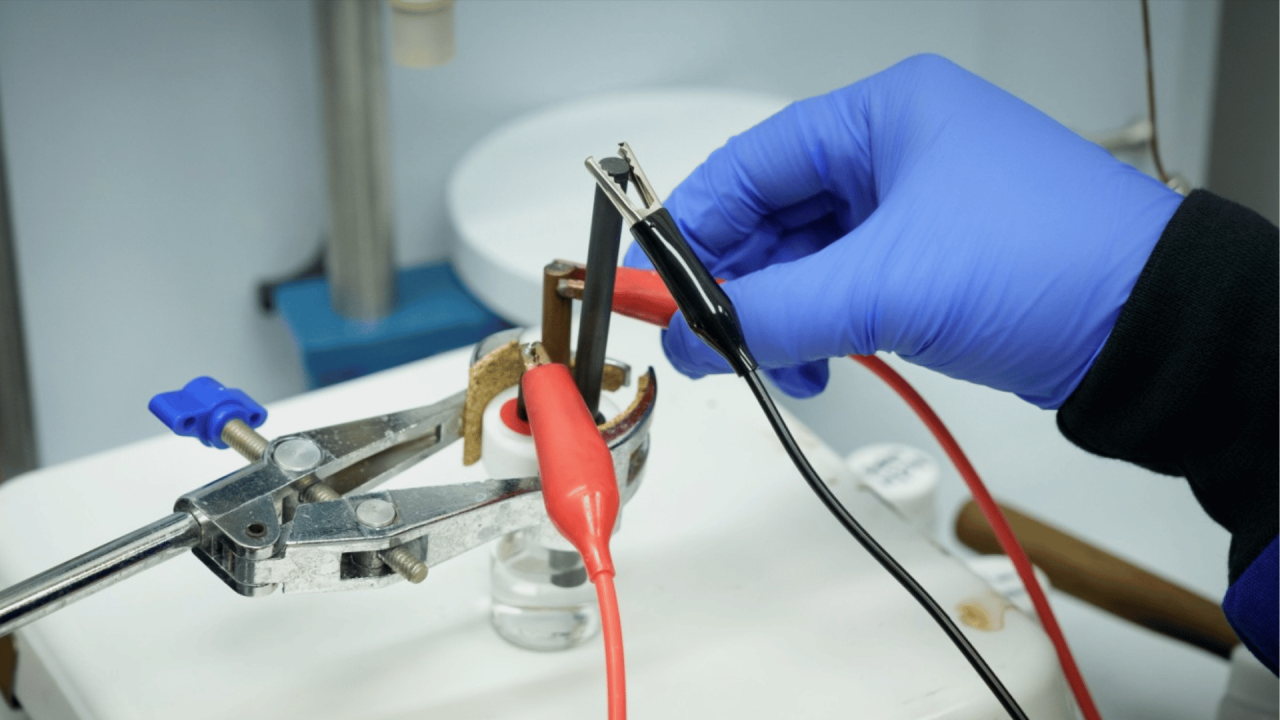
Electrochemical oxidation (EO) has emerged as a superior alternative to advanced oxidation processes (AOPs) for PFAS degradation, offering higher defluorination efficiency while minimizing secondary pollutants . In EO, an electric current is passed through contaminated water using specialized electrodes, generating reactive species and enabling direct electron transfer from PFAS molecules at the electrode surface. This mechanism is particularly effective because it overcomes the limitations of conventional radical-based oxidation, which struggles to break the C-F bond . Recent breakthroughs have demonstrated the potential of graphene-enabled electrochemical systems, with the FOREVER-WATER project, funded by the European Innovation Council, developing and validating these technologies in real-world conditions . These systems, based on graphene sponge electrodes, are being tested for treating groundwater, landfill leachate, and semiconductor wastewater, representing a significant step toward commercial application . The approach is also proving effective against short-chain PFAS, which are notoriously difficult to degrade. Researchers from the University of Chicago have reported an electrochemical process capable of achieving up to 100% degradation and defluorination of short-chain PFAS such as perfluorobutanoic acid (PFBA) and Gen-X . These advances highlight the tremendous potential of EO as a scalable, sustainable solution to PFAS contamination, particularly when integrated with renewable energy sources and combined with other treatment technologies.
The Rice University Breakthrough: Turning PFAS into Graphene
One of the most exciting developments in PFAS destruction comes from Rice University, where a team of scientists has developed a method that not only breaks down forever chemicals but also transforms them into a valuable resource . This pioneering method involves combining PFAS-laden granular activated carbon with salts and subjecting the mixture to flash heating at temperatures exceeding 3,000 degrees Celsius for less than a second. The intense heat breaks the chemical bonds of PFAS, converting them into harmless fluoride salts while simultaneously transforming the activated carbon into graphene one of the strongest and lightest materials known to science . Graphene has tremendous value in industries ranging from electronics to construction and manufacturing, providing an economic incentive for PFAS destruction. The process is remarkably effective, removing 99.98% of the most common PFAS pollutant and working across a wide range of compounds, including Teflon-R, which is among the most difficult to degrade . Furthermore, the heating process can be tuned to produce other valuable forms of carbon, such as carbon nanotubes and nanodiamonds, offering multiple revenue streams from contaminated waste. This dual benefit of environmental remediation and resource recovery represents a paradigm shift in how we think about PFAS destruction, transforming a burden into an opportunity.
Mechanochemical Destruction: A Simple but Powerful Solution
Sometimes the most elegant solutions are also the simplest. Researchers at the University of Oxford and Colorado State University have developed a mechanochemical method for destroying PFAS that works through mechanical force rather than heat or electricity . The process involves grinding PFAS samples with potassium phosphate salts and ball bearings in a solid-state reaction. The mechanical energy breaks down the durable PFAS chemicals, allowing researchers to extract the fluorine content for reuse . This method is operationally straightforward and, crucially, works on all PFAS classes, including those commonly found in everyday products like non-stick coatings, electrical insulation, and industrial tubing. The recovered fluoride can be used to generate common fluorinating reagents for industrial processes, and importantly, the phosphate activator can be recovered and reused, ensuring no detrimental impact on the phosphorus cycle . This approach enables a circular fluorine economy, which is critically important as the world’s reserves of fluorspar the mineral from which essentially all fluorochemicals are manufactured are rapidly depleting due to extensive mining . The potential applications are vast, from recovering fluorine from Teflon tape waste to generating precursors for life-saving medicines like cholesterol-lowering statins (Lipitor) and anti-seizure agents (Rufinamide). This serendipitous discovery, which began with the observation that sealing rings in ball-milling jars were degrading during unrelated experiments, exemplifies how interdisciplinary research can yield transformative solutions to complex environmental challenges .
Ultrafast Microdroplet Reactions: Speed Redefined
In a remarkable advance, chemists from the New Jersey Institute of Technology and Stanford University have developed an ultrafast method for degrading PFAS using oxidant-containing microdroplets . This technique achieves degradation efficiencies of 77-94% for perfluorocarboxylic acids (PFCAs) in less than one millisecond under ambient conditions . The microdroplet approach, which employs sonic spray ionization to create tiny droplets of PFAS solution mixed with oxidants like persulfate or Fenton’s reagent, dramatically accelerates reactions due to the unique properties of droplet interfaces. Compared to bulk solution reactions that take 30 minutes to achieve only 3-8% degradation, the microdroplet method achieves over 90% degradation in a fraction of a millisecond—a rate enhancement of over two million times . The process also generates significantly higher fluoride ion conversion, reaching 25.8% with persulfate additives compared to just 2.2% in bulk conditions . Remarkably, the method works on short-chain PFAS like PFPeA, PFHxA, and PFHpA, which are typically more resistant to degradation, and even achieves over 50% degradation of PFOS, which was previously reported as hardly degradable in microdroplets . This breakthrough opens new possibilities for rapid, on-site PFAS treatment that could be deployed in emergency response situations or integrated into existing water treatment infrastructure with minimal energy consumption and footprint.
Emerging Technologies and Future Directions

The landscape of PFAS destruction is rapidly evolving, with numerous other technologies showing promise at various stages of development. Advanced reduction processes (ARPs), such as UV/sulfite and UV/iodide systems, effectively degrade long-chain PFAS through reductive mechanisms, though they are hindered by pH dependence and toxic iodide by-products . Plasma-based degradation, while still in early stages, has shown potential for treating PFAS in water, with reported removal efficiencies of 50-85% for certain compounds . Biodegradation, while currently inefficient for complete mineralization, is being investigated as a potential low-cost option for long-term remediation, with researchers searching for microorganisms with high PFAS degradation capabilities . Fenton-based reactions, including photo-Fenton and electro-Fenton processes, offer mild reaction conditions and operational simplicity, though they face challenges in efficiently breaking the C-F bond . The consensus among experts is that no single technology will provide a universal solution. Instead, integrated treatment trains that combine separation technologies with destructive methods are likely to be the most effective approach, achieving over 98% PFAS removal in complex waste streams . This will involve using adsorption or membrane filtration to concentrate PFAS, followed by advanced destruction to mineralize the concentrated waste, with resource recovery where possible. As regulatory pressures mount and public awareness grows, we can expect continued innovation and scaling of these technologies, moving toward a future where “forever chemicals” are no longer a permanent burden but a manageable challenge.
The Path Forward: Policy, Innovation, and Collaboration
The fight against forever chemicals requires more than just technological innovation; it demands a concerted effort from policymakers, industry, researchers, and the public. Regulatory frameworks are strengthening worldwide, with the European Union and the United States EPA implementing stricter drinking water standards for PFAS compounds . These regulations create both the incentive and the market need for effective destruction technologies. Industry, particularly the fluorochemical sector, must embrace circular economy principles, developing products that can be easily recycled and supporting the development of PFAS destruction infrastructure. The concept of a circular fluorine economy, where fluorine is recovered from PFAS waste and reused in manufacturing, represents an ideal model that could reduce dependence on finite mineral reserves while addressing environmental contamination . Research institutions and funding agencies must continue to support interdisciplinary work that combines chemistry, engineering, and environmental science to develop novel solutions. Public engagement is equally important, as informed citizens can drive demand for PFAS-free products and support policy changes through their choices and votes. The science of PFAS destruction has advanced dramatically in just the past few years, moving from speculative research to practical, effective technologies that are ready for deployment. With continued investment and collaboration, we can turn the tide against these persistent pollutants and protect both human health and the environment for generations to come.
Conclusion: Hope on the Horizon
The challenge of destroying forever chemicals is one of the most pressing environmental issues of our time, but it is not insurmountable. From high-temperature pyrolysis and electrochemical oxidation to ultrasonic degradation and mechanochemical destruction, a diverse array of technologies now exists to tackle this problem from multiple angles . The Rice University breakthrough that transforms PFAS into valuable graphene, the Oxford method that recovers fluorine for reuse, and the microdroplet technology that degrades PFAS in milliseconds all point toward a future where these chemicals can be effectively managed . The key lies in scaling these technologies, reducing costs, and integrating them into comprehensive treatment trains that combine separation, destruction, and resource recovery. While the path forward is complex, the scientific and engineering communities have demonstrated their ability to innovate in the face of daunting challenges. As public awareness grows and regulatory pressure mounts, the economic and political will to implement these solutions will only increase. The concept of a circular fluorine economy—where fluorine is perpetually recycled rather than mined and discarded—offers a hopeful vision of a sustainable future . Ultimately, the lesson of forever chemicals is that we must be more thoughtful about the materials we introduce into our environment. However, with the innovative destruction methods now available, we have the tools to clean up the mistakes of the past and build a healthier, more sustainable future. The era of “forever chemicals” may finally be coming to an end, replaced by an era of responsible innovation and environmental stewardship.