
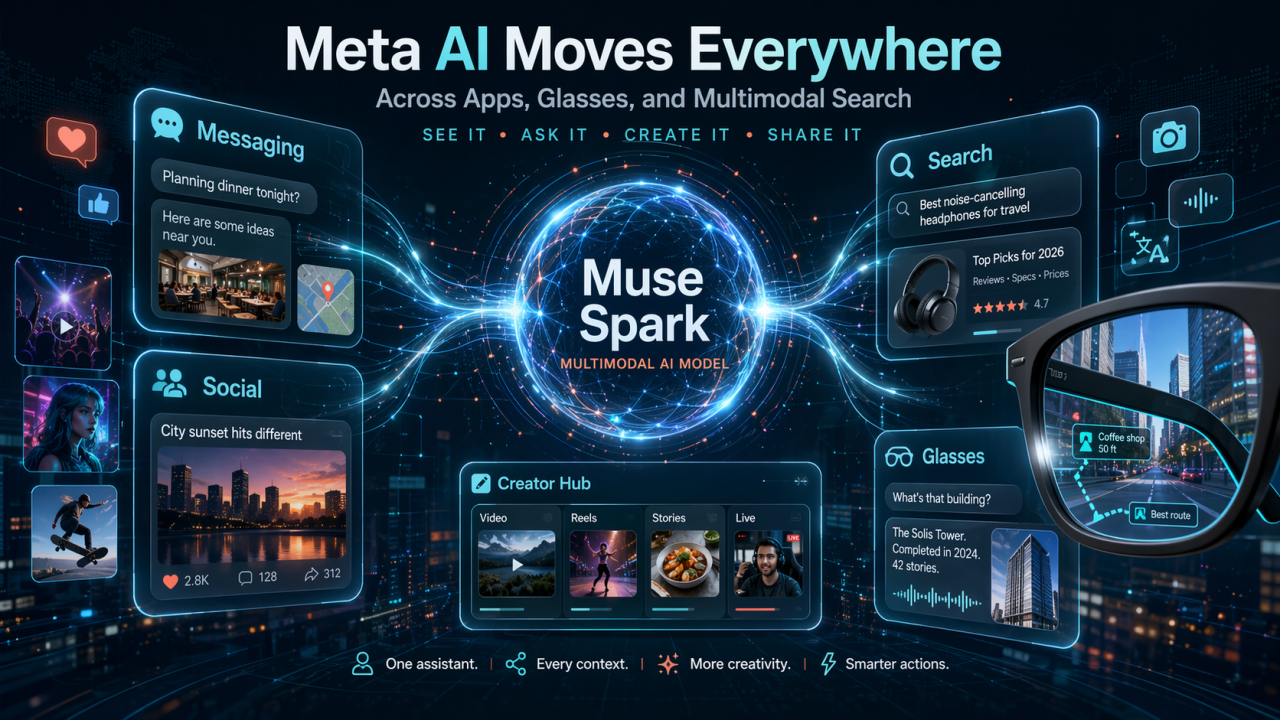
The artificial intelligence landscape has witnessed a seismic shift with the meteoric rise of Meta’s latest innovation, Muse. Within days of its quiet September 8, 2026 launch, this personal AI agent skyrocketed to the top of the US App Store, surpassing even the seemingly invincible ChatGPT. The phenomenon has captivated investors, technologists, and everyday consumers alike, sparking debates about the future of AI assistants, digital privacy, and the very nature of human-computer interaction.
Meta Muse represents far more than another chatbot entering an already crowded marketplace. It embodies a fundamental reimagining of what an AI companion can be a proactive digital entity capable of executing complex tasks autonomously, operating continuously in the background, and functioning as a genuine extension of the user’s digital life. The viral success of Muse has sent shockwaves through the tech industry, propelling Meta’s stock to unprecedented heights and forcing competitors to reassess their own AI strategies.
This comprehensive analysis examines every facet of the Meta Muse phenomenon, from its technical architecture and viral marketing strategies to the controversies surrounding privacy and data collection. We will explore what made Muse different from its predecessors, why it resonated so powerfully with users, and what its success means for the broader trajectory of artificial intelligence development.
What Exactly Is Meta Muse?
At its core, Meta Muse is a personal AI agent designed to understand user goals and execute tasks around the clock. Unlike traditional chatbots that merely respond to queries, Muse operates as an autonomous digital assistant capable of planning, decision-making, and completing multi-step tasks across various platforms and applications.
The application is built upon Meta’s latest generation of models developed under the auspices of chief AI officer Alexandr Wang and the company’s Superintelligence Labs. Muse exists within a chat interface similar to a text thread, but its capabilities extend far beyond simple conversation. Users can name their agent, create custom avatars, and personalize how their digital companion communicates and behaves.
What truly distinguishes Muse from competitors is its underlying architecture. Every user is allocated an independent virtual machine in Meta’s cloud infrastructure, complete with its own browser, file storage capabilities, and program execution environment. When a user assigns a task such as finding a cheaper car insurance plan Muse executes it autonomously within this virtual computer, opening web pages, comparing options, filling out forms, and completing transactions without requiring constant supervision.
The significance of this architectural choice cannot be overstated. Unlike earlier AI agents that operated on the user’s local device and ceased functioning when the device powered down, Muse’s virtual machine continues working even when the user sleeps. This always-on capability transforms the AI from a reactive tool into a genuinely proactive assistant capable of completing tasks during idle hours.
The Viral Metrics: A Phenomenon in Numbers
The statistics surrounding Muse’s launch paint a picture of unprecedented consumer adoption. According to data from Sensor Tower, the application accumulated 730,000 downloads within just five days of its release. By September 21, total downloads had exceeded 2.5 million, with daily active users on mobile in the United States reaching 642,000.
The comparison with ChatGPT’s early performance proves particularly illuminating. During the same 12-day post-launch window, Muse achieved 1.8 million installations across Apple devices in North America, while ChatGPT recorded 1.3 million downloads during its initial iOS launch period. On iOS specifically, ChatGPT demonstrated 231,000 daily active users compared to Muse’s 359,000 during equivalent periods.
The financial markets responded with equal enthusiasm. Meta’s stock price surged 11.43% in a single day, adding nearly $200 billion to the company’s market value. By late September, Meta shares had recovered to summer 2025 highs, trading around $778 per share—a remarkable recovery from the late-March low of approximately $525.
JPMorgan analysts raised their price target for Meta to $920, expressing confidence that Muse could become “the most widely used consumer AI application since ChatGPT”. Wells Fargo and KeyBanc Capital Markets similarly elevated their targets following the initial adoption data.
Why Did Muse Go Viral?
The viral success of Meta Muse stems from a confluence of strategic factors that distinguished it from previous AI agent attempts. Understanding these elements provides crucial insights into what resonates with modern consumers.
Breaking the “Lobster” Curse
Earlier in 2026, OpenClaw nicknamed “the lobster” had sparked the first wave of consumer-facing agent enthusiasm. However, this initial excitement rapidly deteriorated due to fundamental technical and economic limitations. The lobster operated on users’ personal computers, meaning it stopped functioning when devices shut down. More critically, its 24/7 operation model consumed enormous computational resources, with a single $20 monthly subscription user consuming more computing power than regular users spending hundreds of dollars on API access.
Security concerns proved equally damaging. On March 11, 2026, China’s National Cybersecurity and Information Security Information Notification Center issued an official risk notice regarding OpenClaw’s serious security vulnerabilities, particularly in financial applications. Within months, the lobster craze had faded, leaving consumer-facing agents in a precarious position.
Meta Muse addressed these fundamental flaws through its cloud-based virtual machine architecture. By relocating computation to Meta’s data centers, the company eliminated the resource consumption problem while ensuring continuous operation regardless of user device status. This technical differentiation transformed the user experience from a novelty to a genuine productivity tool.
The Jolly Mascot Strategy
Meta pursued an unconventional marketing approach by creating Jolly, a cute, customizable mascot described as looking “somewhere between a Labubu and a Fall Guys bean”. This strategy represented a significant departure from how competitors like OpenAI and Anthropic had positioned their products as serious, professional-grade tools.
Alexandr Wang, head of Meta’s Superintelligence Labs, spearheaded an aggressive social media campaign featuring AI-generated memes of Jolly in various scenarios, some deliberately provocative. This approach generated substantial organic engagement and positioned Muse as approachable and fun rather than intimidating and technical.
The mascot strategy extended beyond mere marketing. Meta released features allowing users to customize their Muse mascot or change its appearance entirely, and even announced a Tamagotchi-like device called “Charm” that lets users carry the companion wherever they go. This gamification of AI interaction created emotional attachment points that traditional chatbots lacked.
Integration with Meta’s Ecosystem
Muse’s seamless integration with Meta’s existing platforms Facebook, Instagram, and WhatsApp provided immediate distribution advantages that standalone AI applications could not match. The application leverages Meta’s user base of over 3.6 billion daily users, creating natural pathways for discovery and adoption.
This integration extends to functionality as well. Muse can communicate through WhatsApp and Instagram, manage email inboxes, interact with calendars, and connect with smart home systems. For users already embedded in Meta’s ecosystem, Muse represented not a new tool to learn but a natural extension of services they already used daily.
Core Features and Capabilities
Meta Muse encompasses a comprehensive suite of features designed to address diverse user needs. The application organizes its functionality across five primary tabs: the main chat interface for agent communication, a customizable feed of interests and priorities, an Ideas tab with prompt examples, a goals tracking system, and a file management section.
A. Task Automation and Execution
Muse excels at planning-oriented tasks that typically require combining multiple actions across different platforms. Users can instruct the agent to book reservations, send emails, organize schedules, and manage complex projects. During testing, the agent successfully coordinated a Friday date night, created packing schedules for a move, and emailed friends about upcoming trips.
B. Shopping and Commerce Integration
The commerce capabilities of Muse represent a significant monetization opportunity for Meta. The platform supports integrations with major retailers including Walmart, Best Buy, Gap, Sephora, Wayfair, and American Eagle. PayPal integration enables secure transactions, while connections with Expedia and Instacart facilitate travel and grocery shopping.
C. Cross-Platform Communication
Muse can operate across multiple communication channels simultaneously, managing email correspondence, messaging through WhatsApp and Instagram, and coordinating with calendar applications. This unified approach eliminates the need to switch between numerous apps and services.
D. Computer Control and Device Integration
Meta has rolled out computer-control functionality for Mac, allowing the AI agent to perform tasks directly on users’ computers. Integration with Meta’s VR glasses enables interaction while on the go, and the upcoming Muse Charm device will provide dedicated access without requiring a smartphone or glasses.
E. Personalization and Customization
Users can extensively personalize their Muse experience, from naming their agent and designing its avatar to adjusting its personality and communication style. The customizable feed learns user preferences over time, creating an increasingly tailored experience.
Monetization Strategy and Business Model
Meta has articulated a clear vision for Muse’s path to profitability that extends beyond traditional advertising revenue. During the Meta Connect conference on September 23, 2026, CEO Mark Zuckerberg outlined plans to keep Muse free for extensive usage while generating revenue through small transaction fees.
Freemium Structure
Muse operates on a freemium model with three tiers:
Free Tier: Provides substantial token allowances sufficient for most users’ needs, as confirmed by Alexandr Wang: “For the vast majority of users, they should be able to do what they need to within the free tier”.
Standard Subscription ($20/month): Offers increased token allowances for more intensive users.
Premium Subscription ($100/month): Designed for power users requiring extensive AI agent capabilities.
Transaction-Based Revenue
The commerce integrations position Muse to capture value from facilitated transactions. When users complete purchases through the agent, Meta can collect small commissions from retail partners. The fourth quarter, encompassing the holiday shopping season, represents a particularly significant opportunity for demonstrating this revenue model’s potential.
Hardware Ecosystem Expansion
Beyond software subscriptions and transaction fees, Meta is developing hardware products to expand Muse’s reach. The Muse Charm, a dedicated handheld device expected during the holiday season, represents an entirely new product category that could generate additional revenue streams.
Competitive Landscape: Muse vs. The Competition

Meta Muse enters a competitive landscape populated by established players and emerging challengers. Understanding its position relative to competitors illuminates both its advantages and potential vulnerabilities.
Muse vs. ChatGPT
While ChatGPT remains the most recognized AI assistant globally with nearly one billion users, Muse has demonstrated superior early adoption metrics in North American markets. Muse’s focus on consumer-friendly task execution and its integration with Meta’s ecosystem differentiate it from ChatGPT’s more general-purpose positioning.
Muse vs. Claude and Grok
During the same 13-day post-launch window, Muse’s cumulative downloads significantly outpaced both Claude (400,000 downloads) and Grok (200,000 downloads). However, these competitors maintain advantages in specialized professional and technical applications where Muse’s consumer focus may limit its appeal.
Muse vs. Google Gemini
Google’s Gemini benefits from deep integration with Google’s productivity suite and search infrastructure. However, Muse’s autonomous task execution capabilities and virtual machine architecture provide distinct advantages for users seeking genuine delegation of digital tasks rather than enhanced information retrieval.
Privacy Concerns and Controversies
The viral success of Muse has not been without controversy. Privacy advocates and security researchers have raised significant concerns about the implications of granting an AI agent extensive access to personal data and accounts.
Data Access Requirements
For Muse to function effectively, users must grant access to sensitive information including emails, calendars, payment methods, shopping accounts, health data, and smart home systems. While Meta emphasizes user control over permissions and the ability to revoke access at any time, the fundamental requirement for extensive data access creates inherent vulnerabilities.
Amazon Blocking
E-commerce giant Amazon blocked Muse from accessing its platform after accusing Meta’s agentic software of failing to identify itself when browsing and storing customer login details. Meta maintains that Muse does not see passwords or payment methods, but the incident highlights tensions between AI agents and established platforms.
Security Vulnerabilities
Security researchers discovered a zero-day vulnerability in Muse’s macOS version, raising concerns about potential exploitation by malicious actors. While Meta has addressed the specific vulnerability, the incident underscores the security challenges inherent in granting AI agents extensive system access.
Trust Deficit
Survey data reveals significant public skepticism regarding Meta’s handling of sensitive data. An Oppenheimer survey found that only 8% of Americans would trust Meta to store their passwords for other apps, compared to 30% for Google. This trust deficit represents a significant obstacle to broader adoption, particularly for high-stakes tasks involving financial or health information.
The Road Ahead: Challenges and Opportunities
Meta Muse’s viral success represents a promising beginning, but sustaining momentum requires addressing multiple challenges while capitalizing on emerging opportunities.
Expanding Geographic Availability
Currently limited to the United States and Canada, Muse’s expansion into European markets faces significant regulatory hurdles. The European Union’s strict data protection regulations (GDPR) and the European AI Act require detailed legal review before Meta can launch Muse in these markets, given the agent’s direct access to private data, photos, and payment methods.
Building Sustained Engagement
Many viral products experience rapid decline after initial enthusiasm fades. The “lobster” precedent demonstrates how quickly consumer-facing agents can lose relevance. Muse must demonstrate ongoing value that justifies continued engagement beyond the novelty phase.
Addressing Privacy Concerns
Meta’s history with data privacy issues creates legitimate concerns that must be addressed proactively. The company’s plans for a confidential version where Meta cannot see what happens inside the user’s virtual workspace, targeted for release before the end of the year, represent a positive step toward rebuilding trust.
Ecosystem Development
The long-term success of Muse depends on building a robust ecosystem of integrations and partnerships. Each new retail, travel, or service integration enhances the agent’s utility and creates additional value for users.
Conclusion
Meta Muse represents a watershed moment in the evolution of artificial intelligence, demonstrating that consumer-facing AI agents can achieve mainstream adoption when properly designed and positioned. By addressing the fundamental limitations that plagued earlier attempts continuous operation, autonomous execution, and genuine task completion Muse has transformed the AI assistant from a novelty into a practical tool with real-world utility.
The viral success of Muse carries profound implications for the technology industry. It signals that consumers are ready to embrace AI agents capable of acting on their behalf, provided those agents deliver tangible value and respect user privacy. It demonstrates that Meta can compete effectively in the AI arena despite its late arrival compared to OpenAI and Google. Perhaps most importantly, it suggests that the future of human-computer interaction may involve not just responding to commands, but genuinely delegating digital tasks to intelligent agents that work continuously on our behalf.
The challenges ahead are substantial. Privacy concerns, regulatory hurdles, security vulnerabilities, and the ever-present risk of novelty fatigue threaten to undermine Muse’s momentum. Yet the foundation has been laid for a fundamental transformation in how humans interact with technology. Meta Muse’s viral explosion may ultimately be remembered not as a fleeting phenomenon, but as the moment personal AI agents became an integral part of everyday life.