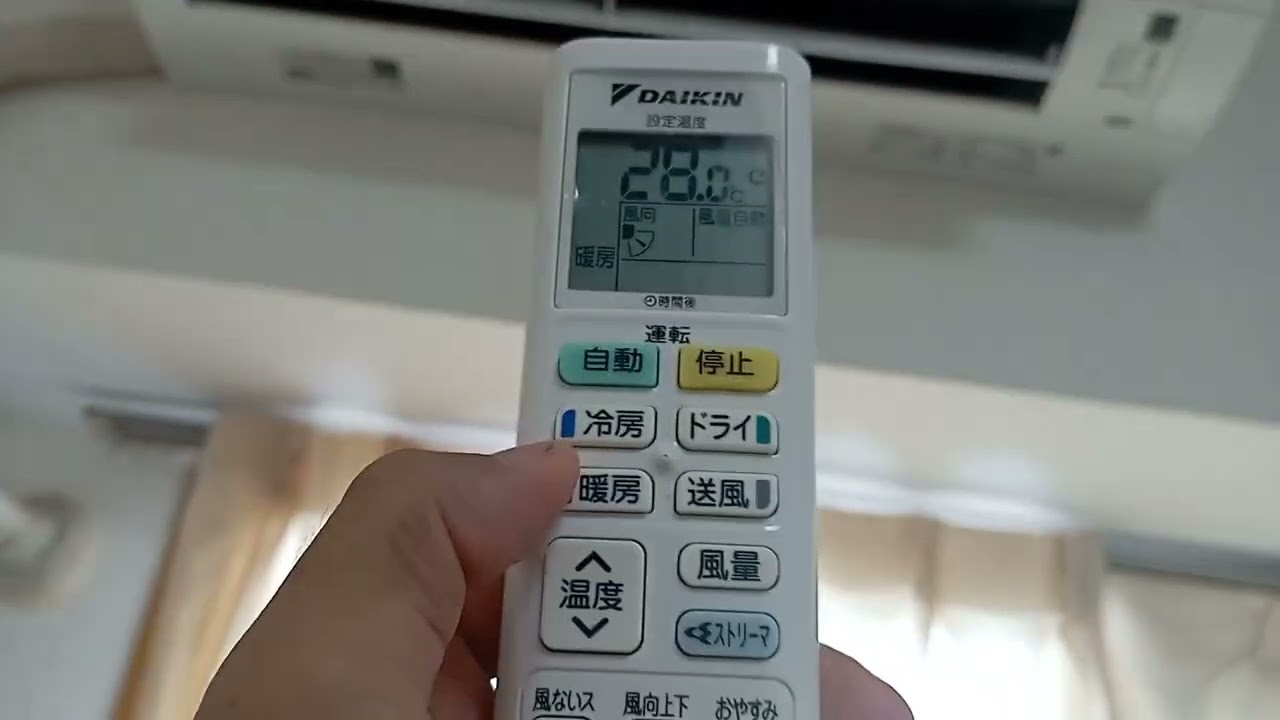
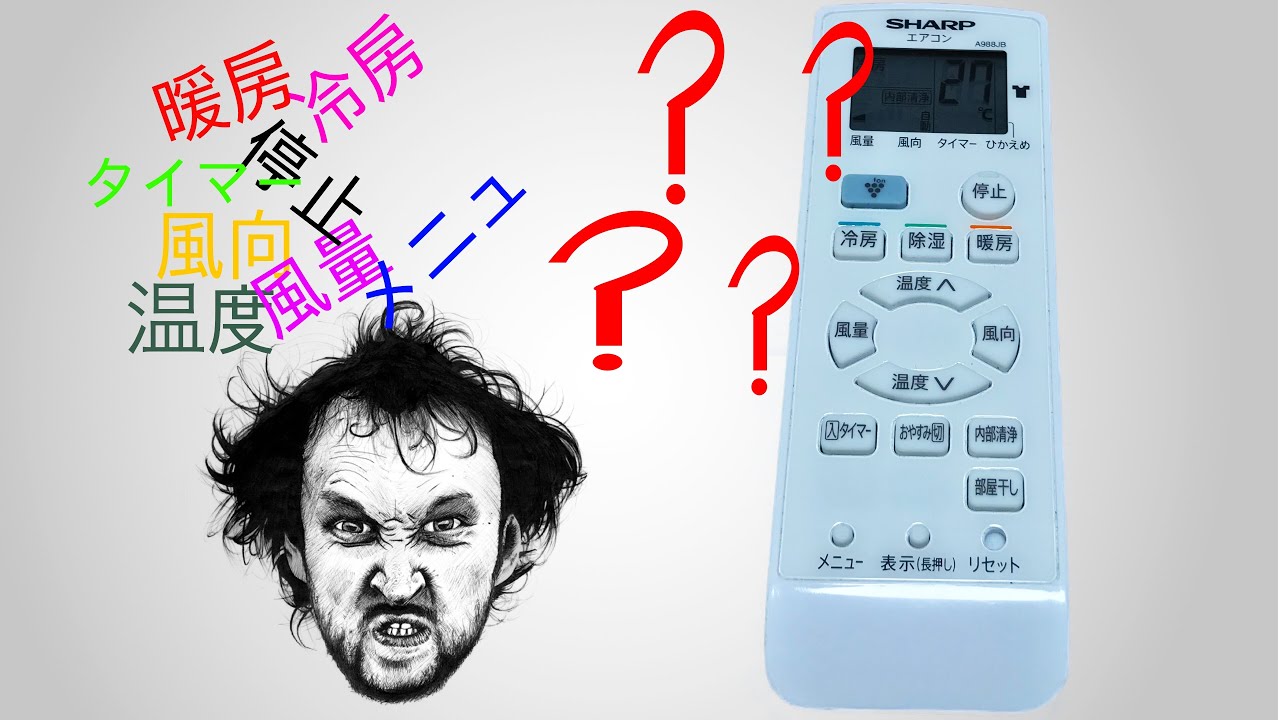
It was 4 AM in a Tokyo hotel room. Michael S. Galpert, an American traveler, woke up drenched in sweat. The room was unbearably hot, but when he reached for the air conditioner remote control, he encountered an unexpected obstacle: every single button was labeled in Japanese characters. In that sleepless moment, with no knowledge of the language and no front desk to call, he faced what millions of international travelers have experienced the frustration of being unable to operate basic appliances in a foreign country.
Instead of pressing buttons randomly and hoping for the best, Galpert pulled out his smartphone and turned to artificial intelligence. Using Google Gemini Nano Banana, an experimental AI image generation and translation tool, he snapped a photo of the remote and prompted the AI with a simple request: “Create an image in English”. Within seconds, the tool identified every button on the remote, translating labels for temperature control, fan speed, operating modes, timer settings, and more. He adjusted the temperature and went back to sleep.
Galpert later shared his experience on X (formerly Twitter), posting before-and-after images of the remote. His post quickly went viral, amassing thousands of shares and comments from travelers who had faced similar struggles abroad. “The Nano Banana gods saved the day,” he wrote. The story resonated because it highlighted something universal: the helpless feeling when language becomes a barrier to basic comfort, and the growing power of AI to dismantle those barriers in real time.
But beneath this simple, relatable anecdote lies a fascinating intersection of technologies. How does AI actually decode a Japanese AC remote? What makes air conditioner remote controls so notoriously difficult to understand and replicate? And what does this mean for the future of travel, smart homes, and human-computer interaction?
This article explores the technology behind AI-powered remote decoding, the unique challenges posed by Japanese air conditioner remotes, the broader implications for travelers and smart home enthusiasts, and the future of AI in everyday problem-solving.
Part 1: Understanding the Challenge – Why Japanese AC Remotes Are So Difficult
A. The Language Barrier
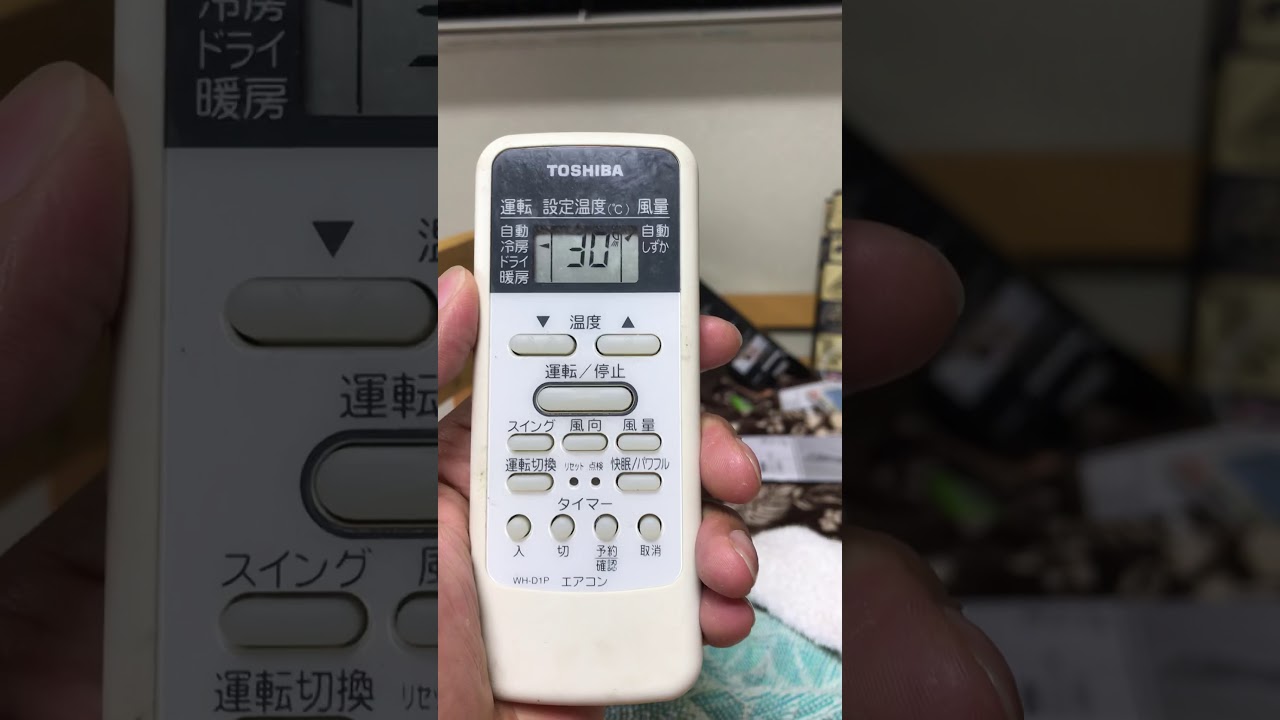
Japanese air conditioner remotes are notorious among international travelers. Unlike many consumer electronics that feature English labels or universally recognized icons, Japanese AC remotes often use kanji, hiragana, and katakana characters exclusively. Buttons labeled “冷房” (cooling), “暖房” (heating), “除湿” (dehumidification), “風量” (fan speed), and “タイマー” (timer) are incomprehensible to non-Japanese speakers. Even travelers who have some knowledge of Japanese may struggle with the specific terminology used in appliance controls.
B. The Complexity of Air Conditioner Infrared Protocols
Beyond the language barrier, air conditioner remotes are technically complex. Unlike television remotes that typically send a simple, fixed command for each button press, air conditioner remotes operate differently. When you press a button on an AC remote, it often transmits the entire device state—including current temperature setting, operating mode, fan speed, swing position, and timer settings—rather than a single command. This is known as a “stateful” remote control protocol.
For example, when you press the temperature increase button, the remote doesn’t just send a “temperature up” command. Instead, it calculates the new target temperature, updates its internal state, and transmits a complete data packet containing all current settings. This means that the infrared signal from an AC remote can be hundreds of bits long, encoding a snapshot of the entire device configuration.
C. Proprietary Encoding Schemes
Each air conditioner manufacturer Daikin, Panasonic, Hitachi, Toshiba, Mitsubishi, Fujitsu, Sharp, and others—uses proprietary encoding schemes for their infrared signals. These schemes vary in:
-
Carrier frequency: Most use 38 kHz modulation, but some use different frequencies.
-
Pulse timing: The duration of marks (infrared light on) and spaces (infrared light off) varies between manufacturers.
-
Data encoding: Some use pulse position modulation (PPM), others use pulse width modulation (PWM), and still others use more complex encoding methods.
-
Frame structure: The number of bits, presence of headers, checksums, and repeat frames all differ.
This fragmentation means that a universal remote control must either contain an extensive database of known codes or possess the ability to learn and decode new protocols on the fly.
D. The Specific Case of Japanese AC Remotes
Japanese AC remotes add another layer of complexity. Many Japanese manufacturers implement unique protocols that are not well-documented outside of Japan. For instance, the Hisense HA-S22CE8-W air conditioner uses a frame structure that includes 184 bits (23 bytes) transmitted as a single subframe. The remote doesn’t send a separate main frame; instead, the main control data is embedded within the subframe’s final bytes. Fan speed settings are distinguished by specific byte values, and the entire frame includes a checksum calculated using XOR operations on multiple bytes.
Part 2: How AI Decodes Infrared Signals
A. The Traditional Approach: Database Matching
Traditionally, decoding an unknown remote control involved one of two approaches:
-
Code Database Matching: The device compares the captured infrared signal against a pre-existing database of known remote control codes. If a match is found, the device can identify the button pressed and the corresponding action. This is how most universal remotes and smart IR blasters work.
-
Manual Reverse Engineering: For unknown protocols, engineers would capture raw timing data from the infrared signal and manually analyze the pulse patterns to deduce the encoding scheme. This is a time-consuming process that requires specialized knowledge of infrared protocols and signal analysis.
B. The AI Revolution in Remote Decoding
Artificial intelligence has introduced new paradigms for decoding remote controls:
1. Computer Vision and OCR for Interface Translation
The simplest application of AI—and the one used by Galpert—involves computer vision and optical character recognition (OCR). The AI tool analyzes an image of the remote, identifies text labels on buttons, and translates them into the user’s preferred language. This approach doesn’t decode the infrared signal itself; it translates the user interface. However, it solves the immediate problem for travelers: understanding what each button does.
Google Gemini Nano Banana (formally known as Gemini 2.5 Flash Image) combines image recognition with real-time translation. It’s designed for creating and editing images, but travelers have discovered it works beautifully for decoding foreign packaging, street signs, and household appliances.
2. Machine Learning for Protocol Identification
More advanced AI applications use machine learning to identify infrared protocols automatically. By training neural networks on thousands of infrared signal samples from different manufacturers, AI systems can:
-
Recognize the carrier frequency and modulation scheme
-
Identify the protocol family (NEC, Sony SIRC, Philips RC-5, etc.)
-
Parse the data structure and extract meaningful commands
-
Map buttons to their functions even without a pre-existing database
3. Pattern Recognition for Unknown Protocols
When an infrared signal doesn’t match any known protocol, AI can still provide useful information. A decoder can calculate a stable fingerprint from normalized durations, label it as an unknown protocol, and store multiple captures of the same button for comparison. If repeated captures cluster around the same pattern, the application can map that fingerprint to an action even before the protocol is formally decoded.
4. Large Language Models for Natural Language Control
Some systems now integrate large language models (LLMs) to interpret natural language commands and translate them into device control actions. A user might say “make it cooler” or “set the temperature to 24 degrees,” and the LLM interprets the intent, maps it to the appropriate device command, and triggers the infrared transmission.
Part 3: The Technical Deep Dive – How Infrared Remote Controls Work
To fully appreciate what AI is decoding, it’s essential to understand the underlying technology of infrared remote controls.
A. Infrared Signal Basics
Infrared remote controls communicate with devices by emitting pulses of infrared light. These pulses are modulated at a specific carrier frequency—typically 38 kHz for consumer electronics. The receiver in the appliance detects these pulses and demodulates them to extract the underlying data.
B. Pulse Timing and Encoding
The data is encoded in the timing of the pulses. Two common encoding methods are:
-
Pulse Width Modulation (PWM): The duration of the pulse (mark) or the gap between pulses (space) encodes binary data. For example, a short space might represent a “0” and a long space might represent a “1”.
-
Pulse Position Modulation (PPM): The position of the pulse within a fixed time window encodes the data.
C. Frame Structure
A typical infrared frame includes:
-
Header: A distinctive pulse pattern that signals the start of a frame.
-
Data Bits: The actual command data, which may include address bits, command bits, and status information.
-
Checksum: Error-checking data to ensure the frame was received correctly.
-
Trailer: A final pulse to mark the end of the frame.
D. Stateful vs. Stateless Remotes
-
Stateless Remotes (typical for TVs): Each button press sends a simple, fixed command. The device maintains its own state independently.
-
Stateful Remotes (typical for ACs): Each button press sends the complete device state. This allows the remote to display current settings on its screen and ensures that the device and remote stay synchronized.
E. Repeat Frames
When a button is held down, remotes handle repeats differently:
-
Some resend the full frame repeatedly.
-
Others send a short repeat frame after the first full command.
-
The decoder must handle both scenarios correctly.
Part 4: Real-World Applications and Products
A. Smart IR Blasters with AI Learning
Several products now incorporate AI-powered learning capabilities:
-
i-Ctrl AC Plus: This smart remote controller by AIFA includes an extensive infrared code library covering 95% of infrared appliances and air conditioner brands, including Hitachi, Panasonic, Daikin, and others. It supports app remote control, voice commands through Google Home, Alexa, and Siri, and even includes AI-based mold prevention features.
-
Surco: A cloud-based smart remote that can control TVs, lights, air conditioners, DVD players, speakers, robot vacuums, fans, set-top boxes, and air purifiers simultaneously.
-
eRemote: Products like the LinkJapan eRemote mini offer compact, high-performance smart remote control with AI learning capabilities, supporting both Alexa and Google Home integration.
B. Open-Source Projects
The maker community has also embraced AI for remote decoding:
-
IRremoteESP8266: This library for ESP8266 and ESP32 microcontrollers enables infrared remote control reception and transmission. It supports a wide range of protocols and has been used in numerous projects.
-
ESP32-Faikin: A project that reverse-engineers the remote control protocol of Daikin AC units.
-
Raw-IR-decoder-for-Arduino: A decoder that supports multiple decoding modes for different manufacturers, including Panasonic, Mitsubishi Electric, and Fujitsu.
C. Academic Research
Academic research has also explored AI-powered infrared decoding:
-
A Wi-Fi IR blaster with on-device learning and a Flutter app for multi-brand appliance control was presented at IEEE. The system integrates an ESP8266-based control node with IR learning capability, capturing and storing IR codes from any brand and retransmitting them through IR LEDs modulated at 38 kHz.
-
Machine learning-based remote control learning methods and systems have been patented, using deep neural networks for remote control identification.
Part 5: Testing and Validating IR Decoders
For developers working on IR decoders, rigorous testing is essential. A systematic approach includes:
A. Setting Up a Test Environment
-
Place the remote 20 to 50 cm from the IR receiver module.
-
Point the remote directly at the sensor.
-
Keep strong sunlight or fluorescent lamps away from the test area.
-
Use a serial monitor, analyzer, or logging interface to record detected protocols, addresses, commands, bit counts, raw mark-space timings, and repeat frame status.
B. Test Sequence
-
Verify Basic Reception: Press Power, Volume Up, Volume Down, Channel Up, and Menu. Confirm that every press produces a clean decoded result or a consistent raw capture.
-
Check Repeat Behavior: Hold Volume Up or a navigation key. Protocols such as NEC may emit a short repeat frame, while others resend the full command.
-
Compare Duplicate Captures: Press the same button five times. The decoded address and command should stay stable, allowing for expected toggle bits in protocols such as RC5 or RC6.
-
Test Distance and Angle: Move the remote farther away and try off-axis positions. A reliable decoder should still classify frames when the receiver output remains clean.
-
Record Unknown Frames: If no protocol match is found, store the raw timing list with a label for the remote model and button name.
C. Handling Stateful Remotes
For air conditioner remotes, remember that a single button may transmit the entire device state rather than a simple command number. This means that pressing the same button twice may produce different frames if the device state has changed between presses.
D. Tolerance and Error Handling
Use tolerance bands rather than exact microsecond comparisons, and log both the normalized symbols and the original timings. If the same button always produces consistent raw captures but inconsistent decoded results, the issue is likely in the decoder logic rather than the signal capture.
Part 6: The Future of AI-Powered Remote Control
A. Beyond Translation – Full Device Control
The next frontier is moving from translating remote labels to full device control through natural language. Imagine pointing your phone at any appliance and saying, “Turn on the air conditioner, set it to 24 degrees cooling mode, and run the fan at medium speed.” The AI would identify the device, determine the appropriate infrared protocol, and transmit the correct commands.
B. Context-Aware Automation
AI could learn from user behavior and environmental conditions to automate device control automatically. For example:
-
Geofencing: When you leave work, your AI assistant could detect your location and pre-cool your home before you arrive.
-
Weather Integration: The system could adjust temperature settings based on weather forecasts.
-
Occupancy Detection: Using motion sensors or device usage patterns, the system could turn off appliances when no one is home.
C. Universal Compatibility
As AI-powered decoding becomes more sophisticated, the need for manufacturer-specific code databases will diminish. AI systems will be able to learn and adapt to any infrared protocol on the fly, making truly universal remote controls a reality.
D. Edge AI and Privacy
Processing AI tasks on-device (edge computing) rather than in the cloud offers several advantages:
-
Privacy: Sensitive data about home occupancy and device usage stays local.
-
Speed: No network latency for decoding and translation.
-
Offline Operation: The system works even without internet connectivity.
E. Integration with Smart Home Ecosystems
AI-powered remote decoding will become increasingly integrated with broader smart home platforms:
-
Voice Assistants: Seamless control through Alexa, Google Assistant, and Siri.
-
IFTTT: Integration with automation platforms for custom triggers and actions.
-
Home Assistant: Open-source platforms that allow advanced customization and integration.
Part 7: Challenges and Limitations
A. Protocol Fragmentation
The sheer number of proprietary protocols remains a significant challenge. While AI can learn and adapt, each new device potentially requires a learning phase. For travelers, this means the AI must have the capability to decode new protocols on the fly without prior training.
B. Hardware Limitations
Not all devices have the necessary hardware for infrared transmission. Smartphones typically lack IR blasters, requiring additional hardware like Wi-Fi IR blasters or smart remotes.
C. Learning Curve
While AI makes decoding easier, there is still a learning curve for users. Not everyone knows they can use AI tools to translate foreign remotes, and not all AI tools are equally capable of this task.
D. Accuracy and Reliability
AI translation of remote labels is not always 100% accurate. Nuances in Japanese terminology might be lost in translation, and the AI might misinterpret certain characters or labels.
E. Battery and Power Concerns
IR blasters and smart remotes require power. Battery life, especially for portable solutions, remains a consideration.
Part 8: Practical Tips for Travelers
Based on the viral success of Galpert’s hack, here are practical tips for travelers facing foreign remotes:
A. Use AI Image Translation Tools
-
Google Gemini Nano Banana (Gemini 2.5 Flash Image) can translate text within images.
-
Google Lens offers similar real-time translation features.
-
Other AI-powered translation apps with image recognition capabilities can also work.
B. Document the Remote
Take a clear, well-lit photo of the remote. Ensure all buttons are visible and the text is legible.
C. Use Simple Prompts
Galpert’s success came from a simple prompt: “Create an image in English”. Keep prompts clear and straightforward.
D. Cross-Check with Google Lens
For critical functions like power, temperature control, and mode selection, cross-check the AI translation with Google Lens or another translation tool to verify accuracy.
E. Learn Key Japanese Characters
A few key terms can be helpful:
-
電源 (电源) – Power
-
冷房 – Cooling
-
暖房 – Heating
-
除湿 – Dehumidification
-
風量 – Fan Speed
-
温度 – Temperature
-
タイマー – Timer
-
自動 – Automatic
Part 9: Beyond Air Conditioners – The Broader Implications
The success of AI in decoding Japanese AC remotes points to broader implications:
A. Travel and Accessibility
AI-powered translation and decoding tools are making international travel more accessible. Language barriers that once caused frustration and confusion are increasingly surmountable with a smartphone and the right AI tools.
B. Smart Home Adoption
By making it easier to control existing appliances, AI-powered remote decoding lowers the barrier to smart home adoption. Users don’t need to replace their appliances; they can simply add an AI-powered smart remote.
C. Sustainability
Extending the life of existing appliances through smart control is more sustainable than replacing them with newer, “smart” models. AI-powered remotes reduce electronic waste.
D. Human-Computer Interaction
This application of AI represents a shift in how we interact with technology. Instead of learning to use devices, we can now use AI to make devices adapt to us. The interface becomes conversational and intuitive rather than technical and opaque.
Part 10: Conclusion
The story of an American traveler using AI to decode a Japanese AC remote at 4 AM is more than just a viral internet moment. It’s a glimpse into a future where technology adapts to human needs rather than requiring humans to adapt to technology.
From the simple act of translating button labels to the complex task of decoding proprietary infrared protocols, AI is bridging gaps that have long frustrated travelers, homeowners, and technology users. The combination of computer vision, natural language processing, and machine learning is creating a world where language barriers whether in the form of Japanese characters on a remote control or the technical language of infrared protocols are becoming increasingly irrelevant.
As AI continues to evolve, we can expect even more seamless integration between our devices and our intentions. The ability to point a camera at any device and instantly understand and control it will become as natural as using a smartphone itself. And for the millions of travelers who have struggled with foreign remotes, that future can’t come soon enough.
The next time you find yourself in a hotel room at 4 AM, sweating and staring at an incomprehensible remote, remember: the AI gods might just save your day too.