

The digital landscape is currently experiencing a fascinating phenomenon that blurs the line between reality and artificial imagination. If you have scrolled through Instagram Reels, TikTok, or X (formerly Twitter) recently, you have likely encountered a wave of hyper-realistic videos showing ordinary people seemingly caught on live broadcast cameras in packed stadiums. From the Indian Premier League (IPL) to Korean Baseball Organization (KBO) games and even the FIFA World Cup, these clips appear to capture genuine “fan-cam” moments. However, a closer look reveals a different truth: these are sophisticated creations powered by artificial intelligence . This trend, known as the “Viral AI Stadium Video Trend,” has taken social media by storm, amassing millions of views and sparking a global conversation about the capabilities of AI, the nature of virality, and the future of digital content.
The Genesis of the AI Stadium Trend
The origin of this digital craze can be traced back to early May 2026, when a user on X posted a five-second clip of a young woman watching a Korean baseball game . The video, which quickly racked up over 15 million views, depicted a seemingly candid moment of a spectator caught on the stadium’s Jumbotron. The authenticity of the moment was convincing enough to fool millions, but it was later revealed that the woman was entirely AI-generated .
This initial video acted as a catalyst, sparking a trend that rapidly evolved. What began as a novelty in the KBO baseball scene soon expanded to other sports and cultural contexts. The concept was simple yet powerful: using AI to place oneself in the middle of an exciting, high-energy environment that one might not have physically experienced. By the end of May, the trend had been adapted to feature Indian Premier League (IPL) cricket matches, where users could see themselves cheering alongside thousands of fans in a packed stadium . The trend’s flexibility allowed it to spread like wildfire, with creators placing themselves in football stadiums, Formula 1 races, and even concerts .
How the AI Magic Happens: A Step-by-Step Guide
The allure of this trend lies not just in its results but in its accessibility. The process of creating these viral videos is surprisingly simple, requiring no advanced technical skills or expensive software. It can be broken down into a few straightforward steps using publicly available AI tools like ChatGPT, Google Gemini, and Google Flow.
A. Generate the Base Image
The first step involves creating a realistic still image of the user in a stadium setting. This is achieved by using an AI image generator.
-
Start with a Selfie: Users upload a clear, well-lit portrait or selfie to an AI image generator. The quality and clarity of this photo are crucial for a convincing result, as the AI uses it as the primary reference for the subject’s identity .
-
Craft a Detailed Prompt: The user then inputs a highly specific text prompt that describes the desired scene. The prompt’s precision is key to achieving a realistic “broadcast” look. For example, a typical prompt for an IPL video might read: “Use the uploaded reference image as the strongest identity anchor. The person must look like the exact same person from the reference image. Create an ultra-realistic candid IPL broadcast screenshot of this person accidentally caught by a live TV camera in the spectator seats. They are seated among a lively crowd of [Team Name] fans, wearing a [Team Name] jersey. Use a realistic broadcast camera look: telephoto compression, mild video softness, slight motion blur in the crowd, stadium lighting, natural skin texture, 16:9 horizontal TV broadcast composition.” .
The prompt instructs the AI to preserve the user’s face exactly, create a crowded stadium background, and simulate the visual characteristics of a live sports broadcast, such as specific lighting, depth of field, and a slightly imperfect, candid feel. This emphasis on “documentary realism” is what differentiates these videos from older, more easily identifiable “AI slop” .
B. Animate the Image into a Video
Once the base image is generated and downloaded, the next step is to bring it to life.
-
Select a Video Generation Tool: Users upload their AI-generated image into a video generation platform. Google’s Flow is a popular choice for this step, though other tools like Kling 3.0 are also recommended for their superior facial consistency and crowd motion capabilities .
-
Provide the Animation Prompt: Another prompt is required to guide the video generation. This prompt focuses on the action and movement. A typical prompt might be: “Preserve exact face, hairstyle, skin texture, and identity. Do NOT stylize or beautify. Create a 4-5 second continuous live sports broadcast shot. The subject, based on the uploaded image, is seated in a lively stadium crowd. They notice the camera, break into a genuine smile, make direct eye contact, and wave enthusiastically. The background crowd is actively cheering. Output: single continuous live sports broadcast shot, 4-5s, 16:9, 1080p, no cuts.” .
This process results in a short, realistic clip where the user appears to be a fan caught in the middle of a live sporting event, reacting naturally to the camera. The final touches often include adding background music and sports-style overlays like a “LIVE” graphic in the corner using editing apps like CapCut .
The “Main Character” Effect: Why We Want to be on the Jumbotron
The psychological appeal of this trend is multifaceted. At its core, it taps into the universal desire for recognition and the “main character” fantasy. We have all seen those real-life moments captured on a stadium’s giant video screen, where an attractive or enthusiastic fan gets their 15 seconds of fame. This trend allows anyone to create that moment for themselves, projecting a curated image of being charismatic, spontaneous, and part of an exciting event.
This phenomenon is particularly potent in the context of sports like the IPL and KBO, which have passionate, visually striking fan cultures . The videos allow fans to express their allegiance and imagine themselves as part of the action, even if they are thousands of miles away from the actual stadium. As one observer noted, the trend lets people imagine themselves in moments they may not have experienced, turning “Here’s where I went” into “Here’s where I could have been” .
A New Era of AI Slop: Quality vs. Deception
The term “AI slop” has been used to describe the flood of uncanny, low-quality AI-generated videos that saturate social media. However, the stadium trend represents a departure from this. The level of detail is remarkable: the lighting mimics broadcast standards, the crowd moves realistically, the camera work includes slight zooms, and the subject’s facial features are preserved with high fidelity . The result is so convincing that a significant portion of viewers initially believes these are genuine broadcast clips.
According to a study cited by The Hindu, more than 20% of the videos pushed by YouTube’s algorithm to new users are AI slop videos . The AI stadium trend is a prime example of how the quality of this content is improving, making it harder for the average user to distinguish between what’s real and what’s fabricated. This advancement is largely due to the extremely specific and technical prompts used by creators, which instruct the AI to replicate the nuances of live TV production .
Misinformation and Manipulation: The Darker Side

While many users are creating these videos for harmless fun, the trend highlights the growing potential for AI to be used for misinformation and deception. The initial Korean baseball video, which was posted without any label indicating it was AI-generated, successfully deceived millions of people . As this technology becomes more accessible and sophisticated, the line between reality and fabrication will become increasingly difficult to discern.
The case of a viral video depicting a Brazilian supporter at a 2026 FIFA World Cup match is a stark example of this manipulation . The clip, which appeared to show a male spectator staring at the woman’s cleavage before realizing he was on camera, was actually AI-generated. Fact-checkers found multiple clues: a frozen match clock, an incorrect broadcaster logo, and robotic-sounding commentary . AI-detection tools later confirmed a 99.9% probability that the video was a deepfake. This video was not just a harmless fantasy; it was used to drive traffic to an AI-generated influencer’s monetized page on a platform similar to OnlyFans.
This trend has also led to the creation of “celebrity” deepfakes, where world leaders like Donald Trump and Vladimir Putin or deceased musicians like Freddie Mercury are shown in stadium crowds . While some of these are humorous memes, they represent a broader, more troubling trend of using AI to create entirely fake but realistic-looking content.
The Algorithmic Loop
The virality of these videos is further amplified by social media algorithms. The algorithms are designed to promote content that generates engagement, and these AI videos, which often look surprising or impressive, are highly effective at capturing attention and driving views. As one analysis points out, “the algorithm feeds on it, takes it into the system, and distributes it back such that these AI videos are all we see and we fall into its rhythm” . This creates a “loop trick” where the constant stream of AI content normalizes it, making users less skeptical and more likely to accept similar content in the future .
The Future of Authenticity
The AI stadium trend is more than just a passing fad; it is a sign of things to come. It represents a cultural shift in how we create and consume media. The ability to generate hyper-realistic videos from a single photo marks a significant technological leap, the ramifications of which are only beginning to be understood. The trend has prompted discussions about digital literacy, the ethics of AI, and the economic incentives behind such viral content, as each popular trend significantly boosts the usage and, by extension, the value of AI companies .
The “Sky Stadium” Hoax: AI and Mass Misinformation
The power of AI to create convincing false narratives is not limited to individual fan-cam videos. A separate, but equally telling, incident involved an AI-generated video of a futuristic stadium built on top of a towering skyscraper .
The video, which garnered over 50 million views, was widely shared on social media and even picked up by some news outlets as evidence of Saudi Arabia’s ambitious plans for the 2034 FIFA World Cup . The clip showed a gleaming glass stadium perched hundreds of meters in the air, an architectural marvel that seemed to fit perfectly with the kingdom’s reputation for megaprojects.
However, it was eventually revealed that the video was a “purely imaginative AI concept” created by Liam Hawes, a 34-year-old from the UK, in just two minutes on his phone . The creator stated he had no knowledge of any Saudi project and was simply experimenting with an idea. The fact that a two-minute AI creation could fool millions of people and influence global media discourse underscores the immense potential for AI to be used as a tool for large-scale misinformation .
Conclusion: Navigating the AI Mirage
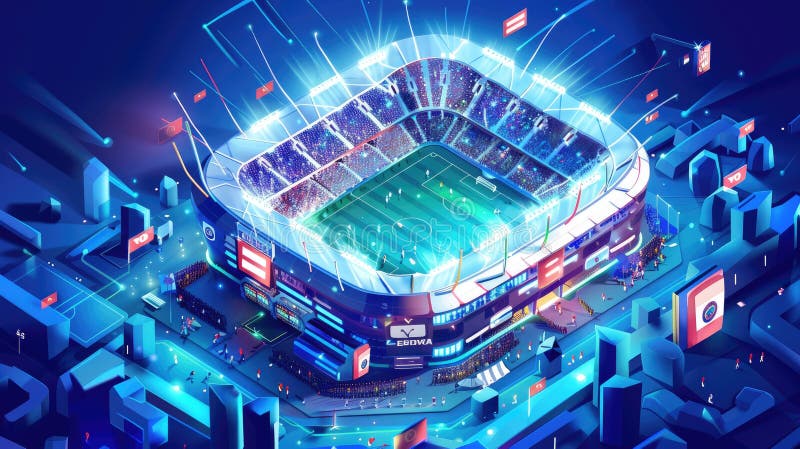
The Viral AI Stadium Trend is a captivating case study of our times. It showcases the breathtaking capabilities of modern AI, allowing ordinary users to become the “main character” in a virtual stadium, all from a simple selfie. It represents the democratization of digital content creation, where anyone can craft cinematic and highly shareable narratives about their lives. However, this trend also serves as a stark warning. It highlights the ease with which reality can be fabricated and disseminated to a global audience, raising serious questions about authenticity, misinformation, and digital trust. As AI generation tools become ever more integrated into our creative workflows and social media feeds, our ability to discern the real from the synthetic will be one of the most critical skills of the digital age. The stadium trend is just the beginning of this journey into a world where our online experiences are increasingly shaped by lines of code.