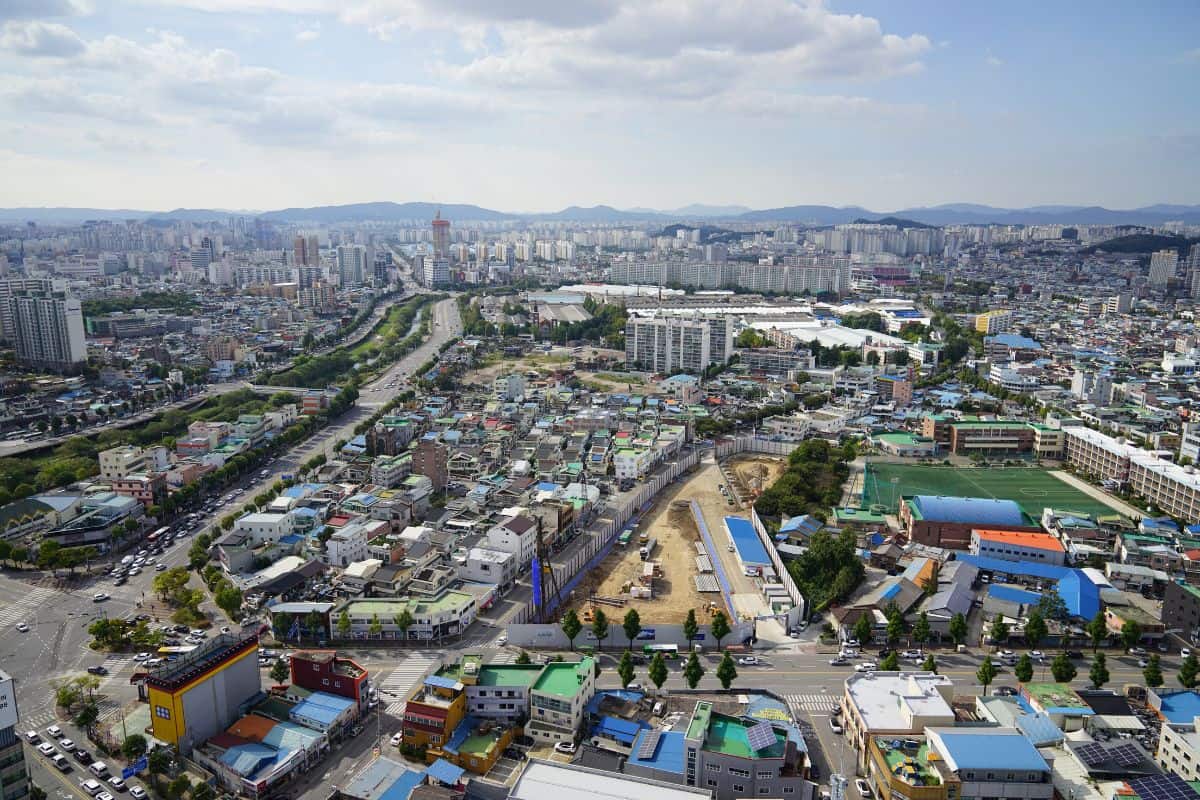
In a landmark development that signals South Korea’s ambitious push to decentralize its innovation economy, Gwangju Metropolitan City has been officially designated as an artificial intelligence (AI)-centered “Tech Startup City.” This designation, announced at the government’s “National Startup Era Strategy Meeting” on April 27, 2026, positions Gwangju among an elite group of four “Major Tech Startup Cities” alongside Daejeon, Daegu, and Ulsan. The selection represents far more than a ceremonial title it marks a strategic realignment of South Korea’s innovation ecosystem and a decisive bet on AI as the engine of next-generation economic growth.
Gwangju’s journey to this pivotal moment has been years in the making. Since 2018, the city has systematically positioned itself at the forefront of the Fourth Industrial Revolution, selecting AI as its future strategic industry and laying the groundwork for what is now becoming a tangible reality. The designation as an AI Startup City validates these efforts and provides the institutional framework and governmental support necessary to accelerate transformation on an unprecedented scale.
The National Context: Breaking Seoul’s Innovation Monopoly
South Korea’s startup ecosystem has long suffered from extreme centralization. The greater Seoul metropolitan area has historically captured the lion’s share of venture capital, talent, and infrastructure, leaving other regions struggling to retain their brightest minds and most promising enterprises. This concentration has created a “brain drain” phenomenon where ambitious entrepreneurs and skilled technologists feel compelled to relocate to the capital to access resources and opportunities.
The government’s Startup City Development Project directly addresses this imbalance. By designating ten cities as startup hubs by 2027—beginning with Gwangju, Daejeon, Daegu, and Ulsan in 2026—the initiative aims to create regionally anchored innovation ecosystems that can compete on a global scale. Each city is being developed around its unique industrial strengths: Daegu as a robotics hub, Gwangju as an AI and smart energy center, and Ulsan as a future mobility powerhouse.
The strategic rationale is compelling. While South Korea ranks 20th globally in startup ecosystem competitiveness, it currently has only three cities in the top 500 startup cities worldwide—a modest showing compared to 137 American cities, 34 British cities, and 26 Chinese cities. Through this initiative, the government aims to place at least five Korean cities among the world’s top 100 startup hubs by 2030.
Gwangju’s Strategic Vision: AI as the Core Competency
Gwangju’s designation as an AI-focused Startup City is built upon a comprehensive strategy that leverages the city’s existing strengths while creating new capabilities. At the heart of this vision is the Gwangju Institute of Science and Technology (GIST), which serves as the anchor institution around which the entire ecosystem is being constructed.
A. Strategic Focus Areas
Gwangju Metropolitan City has identified three primary domains for concentrated development:
-
Future Mobility: Leveraging Gwangju’s automotive manufacturing heritage and its designation as a national autonomous driving testbed, the city is positioning itself at the intersection of AI and transportation innovation. The entire city—spanning 500.97 square kilometers—is being utilized as a proving ground for autonomous driving technology, with approximately 200 autonomous vehicles deployed across residential and commercial areas to collect driving data and achieve Level 4 autonomy.
-
Energy and Smart Energy Infrastructure: Gwangju’s strategy extends beyond its administrative boundaries to connect with energy infrastructure in neighboring Naju, including the Korea Institute of Energy Technology and Korea Electric Power Corporation. This creates a broader regional startup corridor where energy innovation can flourish.
-
AI and Semiconductors: The city is positioning itself as a hub for AI semiconductor development, with particular emphasis on Neural Processing Units (NPUs)—next-generation semiconductors that are 10 to 100 times more efficient than GPUs for AI inference tasks. The planned National NPU Computing Center will serve as a cornerstone of this effort.
B. Concrete Targets and Timelines
Gwangju has established ambitious but achievable goals that demonstrate the city’s commitment to tangible outcomes:
-
By 2030: Discover and nurture 500 deep-tech early-stage startups with unrivaled technological capabilities.
-
By 2027: Designate GIST as a “Deep Tech Startup-Centered University” and establish a new “Startup Institute.”
-
Ongoing: Attract 1,000 AI convergence companies and create over 6,000 jobs through the AI ecosystem.
The City as a Living Laboratory: 3,375 Testbed Sites
Perhaps the most innovative aspect of Gwangju’s AI Startup City strategy is the transformation of the entire municipality into a real-world demonstration platform. Under the slogan “AI for All, Gwangju as a Demonstration City,” the city has launched a full-scale initiative to integrate AI technologies into every corner of urban life.
The city is accepting demonstration applications on a rolling basis for 3,375 testbed sites distributed across all five districts: Dong-gu (663 sites), Seo-gu (815), Nam-gu (240), Buk-gu (795), and Gwangsan-gu (862). These sites include community service centers, parks, parking lots, and other public spaces where innovative AI technologies can be deployed and validated in real-world conditions.
This approach offers several significant advantages:
A. Accelerated Commercialization: Companies can demonstrate their technologies in authentic environments rather than sterile laboratories, generating proof points that accelerate market entry.
B. Citizen Engagement: Residents experience innovative technologies firsthand, fostering AI literacy and creating grassroots support for digital transformation.
C. Iterative Development: Real-world deployment generates valuable data that enables continuous improvement and refinement of AI solutions.
D. Global Showcase: Successful demonstrations in Gwangju can serve as case studies for international market expansion, as evidenced by Company A’s successful entry into the North American market following its AI safety guardian demonstration at Seorim Elementary School.
E. Inclusive Participation: Companies with innovative AI technologies can participate regardless of their location or size, democratizing access to demonstration opportunities.
F. Comprehensive Support: Following demonstrations, the city provides post-management services including linkage with existing support programs to address challenges and open new sales channels.
Funding and Infrastructure: Building the Foundation for Growth
Gwangju’s transformation into an AI Startup City is backed by substantial financial commitments and infrastructure development. The city has already established an $80 million Gwangju AI Investment Fund and continues to expand its investment capacity. Looking forward, the city aims to build a 1 trillion won (approximately $750 million) fund by 2028.
Key infrastructure elements include:
A. National AI Data Center: Korea’s first AI-specialized data center, already under construction in the Cheomdan 3 District, provides 88.5 petaflops of operational resources and 107 petabytes of storage capacity. This infrastructure enables the learning, analysis, and utilization of massive datasets essential for AI development.
B. AI Startup Building: A dedicated facility offering 67 office spaces as well as collaboration facilities such as meeting rooms and training rooms, serving as the physical center of Gwangju’s startup ecosystem.
C. AI InnoSpace: A planned facility for AI technology verification, commercialization, and mass adoption, designed to bridge the gap between innovation and market readiness.
D. AX Demonstration Valley: A five-year project beginning in 2026 with approximately KRW 600 billion in investment, focusing on integrating AI into regional strategic industries such as mobility and energy.
E. AI Startup Camp: Operating 70 office spaces and 53 shared offices provided free of charge to startups and attracted companies, removing a significant barrier to entry for early-stage ventures.
Talent Development: Cultivating the Human Capital

No AI ecosystem can succeed without a robust pipeline of skilled talent, and Gwangju has implemented a comprehensive approach to human capital development. The “2030 Talent Development Strategy” aims to foster a total of 810,000 industrial technology talents by 2030, with participation from 87 organizations spanning education, industry, and public institutions.
Specific initiatives include:
A. Regulatory Easing: Extending startup leave and concurrent employment periods to encourage researchers and faculty members to pursue entrepreneurial ventures without risking their academic careers.
B. AI Academy: An existing program providing AI education and training, now being expanded as part of the broader talent development roadmap.
C. University-Industry Integration: GIST’s designation as a “Deep Tech Startup-Centered University” will create new pathways for academic research to translate into commercial ventures.
D. Corporate Partnerships: Major companies including AsicLand, AimFuture, and ESTsoft are actively recruiting talent from Gwangju and collaborating with the city on AI and digital talent development.
Investment and Support Ecosystem
The Startup City designation has catalyzed a comprehensive support system that addresses the entire startup lifecycle:
A. Angel Investment Hub: Expanded operations to provide early-stage funding for promising ventures.
B. Korea Venture Investment Corp. Regional Office: Enhanced local presence to facilitate investment coordination.
C. KDB NextONE: A platform that selects promising early-stage startups and supports them with office space, mentoring, and links to investment, with the Gwangju hub discovering and incubating approximately 30 promising startups each year within seven years of founding.
D. Rapid Investment Support System: A commitment to immediate investment for ventures demonstrating technological capability, reducing the time between innovation and funding.
E. GIST Holdings Fund: A 7.5 billion won fund focused on early-stage companies in GIST’s three major deep-tech specialized fields: AI, bio, and optical laser.
F. G-Unicorn Program: Systematic unicorn incubation that has already produced five selected companies in 2025—iMediTech, Vessel AI Korea, Biocom, STH, and Fine Korea—achieving 2.3-fold sales growth.
Global Recognition and Momentum
Gwangju’s AI ecosystem is already generating international recognition. At CES 2026, seven Gwangju-based companies—LBS tech, GhostPass, innoDtech, inDJ, AllTheTime, MainSpace, and DeepScent—received innovation awards, surpassing the previous year’s total of six and demonstrating the rapid growth and strengthening global competitiveness of Gwangju’s AI ecosystem.
Gwangju startups are also making their mark on the global stage. Intflow, a Gwangju-based AI startup, participated in the NVIDIA GTC 2026 Inception Pitching Session at the world’s largest AI conference in San Jose, USA, where it introduced its livestock AI solution. This international exposure validates the quality of Gwangju’s AI innovation and opens doors for global partnerships and market expansion.
The Agricultural AI Frontier
Demonstrating the versatility of AI applications, Gwangju is also leading the development of a National Agricultural AI Transformation (AX) Platform in partnership with the Ministry of Agriculture, Food and Rural Affairs. With a $254.6 million investment, the city plans to develop a global business center, a demonstration center, and an AI-based growth support data center in Muan, creating a “triple infrastructure” for agricultural AI. This initiative reflects Gwangju’s commitment to applying AI across diverse sectors and creating broad-based economic benefits.
Semiconductor Ambitions
The AI Startup City designation aligns with even larger ambitions in the semiconductor sector. Samsung Electronics and SK hynix are participating in an 800 trillion won ($582.9 billion) project to build a vast semiconductor and AI cluster in Gwangju and surrounding regions. The government is accelerating this push by relocating the military airport in Gwangju to other facilities by 2028, freeing up space for semiconductor production facilities.
Governance and Implementation Structure
To ensure the success of the Startup City initiative, Gwangju has established a robust governance structure:
A. Startup City Promotion Team: A collaborative body in which local research institutes, universities, and related organizations participate to provide organic support throughout the entire startup process—from idea discovery to research and development (R&D), demonstration, and investment attraction.
B. University-Industry-Research Collaboration: A structure that combines local universities, research institutes, and public data resources with government R&D and investment to create a self-reinforcing innovation cycle.
C. Inter-City Coordination: Gwangju’s strategy extends beyond its boundaries to connect with energy infrastructure in Naju, creating a metropolitan-scale startup ecosystem.
D. Central-Local Partnership: A formal memorandum of understanding (MOU) between the Ministry of SMEs and Startups and the four participating metropolitan governments, committing all parties to cooperate on discovering and nurturing tech talent, attracting outstanding startup corporations, supporting technology development, commercialization and investment, and improving regional living conditions.
The Road Ahead: Challenges and Opportunities
While Gwangju’s designation as an AI Startup City represents a tremendous opportunity, significant challenges remain. The city must compete with the gravitational pull of Seoul’s established ecosystem, attract and retain top talent, and ensure that its infrastructure investments translate into tangible startup success.
However, the momentum is clearly on Gwangju’s side. The combination of government support, institutional anchors like GIST, substantial investment commitments, and the innovative “city as testbed” approach creates a compelling value proposition for entrepreneurs and investors alike.
As Minister Han Seong-sook of the Ministry of SMEs and Startups stated, “Through the Startup City Project, we will create self-sustaining startup ecosystems where regions generate their own growth engines and build an environment where startups can thrive anywhere in South Korea.”
Conclusion: A Blueprint for Decentralized Innovation

Gwangju’s selection as an AI Startup City is more than a local achievement it represents a new model for decentralized innovation that other regions and countries may seek to emulate. By combining targeted industrial focus, substantial infrastructure investment, comprehensive talent development, and the innovative use of the entire city as a living laboratory, Gwangju is demonstrating that world-class innovation can flourish outside traditional metropolitan centers.
The city’s journey from its automotive and photonics industrial heritage to its current position as an AI powerhouse reflects a remarkable capacity for strategic reinvention. With clear targets, robust support systems, and growing international recognition, Gwangju is well-positioned to achieve its goal of becoming one of the world’s top 100 startup cities by 2030.
For entrepreneurs, investors, and technologists looking for the next frontier of AI innovation, Gwangju offers a compelling destination a city where AI is not just a buzzword but a lived reality, transforming everything from children’s school commutes to autonomous vehicles, from agricultural production to semiconductor manufacturing. The AI Startup City designation is not the end of the journey but the beginning of a new chapter in Gwangju’s remarkable transformation.